Commure: The AI Operating System for Healthcare
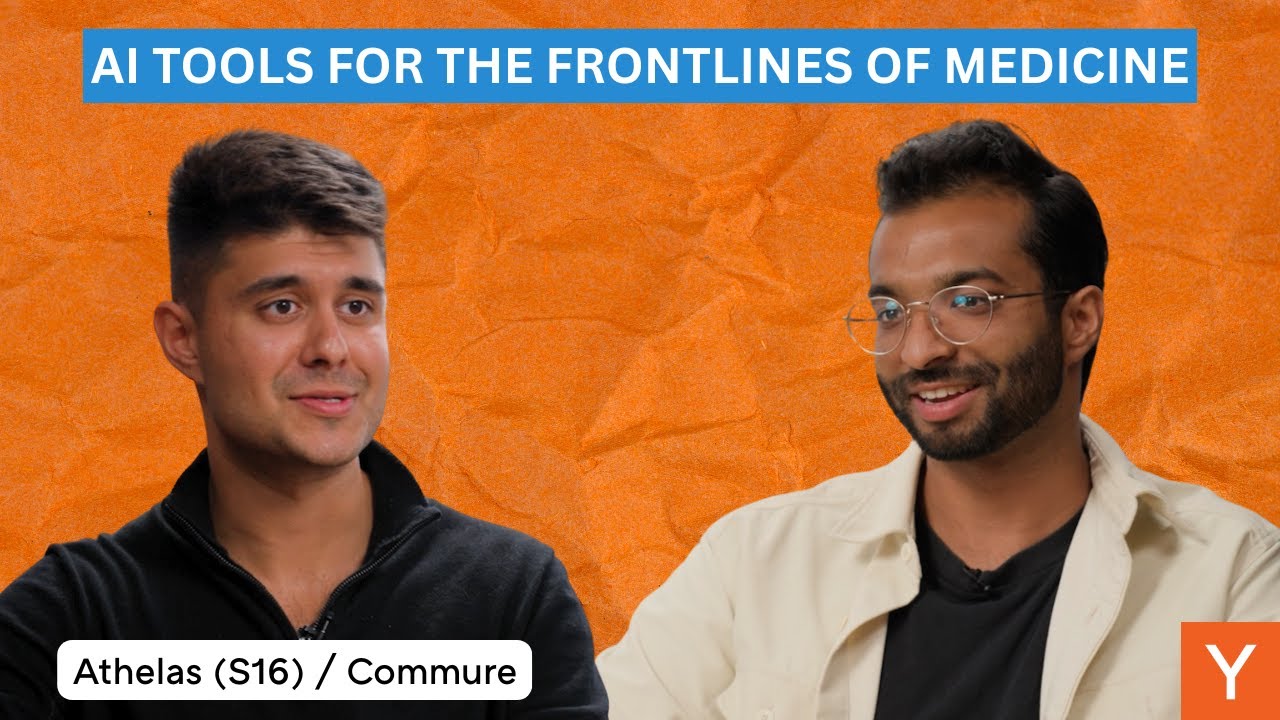
Tanay Tandon, co-founder and CEO of Commure, discusses his journey from building a medical device in college to creating an AI operating system for healthcare. He covers the pivot from hardware to software, the power of LLMs in automating revenue cycle and clinical documentation, and his vision for a future where AI liberates physicians from administrative burdens and fundamentally reshapes patient care.
The Founding Journey: From Hardware to a Healthcare OS
The genesis of Athelas (now Commure) was a project from Tanay Tandon’s high school days, born out of a YC Hacks hackathon. The initial concept involved using early computer vision techniques—like watershed segmentation and random forests—to analyze blood cells for malaria by effectively turning a smartphone into a microscope. After multiple rejections from Y Combinator, Tandon and his co-founder, Deepika Bodapati, were accepted in the Summer 2016 batch with a working prototype.
Their time in YC was defined by a radical acceleration of typical healthcare timelines. Mentored by group partner Qasar Younis, they challenged the multi-year, high-cost assumptions of medical device development.
“We had many conversations where we got a quote from Stanford where it was like, ‘We can run this trial and it’ll be $120,000 and it will take 3 years.’ And and I mean, when you see something like that, it’s almost so absurd that it wheels you into action a little bit.”
By rethinking the process from first principles, they identified a partner hospital in Juarez, Mexico, and ran the clinical trial themselves. The entire process, from finding the hospital to getting the results, was compressed into six weeks of the YC batch.
After raising a seed round, the next two years were a “brutal focus” on securing FDA clearance for their device. The first commercial traction came from a pharmaceutical company that needed blood monitoring for patients on a specific schizophrenia drug. This early success, however, illuminated the limitations of being a point-solution hardware company. While they were on a path to building a solid business, Tandon and his team saw a much larger opportunity by observing their customers’ daily struggles firsthand. Deploying their devices in clinics gave them a front-row seat to a host of other problems, leading to the pivotal shift to software.
Commure’s AI-Powered Product Suite
Commure’s strategy is to be the software operating system for healthcare providers, focusing on two key protagonists: patients and providers. Their tools are designed to combat the administrative complexity imposed by the “effective enemy,” the insurance companies.
Revenue Cycle Management (RCM): “Stripe for Healthcare”
A core pillar of Commure’s platform is its RCM stack, which Tandon describes as “Stripe for healthcare.” This system automates the entire financial workflow for a medical practice, from submitting claims to managing denials. A key innovation is the use of LLMs to interact directly with insurance companies.
- Automated Negotiations: The platform uses AI models that can call or text insurance companies to negotiate and appeal claim denials, a task that traditionally requires thousands of employees in a health system.
- Proactive Monitoring: Tandon frames the RCM challenge as a “cybersecurity problem,” where each denial is an “attack” from the payer. The system is built to constantly monitor for these threats—such as payers “losing” a claim to run out the clock on filing deadlines—and proactively debug them to ensure physicians get paid.
- Business Impact: The result is a tangible increase in revenue for their clients, often by as much as 15%, which creates powerful word-of-mouth growth.
Ambient Documentation and Workflow Automation
To combat physician burnout, a major focus is automating the overwhelming documentation burden placed on clinicians.
- Commure Scribe: This ambient documentation tool listens to physician-patient conversations, transcribes them, and uses LLMs to generate a summarized clinical note. This process is a perfect application for language models, combining transcription, summarization, and reference to clinical source material. The tool has seen explosive adoption, growing from 100,000 appointments documented in 2023 to a projected 25 million in the current year.
- Physician-Led GTM: In a departure from traditional enterprise healthcare sales, Commure has found success with a self-serve, physician-led adoption model. Doctors discover the Scribe tool online and often pay with their own credit cards, demonstrating the immense value it provides. This creates a bottom-up motion to upsell the full, integrated enterprise platform.
Strategy, Competition, and the Market
Tandon believes that to build a hundred-billion-dollar business in healthcare, you must be a platform company. The strategy is to start with a point solution to solve a critical problem and earn trust, then expand to solve adjacent problems, ultimately increasing the “share of wallet” with each customer.
Competing with Point Solutions and Incumbents
- The Platform Advantage: Tandon argues that many new AI startups in healthcare are “LLM wrapper businesses” focused on a single point solution like scribing. He compares them to a 1980s grammar-checking software that was eventually made obsolete when Microsoft bundled autocorrect into Word. Once incumbents like Epic or platforms like Commure build their own native scribe, these single-feature companies will struggle to survive because they don’t own the deeper financial layer of the revenue cycle.
- Counter-Positioning Against Epic: While Epic dominates the EMR market, Tandon sees an opening with health systems that prioritize speed and financial performance. He notes that the country’s most profitable health systems, like HCA, actively avoid Epic because its high implementation costs and slow product roadmap can stifle innovation and consume operating cash flow. Commure aims to be the agile “system of engagement” layer that sits on top of or alongside the EMR, driven by physician demand rather than a top-down CIO mandate.
The Next Decade of Medicine
Tandon envisions a future where AI fundamentally reshapes the healthcare landscape, moving from a system bogged down by administrative waste to one that empowers clinicians and delivers proactive care.
- The End of the “Work Tax”: LLMs present a generational opportunity to “nuke” the administrative work tax, freeing physicians to focus on patient care. This will increase provider capacity, improve access, and make the profession more sustainable.
- Care Moves to the Home: In the next decade, care will increasingly shift from the clinic to the home, enabled by passive monitoring from wearables (Apple Watch, AirPods) and other sensors. This allows for the early detection and treatment of conditions.
- A Shift in Incentives: Tandon predicts the healthcare payment model will evolve to resemble catastrophic auto insurance. Routine care will become more affordable and paid for directly, while insurance will focus on major, complex events. This shift will redirect value from payers back to the providers who actually deliver care.
“I would love a world where the market cap of United Health is you know a fifth but every doctor is a millionaire. Like that is a good world for America because patients are getting treated better.”
- AI as a “Super-Intelligent Co-pilot”: While models will surpass human capabilities in diagnostics and care planning, they won’t replace physicians due to regulatory and liability structures. Instead, they will act as co-pilots, synthesizing millions of data points to support clinical decisions. This provides a stronger defensible position against malpractice than human intuition alone and will compress the time from diagnosis to treatment.
For founders entering the space, Tandon’s advice is to start small and specific. “Get in front of the customer and then just solve problems for them… Don’t be afraid of starting very small.” Taking the momentum from solving one niche problem is the key to building a large, impactful platform.