Paying Engineers like Salespeople – Arman Hezarkhani, Tenex
Arman Hezarkhani, CTO of Tenex, challenges traditional time-based compensation models for software engineers. He argues that in the age of AI, incentives must be directly tied to value shipped, not hours worked. This talk details Tenex's outcome-based system where engineers are paid per story point, exploring the mechanics, cultural shifts, and risk mitigations that drive a high-velocity, high-trust engineering team.
Introduction: Paying Engineers Like Salespeople
Arman Hezarkhani of Tenex introduces a radical compensation model: paying engineers based on the story points they complete. This approach, akin to how sales teams are compensated, directly ties an engineer’s pay to the value they ship. While met with skepticism, Hezarkhani asserts that this outcome-based system has enabled Tenex to hire top-tier talent—including former founders, AI researchers, and NASA rocket scientists—and deliver high-quality code at an incredible pace. The goal isn’t to universally prescribe this model but to offer a new perspective on how compensation structures must evolve in the age of AI to properly incentivize the use of powerful new tools.
The Incentive Problem in Modern Engineering
The core issue with traditional compensation is a misalignment of incentives. Hezarkhani illustrates this by contrasting his own aggressive adoption of AI agents as a founder (driven to maximize efficiency) with another engineer manually typing code. He argues this isn’t about skill or desire, but incentives. The standard model of a base salary, annual bonus, and equity is no longer sufficient to encourage engineers to innovate and adopt efficiency-boosting tools like AI.
A Brief History of Engineering Compensation
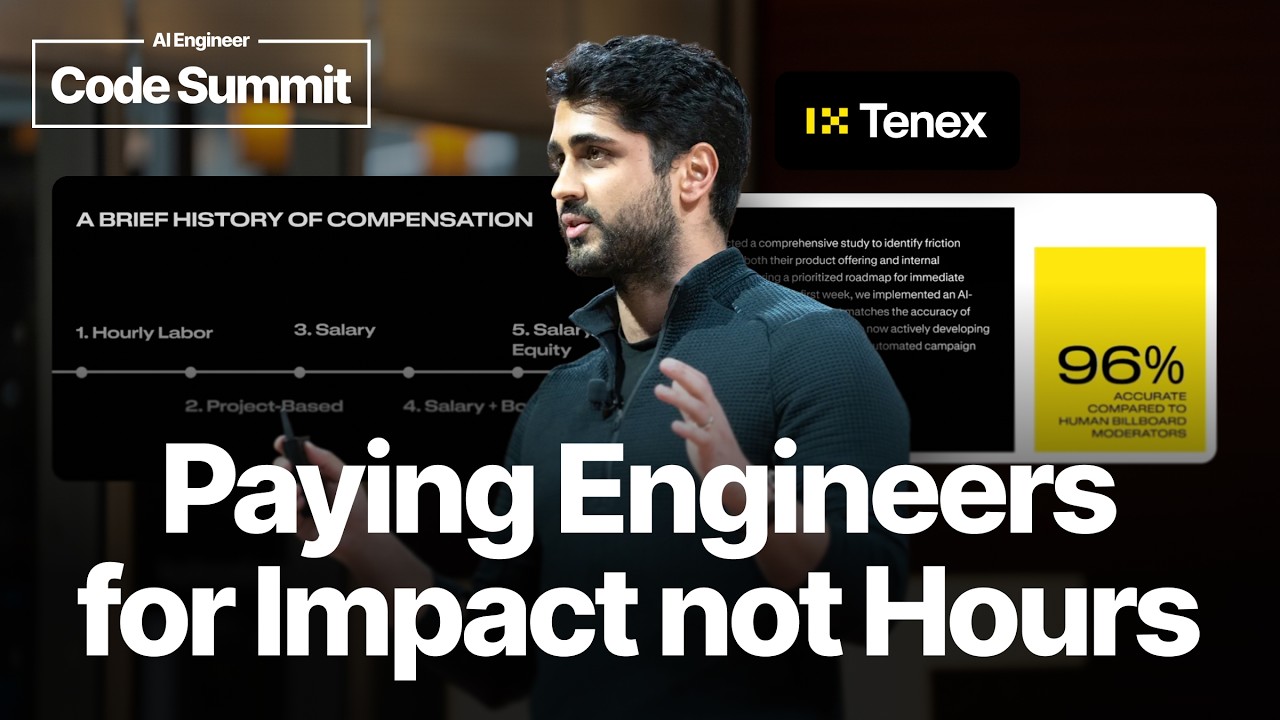
To understand the need for a new model, Hezarkhani provides an illustrative history of compensation structures, highlighting the flaws of each:
- Hourly Pay: Fundamentally broken because it incentivizes working slower, creating a direct conflict between the client and the engineer.
- Project-Based Pay: Fails because engineers, being poor estimators, will heavily pad project timelines to eliminate personal risk, leading to inflated costs for the buyer.
- Salary and Bonus: Often leads to a “9-to-5” mentality, where employees do what’s required but aren’t motivated to go above and beyond.
- Equity: A significant step forward that fueled the startup ecosystem by giving employees a share in the company’s success. However, its effectiveness has waned as engineers become more aware of the high failure rate of startups and increasingly opt for guaranteed cash over risky equity.
Hezarkhani contends that in the AI era, a new model is needed to directly reward the productivity, speed, and quality that AI tools can unlock.
How the Tenex Story Point Model Works
Tenex’s approach is built around a clear process and distinct roles with counterbalancing incentives.
- Roles:
- Strategist: A technical, client-facing role (often former PMs or engineers) responsible for defining product requirements with the client.
- AI Engineer: Responsible for creating a detailed architecture design document, which breaks the project into tickets, and then implementing the code. Most engineering time is spent on this design document.
- Process:
- The Strategist works with the client to define needs.
- The Engineer translates these needs into a comprehensive architecture design, breaking the work into tickets, each assigned a story point value.
- Once the design is approved, the engineer implements the tickets.
- Compensation:
- Engineers receive a flat base salary.
- On top of the base, they earn a bonus calculated on a per-story-point basis for every ticket that is completed and accepted. This is tallied and paid out quarterly.
Real-World Project Examples
This model has been applied to deliver complex, custom AI solutions quickly.
- Billboard Ad Moderation: Tenex built an AI model for a billboard company to automate the moderation of user-uploaded ad creatives. The system was developed in just two weeks and achieved 96% accuracy compared to human moderators, reducing costs and accelerating revenue generation.
- Retail Analytics: For a retail tech company, Tenex expanded the capabilities of their in-store low-power devices. By designing quantized models that could run in parallel, they delivered five different AI features (including heat mapping, queue detection, and theft detection) on a single device, where previously only one was possible.
Mitigating the Risks of an Outcome-Based Model
Hezarkhani addresses the obvious potential downsides of a per-story-point system:
- Inflated Story Points: This is counterbalanced by technical Strategists who scope and review the story points. Their incentive is client satisfaction, not inflated points for the engineer.
- Poor Quality from Rushing: A rigorous QA process is key. Every ticket requires approval from both internal teams (including the Strategist) and the client. The Strategist’s compensation is tied to client happiness (NRR), ensuring they enforce high quality. Engineers are only paid for accepted work.
- “Sharp-Elbowed” Culture: The ultimate solution is hiring. Hezarkhani’s principle is: “We make hiring incredibly difficult for ourselves so that everything else is easy.” The model relies on a high-trust environment. He notes that AI acts as a magnifier: “If you’re a great engineer, AI makes you great. If you’re not, it makes you sloppier.”
Conclusion: Rethink Your Incentives
The central message is that AI grants engineers superpowers, but existing compensation structures often discourage their use. By directly tying pay to delivered value, Tenex has created a system that incentivizes speed, quality, and the adoption of cutting-edge tools. Hezarkhani invites leaders to critically examine their own compensation models to unlock the full potential of their teams in the age of AI.