Riding AI Waves: Agentic AI, Open Source Tools, & AI Adoption Challenges
Grant Miller uses a surfing analogy to explore the challenges and strategies of AI adoption. He discusses the historical waves of technological innovation, the current surge in AI—from generative models to agentic systems—and offers practical lessons on navigating this rapid change by being prepared, patient, and adaptable.
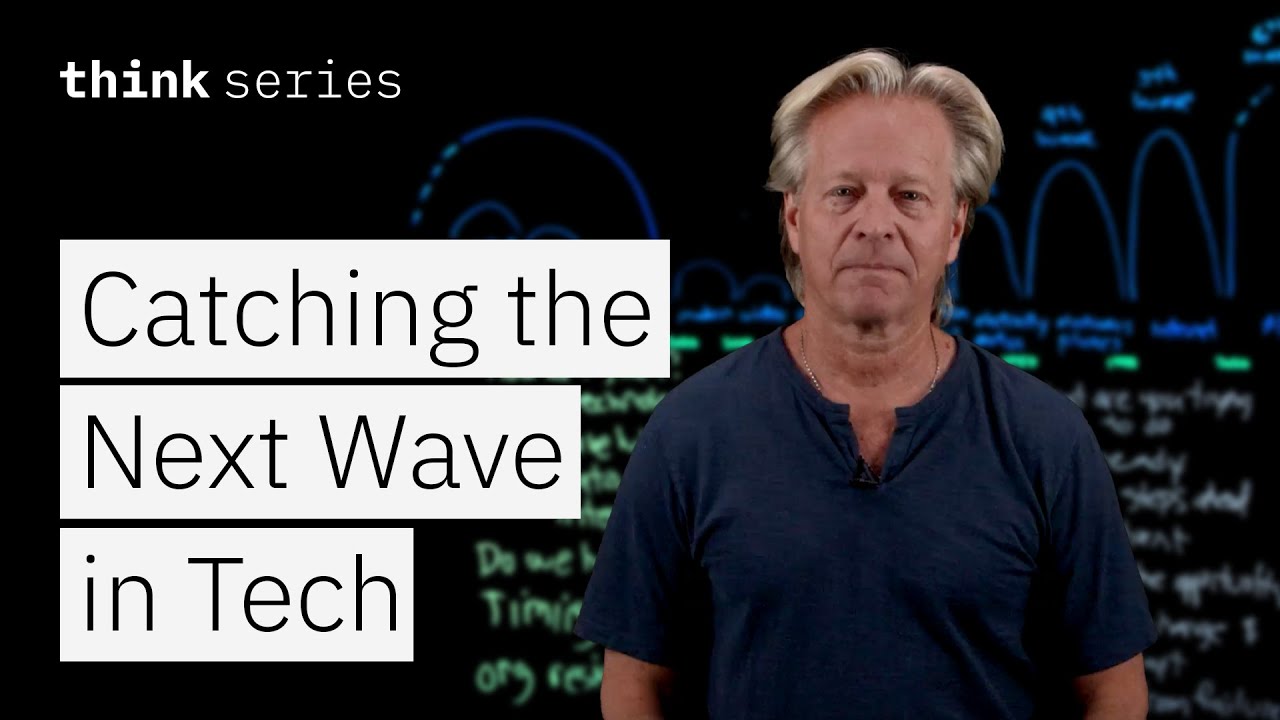
Technology, much like ocean waves, comes in successive waves of innovation and disruption. Economist Joseph Schumpeter first described these disruptive waves in 1942, a concept that has since been extended to describe six major technological shifts:
- First Wave: The Industrial Revolution (machines, waterpower).
- Second & Third Waves: Transportation and Power (trains, steam, electricity).
- Fourth Wave: Early Computing and Global Transit (electronics, computers, airplanes).
- Fifth Wave: The Internet (global connectivity, software).
- Sixth Wave: Artificial Intelligence (the current wave, beginning around 2020).
We are currently in the midst of this sixth wave, which is transforming how we work and operate by processing information at unprecedented speeds.
Deconstructing the AI Wave
The AI wave itself can be broken down into its own distinct phases:
- The Birth (1950s): The conceptual foundation laid by figures like Alan Turing. This was followed by an “AI winter” where the technology’s potential was oversold compared to its actual capabilities.
- The Rise of Machine Learning: The resurgence of AI, driven by ML and data. A key moment was IBM’s Deep Blue defeating Garry Kasparov in chess in 1996.
- The Modern Era of Deep Learning: The rise of consumer-facing AI systems like Alexa and Siri, which could respond to user queries.
- The Current Surge: The present-day explosion of AI capabilities, which can be further subdivided:
- AI That Recognizes: Systems that consume vast amounts of data to identify patterns and trends.
- AI That Chats: The emergence of Large Language Models (LLMs) with billions of parameters, enabling natural human interaction (e.g., Generative AI, RAG models).
- AI That Does: The development of agentic AI—autonomous agents that can perform tasks and execute actions on a user’s behalf.
- Physical AI: The future wave where AI moves beyond the digital realm and into physical interaction.
This surge brings a tsunami of technologies to consider, from Copilots to frameworks like LangChain and LangGraph.
Challenges in AI Adoption: The Surfing Analogy
Adopting AI presents challenges that are remarkably similar to those faced by a surfer deciding how to approach the ocean.
| AI Adoption Challenge | Surfing Analogy |
|---|---|
| Where to Start? | Which surf break should I go to? |
| Which Technologies? | Should I use an LLM, a chatbot, or an agentic framework? Build or buy? |
| Do I Have What I Need? | Is my data cleansed, prepped, and ready? Can I integrate new tools with legacy systems? |
| Do I Have the Right Skills? | Does the team have the Python and model training expertise required? |
| What is the Right Timing? | When should we implement? Rushing can be as bad as waiting too long. |
| Organizational Resistance | How do we handle the cultural pushback to slow down or pause adoption? |
Strategic Lessons from Surfing
To navigate these challenges, we can adopt a mindset inspired by experienced surfers.
-
Define Your Objective: Before anything else, ask, “What are we trying to do?” Focus on the desired business outcomes, not just the impulse to “do AI.” A surfer decides if they want to ride big waves or just cruise before they even get in the water.
-
Be Ready: Success is less about brute force (or “arm strength”) and more about being in the right position at the right time. This means having the right skills and technology ready, but also understanding the landscape to know where the “wave” will break.
-
Look Two Steps Ahead: Don’t jump on the first wave that comes. Anxiously adopting the first available technology might cause you to miss a much better, more suitable wave right behind it. Rushing can also get you “caught inside” by a bigger set, leaving you to deal with the negative consequences.
-
Be Patient, Then Seize the Opportunity: Wait for the right wave to come. Once you have a clear plan, the right skills, and the right timing, commit fully. In business, this means taking calculated risks when you are prepared, which can help overcome organizational resistance.
-
Embrace Change and Adapt: Every wave is different. Likewise, every new AI technology or model will have its own nuances. You must be in a constant state of adaptation, ready to change your approach as the technology evolves.
-
Learn from Failure: Surfing involves a lot of falling and learning from mistakes. In AI, not every implementation will be perfect. Embrace failures as learning opportunities, adapt your strategy, and keep moving forward, because the waves of technology will keep coming.
Finally, in both surfing and AI, it’s crucial to foster a supportive community. This is a once-in-a-generation technological wave; it will be intense and challenging. Cheering on others’ successes helps lift the entire ecosystem.