Why Businesses Are Rejecting the AI They’ve Asked For ft Agency CEO Elias Torres
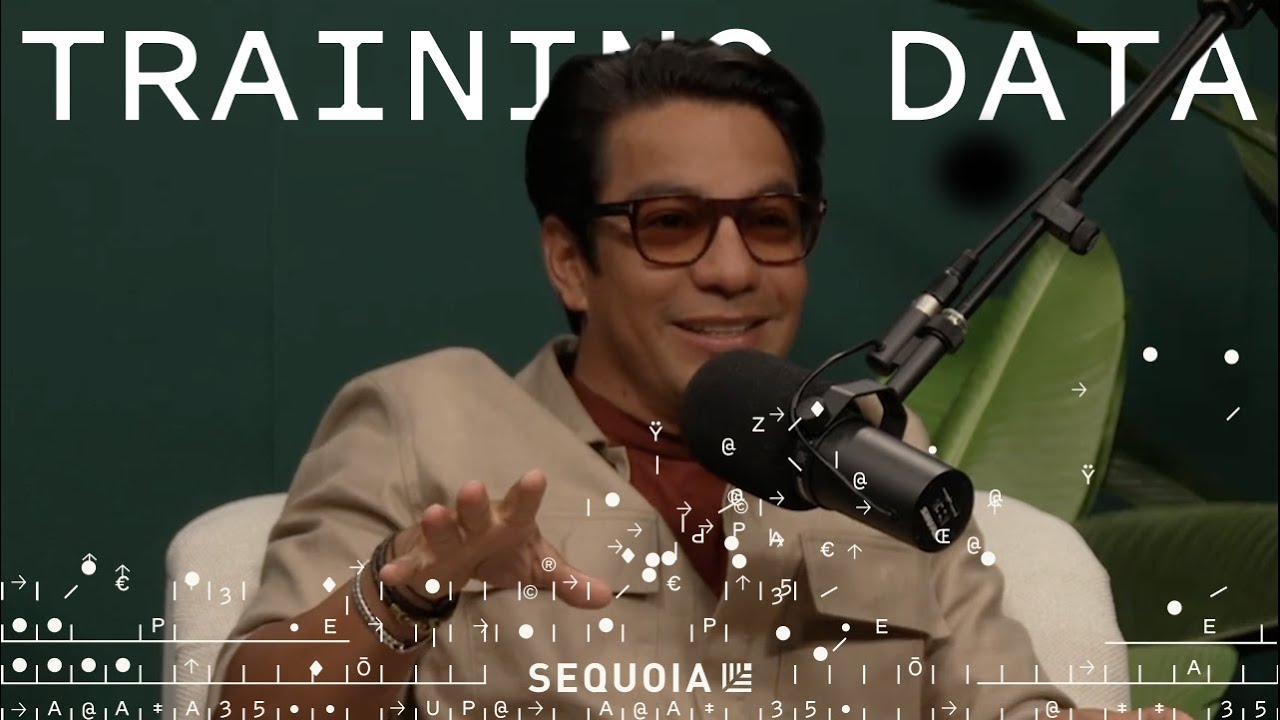
Elias Torres, co-founder of Drift and Agency, discusses the prevalent expectation mismatch in AI adoption, where businesses demand AI but reject it due to "imperfection anxiety." Drawing from his experiences scaling HubSpot and Drift, he explains why human-led customer experience is fundamentally unscalable and details how his new venture, Agency, is building autonomous, AI-first solutions to solve deep, back-end customer challenges. His goal is to "deprogram the entire business world" from inefficient, human-dependent processes.
The AI Expectation Mismatch: Perfection vs. Progress
Elias Torres opens with a critical observation of the current AI landscape: businesses are caught in a paradox. While there is a universal demand for AI, its adoption is hindered by a rejection of its inherent imperfections. “Everybody’s asking for AI… and when you come and bring it to them, they just reject it.” He attributes this to an “expectation mismatch.” We are accustomed to pre-AI technology that performed narrow, deterministic tasks with perfect accuracy, like looking up a string in a database. In contrast, modern AI offers broad functionality with imperfect accuracy, a transition people struggle with.
Torres advocates for a “glass half full” perspective. If an AI system can automate 20-30% of a task that was previously manual, it’s a significant win. However, many businesses adopt an all-or-nothing stance: “If it’s not 100% perfect, I’d rather have none.” This pursuit of perfection, he argues, is a dangerous mindset that paralyzes progress. He points to users spending 20 minutes editing a salutation on an AI-generated email, a delay that epitomizes why human-in-the-loop processes fail to scale. The solution requires a cultural shift where both senders and receivers become more lenient and forgiving of minor AI errors.
Lessons from Scaling HubSpot and Drift
Torres’s perspective is shaped by his extensive experience building and scaling tech companies. Joining HubSpot, he faced the monumental task of rebuilding a product that didn’t work, a team that didn’t function, and customer trust that was broken. He went from serving 20 customers at his startup, Performable, to 5,000 overnight. This forced him to learn how to scale not just technology, but also himself as a leader. A key lesson was in hiring, where he prioritized “hunger” and “grit” over credentials, leading him to hire exceptional future leaders like the founders of Klaviyo.
His next venture, Drift, was born from a key learning at HubSpot: the importance of “time to value.” After two years of pivoting, Torres and his co-founder David Cancel returned to what they knew best—customer engagement. Drift introduced a chatbot to replace static lead forms, aiming to reduce friction and connect sales reps with prospects faster. While successful, Torres reflects that the product was ultimately “shallow.” It solved only the initial step of the customer journey, leading to a fragmented experience. Customers would return to the website or app and find the system had no memory of previous interactions. This highlighted a critical pain point: the inability to maintain a persistent, context-aware understanding of the customer.
The biggest lesson from Drift was the failure of scaling through headcount. As the company grew to hundreds of employees, the focus shifted from the customer and product to internal management—promotions, recruiting, and town halls. “That took our eyes from the ball of the customer and the product,” he admits. This intimate pain of being unable to maintain personal connection and knowledge across thousands of customers became the foundational problem he wanted to solve next.
The Genesis and Vision of Agency
The launch of ChatGPT during a post-Drift sabbatical was the catalyst for Torres’s return. He felt an obligation to re-enter the arena, equipped with years of experience, a robust network, and a deep understanding of the problem. “I’m not just going to sit here when all these people that don’t know anything are like building AI startups,” he resolved.
Agency was founded to solve the core, universal business problem: delivering a great customer experience at scale. The traditional solution—adding more humans—is fundamentally flawed. Agency’s mission is to build AI-led customer experience, creating autonomous systems that operate without a human in every step.
Unlike the wave of AI SDR companies focused on the front-end, Agency took a contrarian “zag,” focusing on the back-end of the business where Torres believes the real pain and value reside. The goal is not to build another tool that creates more work for humans, like a better dashboard or a smarter chatbox. “If you require a human to go type into that chat box, you’re dead on arrival,” he states. The vision is to build systems you can instruct once to perform a task infinitely, moving beyond human-assist tools to true automation.
Deprogramming the Business World
The primary challenge for Agency is not technology, but change management. “I have to deprogram the entire business world,” Torres explains. Businesses are accustomed to human-driven workflows, and their instinct is to ask AI for familiar outputs like dashboards. Torres pushes back, asking “what do you want to do with the dashboard?” He traces the workflow to its logical conclusion: if the goal is to email a customer about a renewal, why can’t the AI just email the customer directly?
This requires a first-principles approach to deconstructing business processes and rebuilding them with AI at the core. It’s a journey from AI-generated insights to AI-driven action. While today’s AI is still “not that smart” and requires significant prompting to perform even one workflow consistently, the ultimate goal is to enable businesses to deliver a true one-to-one customer relationship at scale. Torres is optimistic that AI will free humans from mundane work to focus on what they do best: “taking initiative, making decisions, choosing a purpose… and go serve them.”