Brian Chesky's secret mentor who scaled Airbnb (after dying 9 times & building a hotel empire)
Chip Conley, the founder of Joie de Vivre hotels and former Head of Global Hospitality and Strategy at Airbnb, shares his insights on intergenerational collaboration, thriving in tech as an older professional, and how human wisdom will become more valuable in the age of AI. He discusses his experience working with Brian Chesky, tactics for navigating "founder mode," and the frameworks he developed for building culture and finding meaning, which led him to create the Modern Elder Academy.
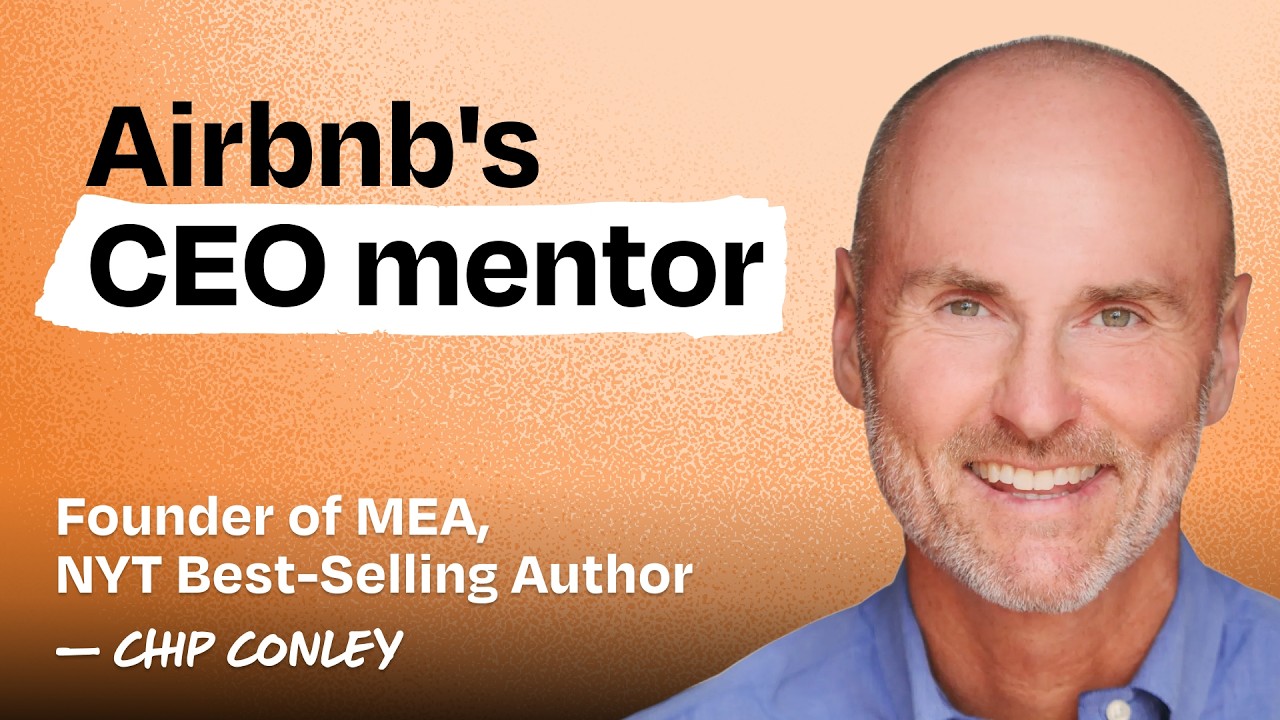
In a conversation with Lenny Rachitsky, Chip Conley, founder of Joie de Vivre hotels and a key leader at Airbnb, delves into his career, offering frameworks for leadership, navigating midlife, and the increasing importance of human wisdom in a world being reshaped by artificial intelligence.
The “Modern Elder” at Airbnb
Conley joined Airbnb at 52, when the average employee age was 26. He was hired to mentor CEO Brian Chesky but was also his direct report, creating a unique dynamic. “I had to be both wise and curious and often the dumbest person in the room,” Conley recalls. This required humility, especially when grappling with tech-industry vernacular.
One of his most significant initial contributions was questioning the definition of “product.” While the team focused on optimizing the app, Conley pushed them to recognize that the true product was the hosts and their homes. This perspective shift highlighted the value of bringing in non-tech, experienced voices. He served as a bridge to the older host community, advocating for their needs, such as resisting a push to make the platform mobile-only, which would have alienated many hosts.
Working with a “Founder in Mode”
Conley provides a candid look at working for Brian Chesky, a quintessential founder driven by a singular vision. While he admired Chesky’s curiosity and growth mindset, the experience came with challenges:
- Pace and Assumption: Chesky assumed everyone shared his workaholic, one-dimensional focus. “His point of view is like, hey, we’re having a meeting in the office tonight at 10:00. You know, be there.”
- The Visionary’s Burden: Inspired by Steve Jobs, Chesky often felt he knew best, which could be demotivating for teams who felt their work was constantly under a microscope. Product meetings with Brian were a source of extreme stress.
- Unreasonable Goals: He often set seemingly impossible goals, believing it would drive exceptional results. However, this frequently led to stress and a sense of failure when teams inevitably fell short.
To be effective in such an environment, Conley recommends two key tactics:
- Establish Alignment First: Start meetings by clearly defining the intention and what success looks like. This creates a shared foundation to return to when the conversation goes off track.
- Build Credibility: Gain deep, first-hand knowledge of the customer. Conley’s world tour to meet hosts gave him credibility that data alone couldn’t provide, allowing his voice to be heard.
Intergenerational Collaboration and the Value of Age
Conley champions the power of intergenerational teams. He contrasts the “fluid intelligence” of younger brains (fast, focused, linear) with the “crystallized intelligence” of older brains (holistic, systemic, connecting the dots). When combined, this diversity is “brilliant.” Older professionals often excel at “invisible productivity”—elevating the talent around them and acting as a confidant who gives others confidence.
For older professionals in tech, Conley advises:
- Embody Passionate Curiosity: “People won’t notice your wrinkles as much as they’ll notice your energy.” Your engagement and positivity are more defining than your age.
- Be a Mentor and an Intern: Adopt a mindset of being both a teacher and a learner, showing respect for the skills of younger colleagues.
- Focus on Generalist Skills: As AI handles specialized, technical tasks, the ability to think broadly, solve complex problems, and connect disparate ideas becomes more valuable.
AI, Wisdom, and the Future of Work
Conley posits that AI will elevate the importance of uniquely human skills. “If what AI cannot do is the human wisdom piece, artificial intelligence and human wisdom might be the balance beams here.” As AI automates technical skills, qualities like emotional intelligence, pattern recognition, and wisdom will become key differentiators. This could create new opportunities for experienced workers who have cultivated these attributes over a lifetime.
He personally uses AI as a creative partner, leveraging ChatGPT to generate first drafts for his daily blog, especially when inspiration is low.
Frameworks for Life and Business
Throughout his career, Conley has developed several powerful frameworks:
-
The Peak Model (Maslow’s Hierarchy for Business):
- For Employees: The needs are Money (base), Recognition (middle), and Meaning (top).
- For Customers: The needs are meeting Expectations (base), meeting Desires (middle), and meeting Unrecognized Needs (top). He cites Airbnb’s shift from a “home-sharing” company to a “belonging anywhere” company as an example of fulfilling an unrecognized need.
-
Emotional Equations:
Anxiety = Uncertainty x Powerlessness: To manage anxiety, focus on what you know and what you can control. He suggests an “anxiety balance sheet” to compartmentalize worries.Despair = Suffering - Meaning: Suffering is a constant, but you can reduce despair by increasing meaning in your life.
The Midlife Chrysalis and the Modern Elder Academy
A near-death experience and burnout in his late 40s led Conley to re-evaluate his life, sell his company, and eventually join Airbnb. This journey inspired him to found the Modern Elder Academy (MEA), the world’s first “midlife wisdom school.”
He reframes midlife not as a crisis but as a “chrysalis”—a transitional phase for growth and metamorphosis. MEA’s curriculum is built on key insights:
- The U-Curve of Happiness: Global data shows life satisfaction often bottoms out in the late 40s before rising steadily through one’s 50s, 60s, and beyond.
- A Pro-Aging Mindset: Citing research from Yale’s Becca Levy, Conley notes that adopting a positive view of aging can add an average of 7.5 years to one’s life.
- Anticipated Regret as Wisdom: He encourages asking, “10 years from now, what will you regret if you don’t learn it or do it now?” This question acts as a catalyst for action and learning.