DeepMind's Pushmeet Kohli on AI's Scientific Revolution
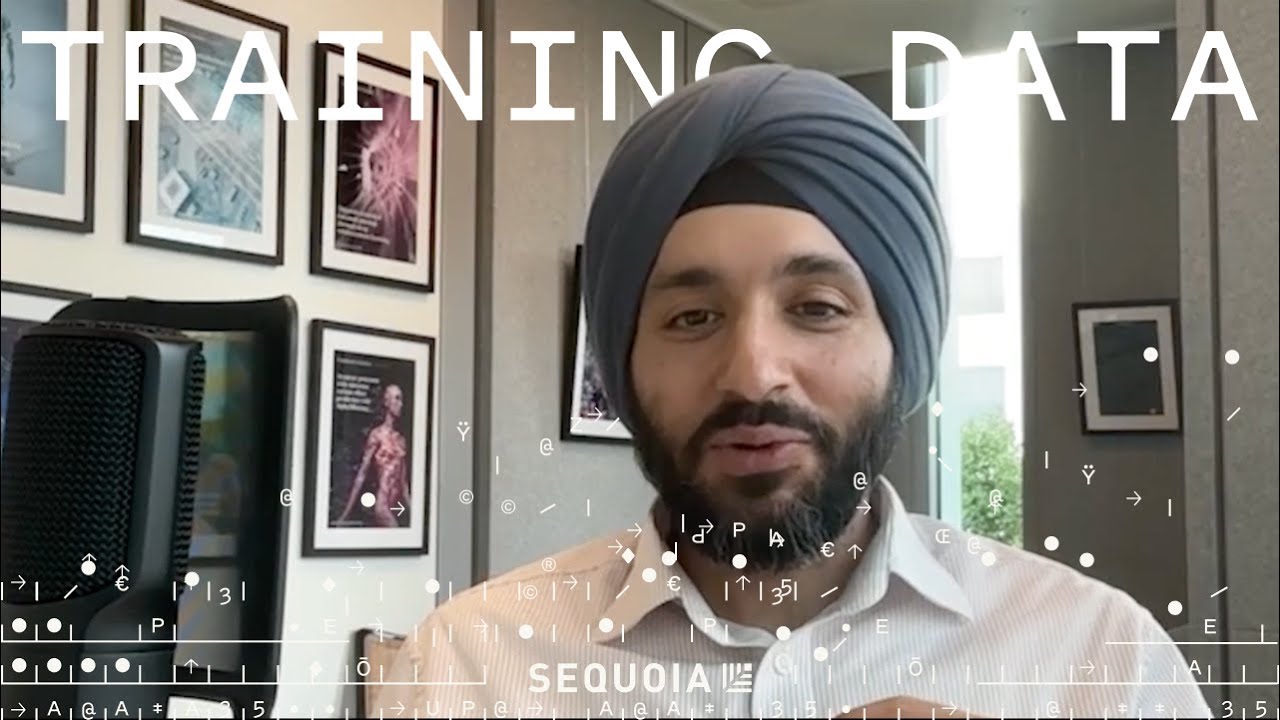
Pushmeet Kohli, head of AI for Science at DeepMind, discusses AlphaEvolve, an AI system that uses Large Language Models (LLMs) coupled with evolutionary search to discover novel, human-interpretable algorithms. He explains the architecture, from its predecessor FunSearch to the multi-agent "Co-scientist" system, and details breakthroughs in solving decades-old math problems and optimizing real-world systems like data center scheduling and chip design.
A New Paradigm for Algorithmic Discovery
A new system, AlphaEvolve, represents a significant milestone in AI-driven scientific discovery. It demonstrates that a Large Language Model (LLM) coupled with an evolutionary search “harness” can discover entirely new algorithms and prove mathematical results that have eluded researchers for decades.
This approach addresses a key challenge in applying AI to practical problems: interpretability. While a typical reinforcement learning agent might produce a high-performing but opaque neural network policy, AlphaEvolve generates code that engineers can read, understand, debug, and trust. This was a primary motivation for its development, particularly for complex, high-impact problems like scheduling jobs in a data center.
What engineers would really prefer is instead of giving them a neural network you gave them a piece of code that they can interpret and they can run and this was essentially the motivation… Can we come up with an agent which can search in the space of programs and come up with a program that solves this hard problem?
The Architecture: From FunSearch to AlphaEvolve
The core architecture consists of two main components: an LLM that acts as a generator of candidate algorithms and an evaluator that assesses how good each proposal is. This creates a powerful feedback loop for discovering novel solutions.
- FunSearch: The first iteration of this concept, FunSearch, successfully discovered new algorithms for long-standing mathematical challenges like the capset problem. However, it was limited as it required a human researcher to provide a code template that the LLM would then complete.
- AlphaEvolve: This system removes the template restriction. It can generate and optimize entire algorithms, searching through vast spaces of very large pieces of code. It is also more efficient, requiring fewer function calls to the evaluator to discover high-quality solutions.
- The Role of Gemini: The increasing sophistication of models like Gemini Pro and Gemini Flash is crucial. Gemini’s strong understanding of code allows it to generate more semantically meaningful and syntactically correct proposals, improving the search effectiveness. The speed of Gemini Flash is particularly important for rapidly generating and evaluating a high volume of candidate algorithms.
A New Scientific Method
The generator-evaluator architecture mirrors the scientific method of generating a hypothesis and then testing it. This concept is extended in a related multi-agent system called “Co-scientist,” where different instances of Gemini are prompted to play various roles in the scientific process: hypothesis generator, critic, reviewer, and editor. This collaborative setup, working over extended periods, is able to produce insights and solutions that significantly surpass the capabilities of a single model instance.
The intuition is that the system’s ability to evaluate and recognize a brilliant idea (even one buried in the “tail of the distribution” of proposals) is stronger than its initial ability to generate that idea. This is analogous to the P vs. NP problem in computer science, where verifying a solution is often much easier than finding it.
Key Breakthroughs and Applications
AlphaEvolve’s generality allows it to operate across different languages—from C++ and Python to Verilog for chip design—and a wide range of tasks. The only prerequisite is a reliable, programmatic function evaluator.
- Mathematics as a Proving Ground: Math provides a precise and unambiguous environment for benchmarking. Precursor systems like AlphaTensor improved upon the 50-year-old Strassen algorithm for matrix multiplication. With FunSearch, collaboration with mathematicians revealed previously unrecognized symmetries in the capset problem that the AI had discovered and exploited.
- Data Center Optimization: AlphaEvolve generated scheduling heuristics that outperformed solutions designed by human experts, providing both improved performance and full interpretability.
- Chip Design: The system can search for optimal chip designs in Verilog, a hardware description language.
The Future of Human-AI Collaboration
The goal of these AI systems is not to replace human scientists but to augment them, freeing them to work on higher-level problems. The story of AlphaFold’s impact on biology serves as a powerful analogy. By solving the protein folding problem, it didn’t eliminate the work of structural biologists; instead, it accelerated, advanced, and democratized the field. Scientists who once spent years determining a single protein’s structure can now ask the next set of questions about drug design and disease treatment.
Similarly, as AlphaEvolve handles the “how” of algorithmic optimization, human experts can focus on the “what”—defining more sophisticated goals for systems, such as making a chip not only efficient but also more fault-tolerant or less expensive to manufacture. The future of science will be defined by human-AI teams working together to achieve breakthroughs that were previously unimaginable.