Tokenless

Interactive discovery

Explore the topic map

Follow the connections between themes, people, and ideas across the Tokenless archive in an interactive topic modeling map.

Machine Learning

View All
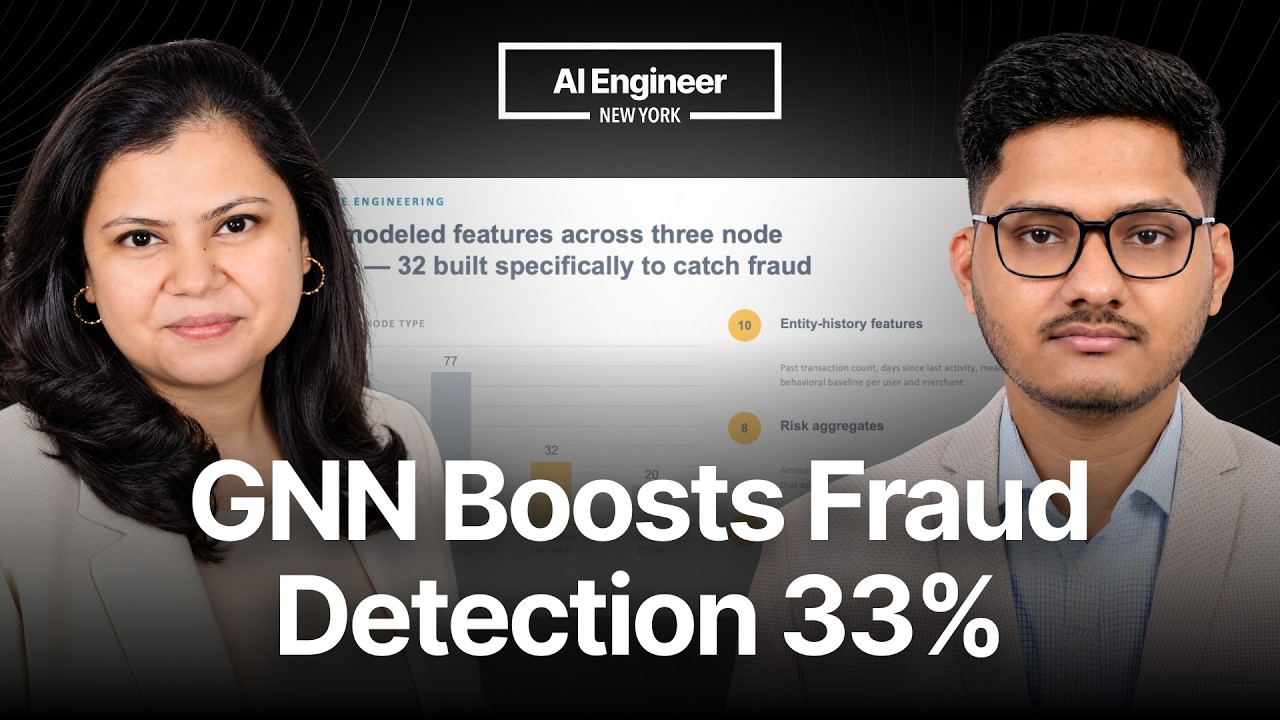
Judge a Transaction by the Company It Keeps — Somya Rai & MD Sharique, EXL

Judge a Transaction by the Company It Keeps — Somya Rai & MD Sharique, EXL

EXL developed an advanced fraud detection system that augments XGBoost with Graph Neural Network (GNN) embeddings. Traditional tabular models struggle to capture fraud signals residing in transaction neighborhoods. The system's innovative design includes meticulous sampling strategies, disjoint monthly graph construction for leakage control, and a GraphSAGE architecture that aggregates mean, max, and standard deviation of neighbor features to detect subtle fraud patterns. Emphasizing explainability for regulatory compliance and analyst trust, it also features a highly optimized serving architecture achieving 3ms P99 latency, pivoting to edge prediction to reduce cache footprint from 60GB to 2-3GB. This led to a 27-33% relative lift in true positive rates and a projected $65 million incremental fraud capture.
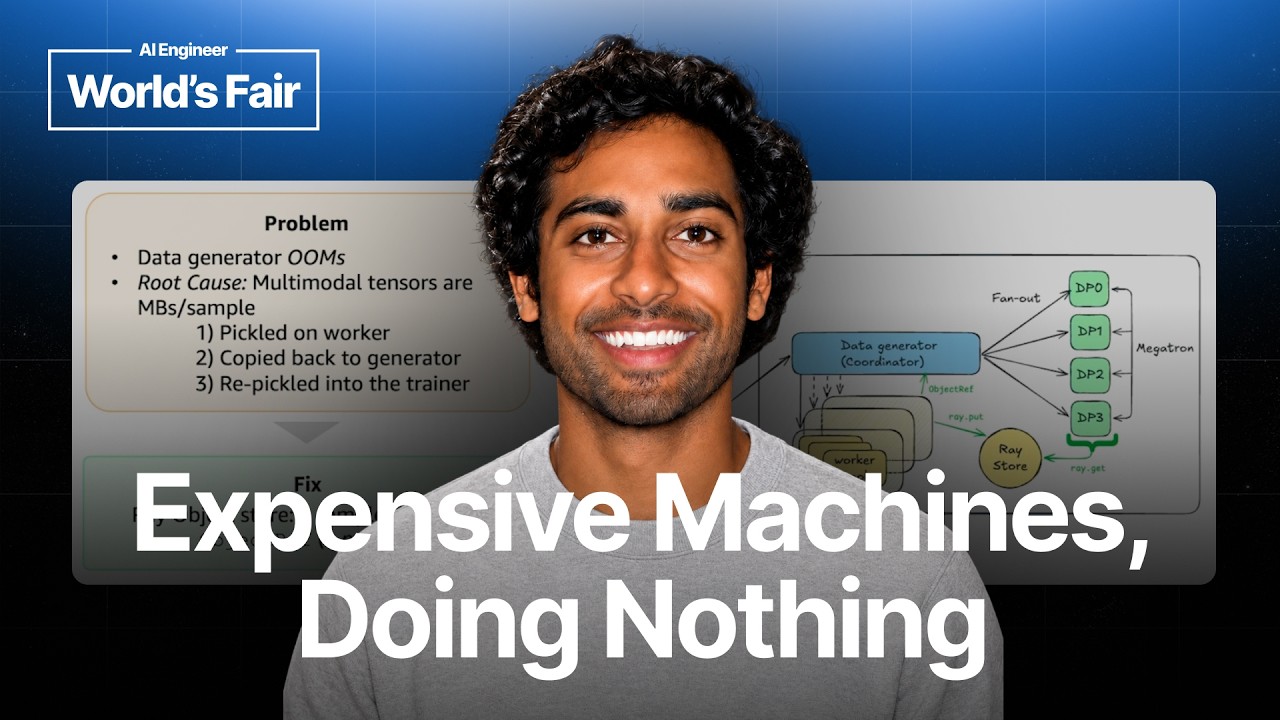

From 15% to 90% GPU Utilization: Fix the Data Pipeline, Not the Model

From 15% to 90% GPU Utilization: Fix the Data Pipeline, Not the Model

Tarun Sunkaraneni from Amazon AGI shows how a multimodal SFT pipeline that spent about 85% of its time waiting on data was brought to roughly 90% GPU utilization. He walks through concurrency with asyncio and Ray actors, prefetching, zero-copy transfer via Ray's object store, and a network-card bottleneck that appears only at scale, and argues that the hardest part of training throughput is often keeping GPUs fed rather than optimizing the model.

Small Models, Big Results: Training a Finance Agent for Under $500 — Charles Dickens, Snorkel AI

Small Models, Big Results: Training a Finance Agent for Under $500 — Charles Dickens, Snorkel AI

Snorkel AI and UC Berkeley's Sky Computing Lab show that a 4B Qwen3 model, trained with reinforcement learning for under $500 using the rLLM framework, beats its 235B sibling on expert-validated financial question answering built from SEC 10-K filings. The talk covers the FinQA dataset construction and verification, common failure modes of frontier models, transfer to multi-table and general tool-use tasks, and ablations showing that simple data and binary rewards outperform more elaborate setups, since the real bottleneck is disciplined tool use rather than reasoning depth.

Artificial Intelligence

View All
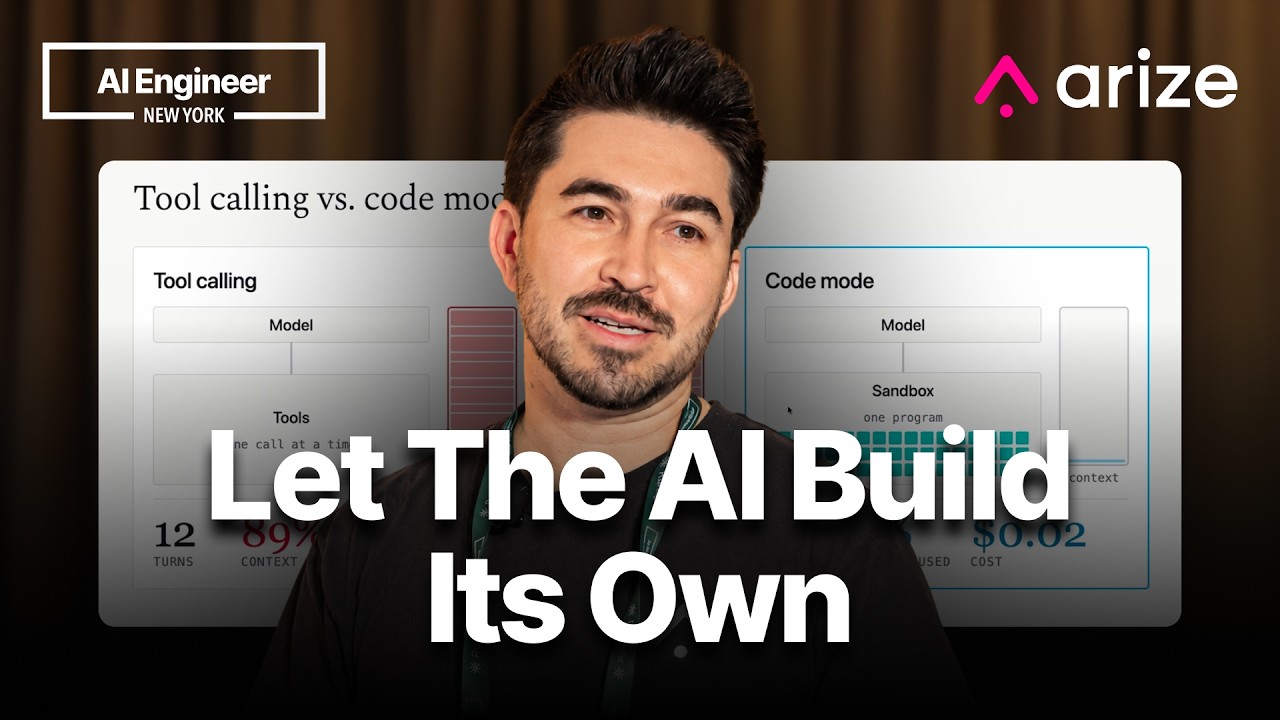
Stop Giving Your Agent Tools. Give It a Sandbox - Mikyo King, Arize AI

Stop Giving Your Agent Tools. Give It a Sandbox - Mikyo King, Arize AI

Mikyo King, head of open source at Arize AI, explains code mode, an agent architecture where the model searches for tools and composes them in a sandboxed programming environment instead of loading large tool catalogs into context. He covers why it works, how Arize built it into Phoenix with Bash, Python, SQL, and UI control, its hidden costs around secrets, permissions, durability, and double sandboxing, and Harbor evals showing 43% fewer tokens and 31% lower cost.

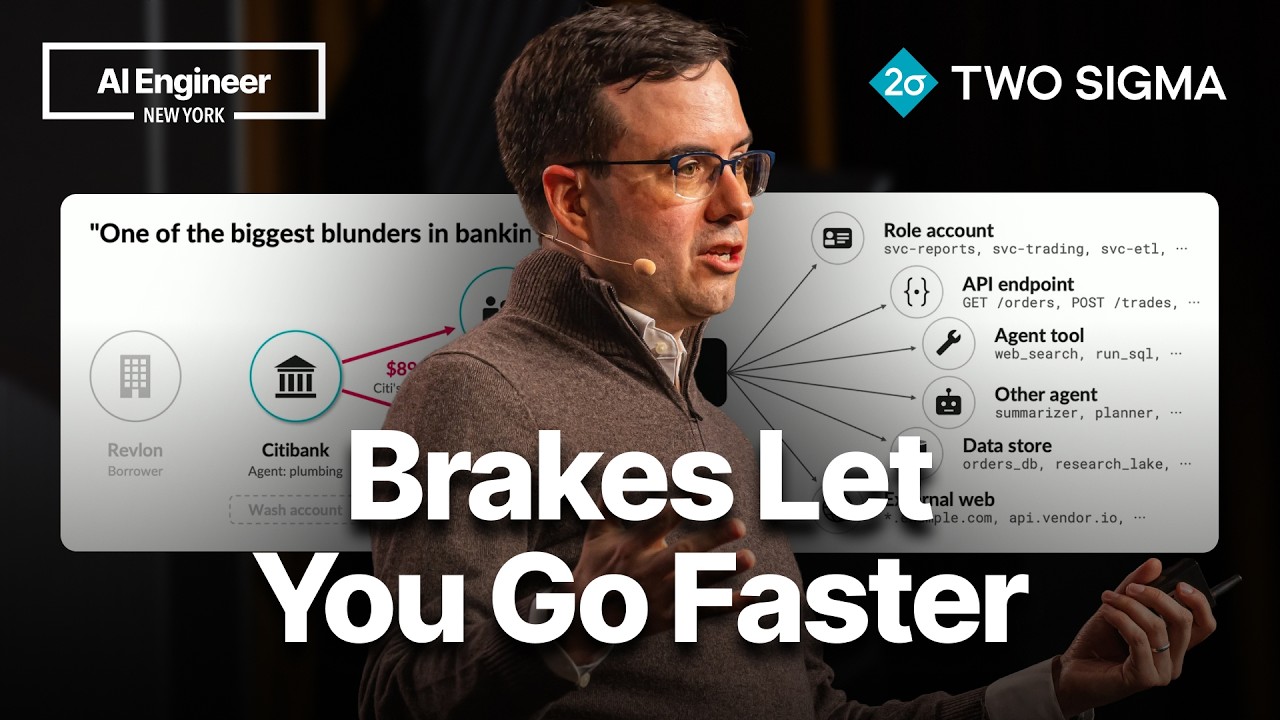
What a $900M Bank Error Teaches Us About AI Agents - John Feminella, Two Sigma

What a $900M Bank Error Teaches Us About AI Agents - John Feminella, Two Sigma

John Feminella of Two Sigma uses a 2020 Citibank payment error to show how AI agents can be given real autonomy through five composable controls: an agent registry, risk-based review, purpose-scoped tool access, shared evals, and classifiers that send humans only the approvals that matter.

The AI School Kids Love More Than Vacation | Alpha School's Joe Liemandt

The AI School Kids Love More Than Vacation | Alpha School's Joe Liemandt

Alpha School principal Joe Liemandt and Horowitz Andreessen Academy co-founder Gagan Biyani discuss how AI-powered learning could compress core academics into two hours a day, freeing the rest of school for teamwork, entrepreneurship, and real-world building, and what that model means for K-12 families, higher education, and the next generation of builders.

Technology

View All
Can Your AI Heat My House?

Can Your AI Heat My House?

A wide-ranging conversation on how AI inference is pushing cloud infrastructure, data centers, and hardware supply chains against physical limits, covering the rise of alt clouds, rack density and cooling, hardware lifecycles and circularity, talent shortages, heat reuse for communities, and what engineering leaders can do about resource-aware software.

What will computer chips look like in 2045?

What will computer chips look like in 2045?

Intel's leadership walks through how advanced process nodes are brought to volume, from yield learning and the lessons of 10nm to the shift from planar transistors to gate-all-around, High-NA EUV, backside power, and CFET. The discussion widens to the chip-to-chip bottleneck that hybrid bonding targets, the supply limits on EUV tooling as AI compute demand grows, and the economics that make foundry scale decisive.

Former Intel CEO: Why This is the Best Time to Build Hardware

Former Intel CEO: Why This is the Best Time to Build Hardware

Pat Gelsinger joins a16z's Raghu Raghuram and Guido Appenzeller to discuss how AI is reshaping chip design, why design speed alone will not fix semiconductor bottlenecks, and why power and energy capacity may ultimately limit AI growth. The conversation covers HBM and memory innovation, stacking limits, the shift from copper to optics, consolidation among AI chip startups, and what a VMware for AI agents might look like.


Recent Post

AI Apps in a Flash: Ship to GPUs Without Docker — Dean Quiñanola, Runpod

AI Apps in a Flash: Ship to GPUs Without Docker — Dean Quiñanola, Runpod

Dean Quiñanola, a staff engineer at Runpod, presents Runpod Flash, a way to run Python on cloud GPUs as if they were local, with no Dockerfiles, image builds, or registry pushes. The talk covers serverless and load-balanced endpoints, endpoint-to-endpoint calls, network volumes with warm caching, and live serverless iteration. A live demo moves from GPU detection to text and image generation and then deploys to production with a single command.

Building Self-Learning Loops for Your Agent — Fuad Ali, Arize AI

Building Self-Learning Loops for Your Agent — Fuad Ali, Arize AI

Fuad Ali demonstrates how a production failure in a shopping agent, a price filter that ignores budget limits, can become a closed improvement loop. Arize Signal and Arize Skills detect and investigate the failure from traces and code, harness-based judges assess outcomes with tool access and external context, and agent experiments validate the proposed fix against real failing traces before it ships.

Can Your Agent Hear You Now? Building Live Voice Agents with Gemini — Thor Schaeff

Can Your Agent Hear You Now? Building Live Voice Agents with Gemini — Thor Schaeff

A live tour of Gemini's real-time and generative media stack: stateful image chaining with the Interactions API, near real-time speech translation with Gemini 3.5 Live Translate, a tool-calling AI radio DJ powered by Lyria 3, and a deep look at how the native-audio Live API works over WebSockets, including its 90-language support, barge-in and grounding.

Why every company now needs to think and operate like a lab team | Josh Woodward (VP Google Labs)

Why every company now needs to think and operate like a lab team | Josh Woodward (VP Google Labs)

Josh Woodward, head of Google Labs, the Gemini app, and AI Studio, explains why every company needs to operate like a labs team in the AI era. He covers where great ideas really come from, the almost-possible framework, how to recognize product-market fit by watching people's eyes, when to kill an idea, the skills rising in value such as unlearning rate and explosive endurance, why roles are not collapsing into a single builder, and how to structure an internal lab that graduates ideas without being crowded out.

Building AI Agents with Real-Time Web Data — Yohan Raju, Bright Data

Building AI Agents with Real-Time Web Data — Yohan Raju, Bright Data

Yohan Raju of Bright Data shows how an AI agent can combine a live Amazon listing with Reddit sentiment to produce a purchase recommendation, arguing that agents need fresh, structured web data rather than relying only on pre-trained knowledge or pre-indexed retrieval.

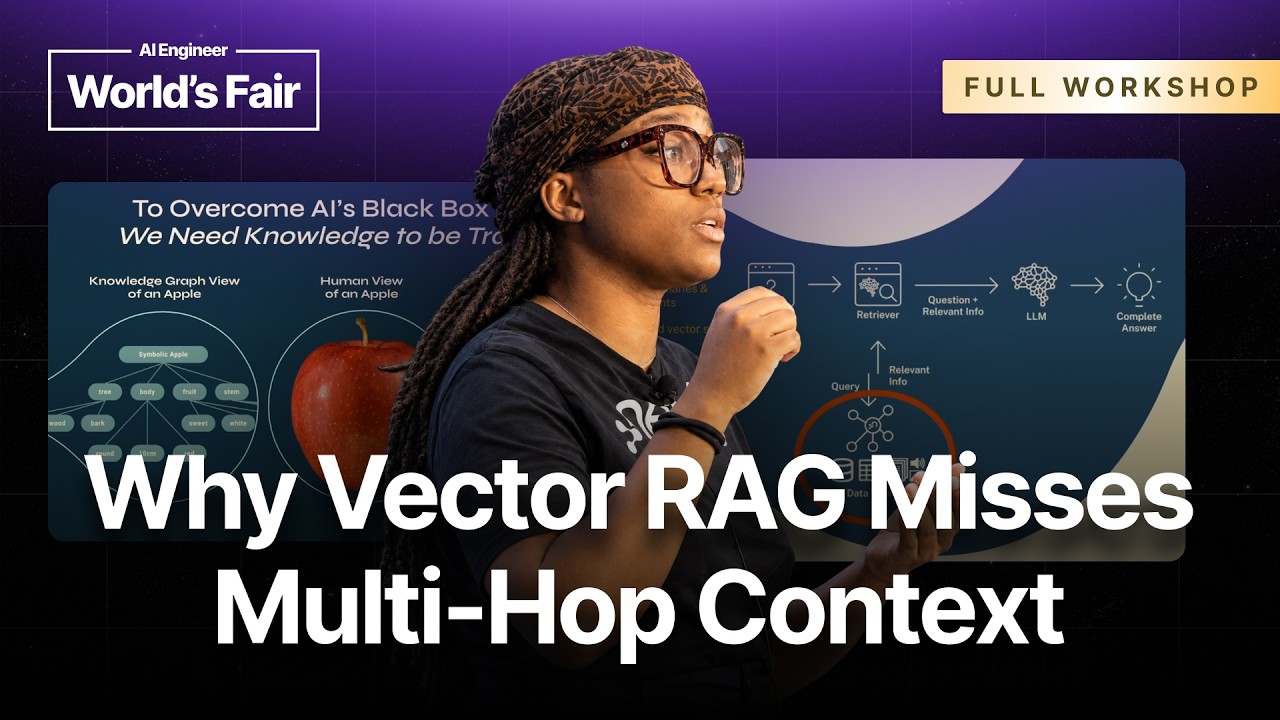
RAG Needs a Map: Using GraphRAG to Retrieve Connected Context — Nyah Macklin, Neo4j

RAG Needs a Map: Using GraphRAG to Retrieve Connected Context — Nyah Macklin, Neo4j

A hands-on GraphRAG workshop from Neo4j showing how combining vector search with a knowledge graph gives an agent connected context, multi-hop traversal, and explainable answers. It covers the difference between semantic similarity and relationships, LLM-driven entity and relationship extraction under a fixed schema, building an Aura database and Python pipeline, and configuring an Aura agent with similarity search and text-to-Cypher, with a closing check that shows why visible query evidence matters.

Stay In The Loop! Subscribe to Our Newsletter.

Get updates straight to your inbox. No spam, just useful content.