Ai

The Recommendation Engine for Commodity Traders — Anekha Sokhal, Moshi

The Recommendation Engine for Commodity Traders — Anekha Sokhal, Moshi

Anekha Sokhal, founder and CEO of Moshi, explains how her background in energy derivatives trading and machine learning research led to a real-time intelligence platform for financial traders. The discussion covers how Moshi structures public, alternative, and private data into a connected graph, why recommendation and UI design matter as much as modeling, how trusted sources and conflicting reports are handled, and the pressure on AI engineers to become the whole team.

AI Can Now Predict 85%+ of What You’ll Do Next | Simile Co-founder & CEO, Joon Sung Park

AI Can Now Predict 85%+ of What You’ll Do Next | Simile Co-founder & CEO, Joon Sung Park

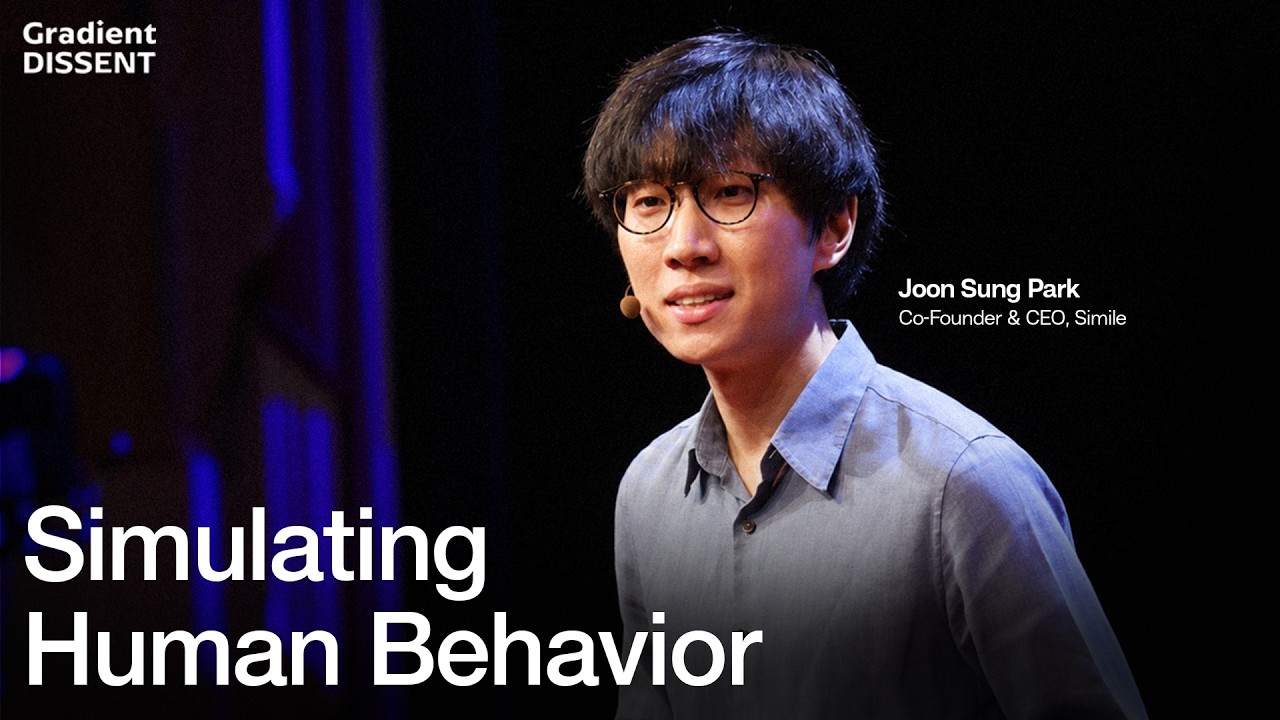
Joon Sung Park, creator of generative agents and CEO of Simile, explains how foundation models trained on real human behavior can simulate people, from a 25-agent town that organized its own Valentine's Day party to 85%-plus accurate predictions of how real participants respond in surveys, behavioral games, and randomized trials.

The New Apex Predator: CrowdStrike CEO George Kurtz on Adversaries Armed With AI Agents

The New Apex Predator: CrowdStrike CEO George Kurtz on Adversaries Armed With AI Agents

George Kurtz, CEO of CrowdStrike, discusses how agentic AI has flattened the adversary pyramid, putting nation-state-grade tradecraft in the hands of low-skill attackers, and why open-weight models have become the tip of the spear. He covers CrowdStrike's Safe Mind lab, built with NVIDIA around red and blue security models trained on fifteen years of telemetry, the lessons from the Hugging Face incident, the case for defense dominance, and why he sees AI as a net creator of opportunity.

1,368 AI Failures and What They Teach About Evals — Vishal Srivastava & Tanmay Sah, New York Life

1,368 AI Failures and What They Teach About Evals — Vishal Srivastava & Tanmay Sah, New York Life

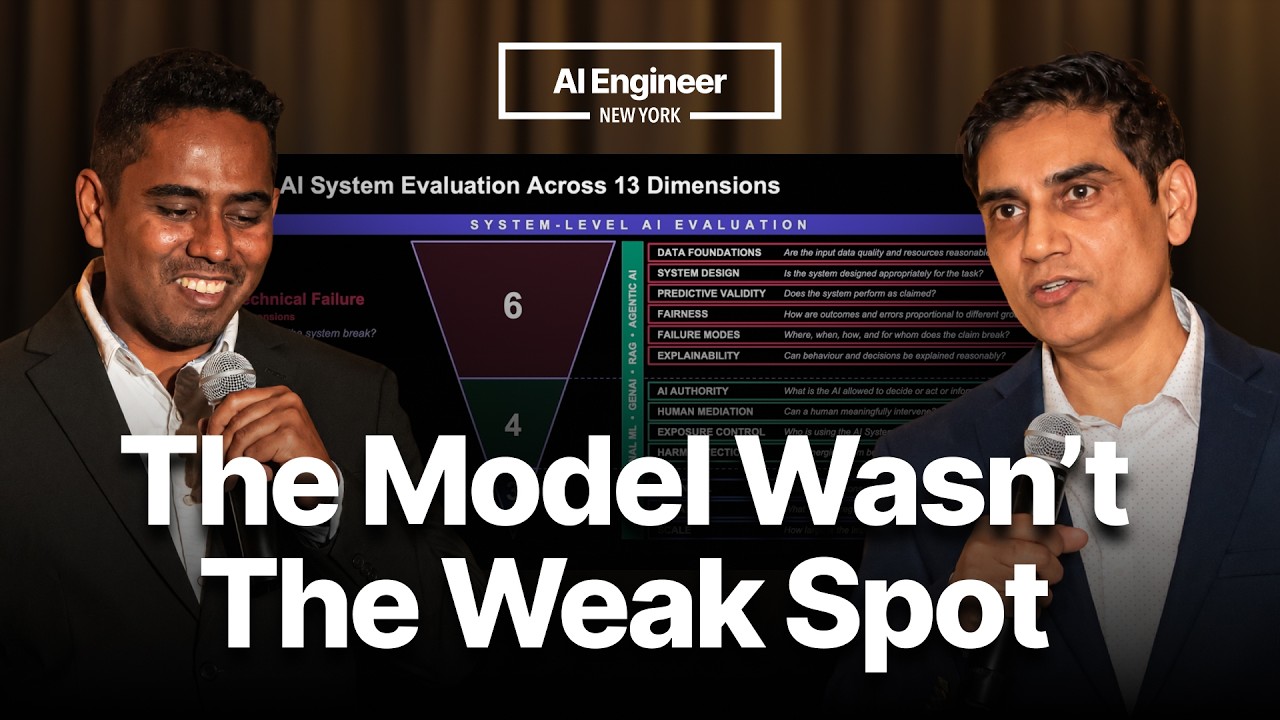
Vishal Srivastava and Tanmay Sah of New York Life analyze 1,368 public AI incidents to show what real failures reveal about how AI systems should be tested. They organize failures into three dimensions (technical strength, deployment controls, business impact) and 13 sub-dimensions covering about 98% of cases, find that weak deployment controls are most closely tied to harm, and present a materiality-based ranking of use cases, a failure-driven build-break-fix evaluation loop, and an airline chatbot refund case as an example.

How to Test AI Agents When No Benchmark Exists — Nathanael Weill, Air Canada

How to Test AI Agents When No Benchmark Exists — Nathanael Weill, Air Canada

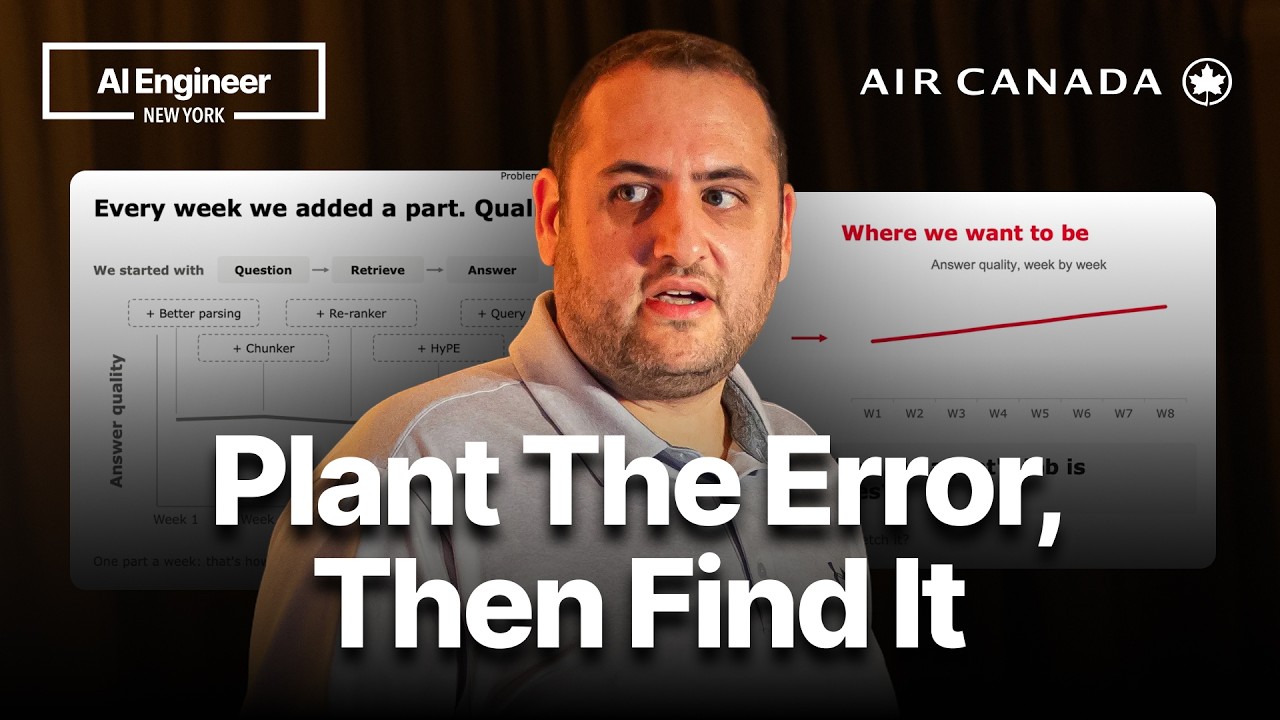
Nathanael Weill of Air Canada explains how to evaluate AI agents when no public benchmark exists and expert time is scarce: start from a known answer, generate the input from it, and check whether the agent recovers it. He covers lessons from a telecom RAG project that moved from one expert-graded test a week to dozens a day, and five ways to build test sets for a supplier contract review agent, along with why code-based checks are preferred over LLM judges.

The AI Content System Behind 200M Views — Sarah Chieng, Cerebras & Cova Lee, OpenAI

The AI Content System Behind 200M Views — Sarah Chieng, Cerebras & Cova Lee, OpenAI

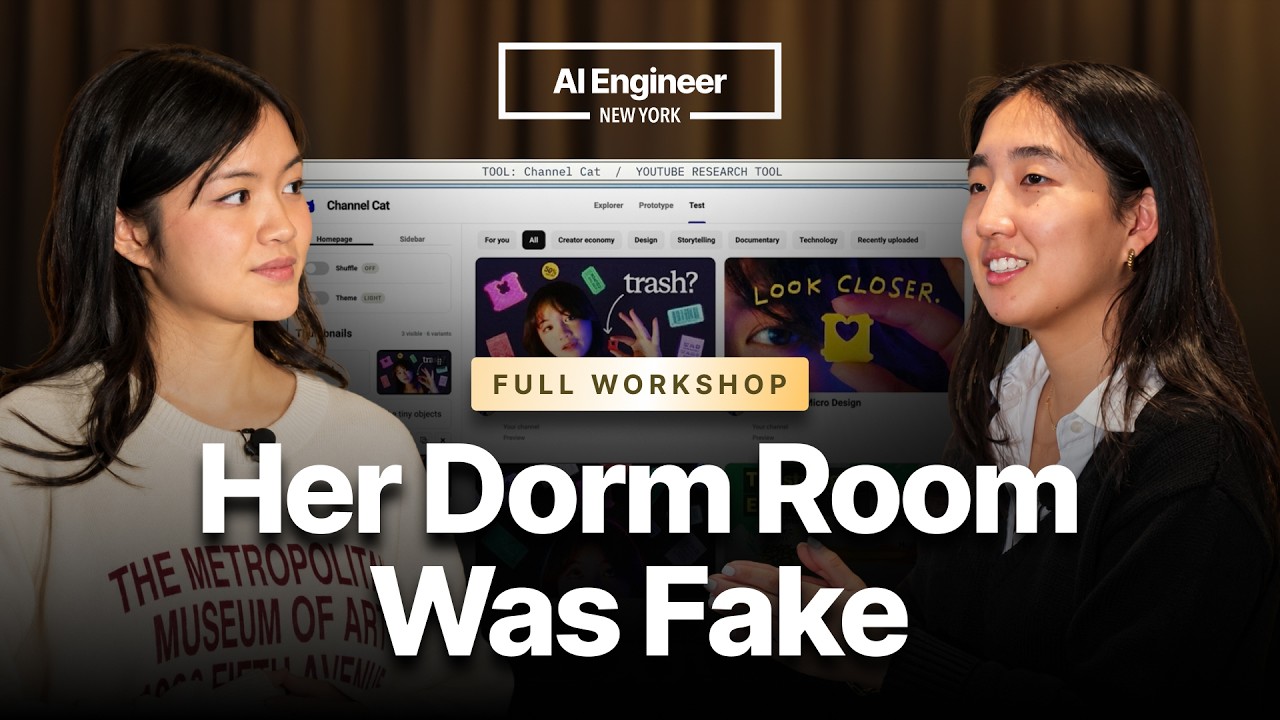
Sarah Chieng (Cerebras) and Cova Lee (OpenAI) walk through an agent-powered content system spanning ideation, scripting, recording, editing, repurposing, and publishing, emphasizing swipe files, voice-driven scripts, design systems, API-based editing, and weekly process reviews as ways to free creators to focus on craft over generic AI output.