Ai

Agentic Sites: Building Hyper Personalized Websites — Carlos Sanchez, Adobe

Agentic Sites: Building Hyper Personalized Websites — Carlos Sanchez, Adobe

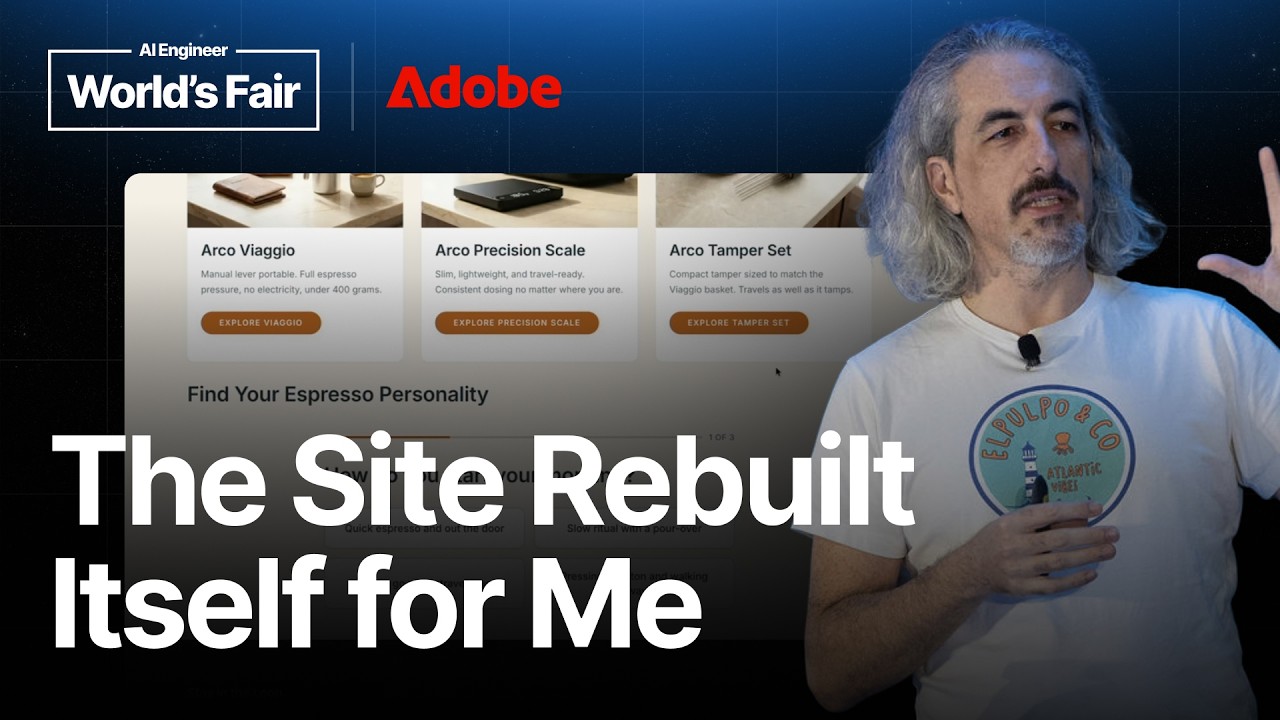
Carlos Sanchez from Adobe presents "Agility Sites," a novel approach to building hyper-personalized websites in real-time. By dynamically generating specific content blocks and grounding responses in the site's corpus, these sites achieve an "audience of one" experience. Key innovations include rapid LLM inference (1.1s average latency with Cerebras), continuous model evaluation for speed and accuracy, and leveraging user intent to deliver tailored content, as demonstrated by an on-the-fly camping coffee machine page and an AI conference comparison site.
Agents Are Where Microservices Were in 2015 — Roberto Milev & Uday Kanagala, Navan

Agents Are Where Microservices Were in 2015 — Roberto Milev & Uday Kanagala, Navan

Roberto Milev and Uday Kanagala from Navan discuss the challenges and emerging best practices in building and operating AI agents, drawing parallels with microservices. They highlight the shift to stateful runtimes, innovative memory and context management using 'skills,' and crucial solutions for observability and testing non-deterministic systems. A central theme is the critical need for robust authorization and guardrails, given the blurring line of agentic action, and a preference for mastering single-agent loops before scaling to complex orchestrations. They conclude by outlining the solved and unsolved problems, with cost and debugging remaining significant hurdles.

AI-Native Organisations Run on Skills: How to Structure and Scale Them — Imad Touil, QuantumBlack

AI-Native Organisations Run on Skills: How to Structure and Scale Them — Imad Touil, QuantumBlack

Imad Touil explores the critical need for governing AI skills within organizations, asserting that skills represent the true repository of enterprise know-how. He contrasts simplified coding agent loops with complex, real-world product lifecycles, demonstrating how ungoverned skills lead to technical debt—including duplication, quality degradation, security risks, and lack of discoverability. Proposing a microservices-inspired approach, Touil outlines a centralized skills platform and human-led governance model essential for achieving deterministic workflows, boosting productivity, and mitigating risks in AI-native enterprises.

Your Code Has Bugs. Lean4 Has Proofs: Formal Verification for Engineers — Varun Pant, AWS

Your Code Has Bugs. Lean4 Has Proofs: Formal Verification for Engineers — Varun Pant, AWS

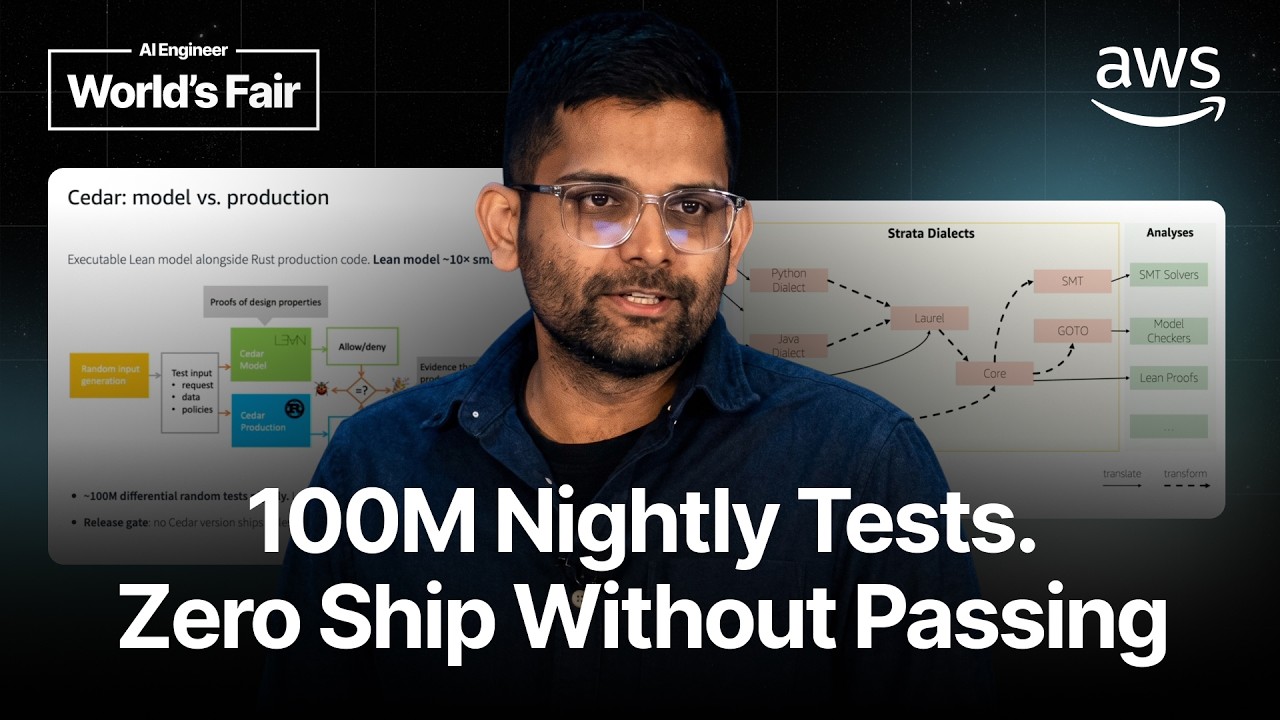
Varun Pant introduces formal verification as the solution to reliably validate AI-generated code, proposing a division where humans define specifications and machines handle code and proof. He details Lean's role as a unified language for code and proof, exemplified by an AI rewriting zlib with 32,000 lines of proof, and AWS's Cedar using Lean specs with Rust production code reconciled by 100 million nightly tests. The talk also covers deductive verification with solvers and future cross-language verification with Strata, aiming for "provably correct" software.

How to Get Your Org to Adopt Coding Agents (Without Shipping Garbage) — Eyal Blum, Figma

How to Get Your Org to Adopt Coding Agents (Without Shipping Garbage) — Eyal Blum, Figma

Figma's internal AI agent adoption journey faces challenges like reduced developer agency, skepticism from senior engineers, and communication inefficiency. Solutions include investing in verification, using a testing pyramid for agent review, prioritizing detailed planning over prompting, engaging skeptics to build AI safety roadmaps, and implementing attention-aware communication by clearly marking AI-generated content.

From AI-Assisted to AI-Native: Building a Frontier Development Team — Clare Liguori, AWS

From AI-Assisted to AI-Native: Building a Frontier Development Team — Clare Liguori, AWS

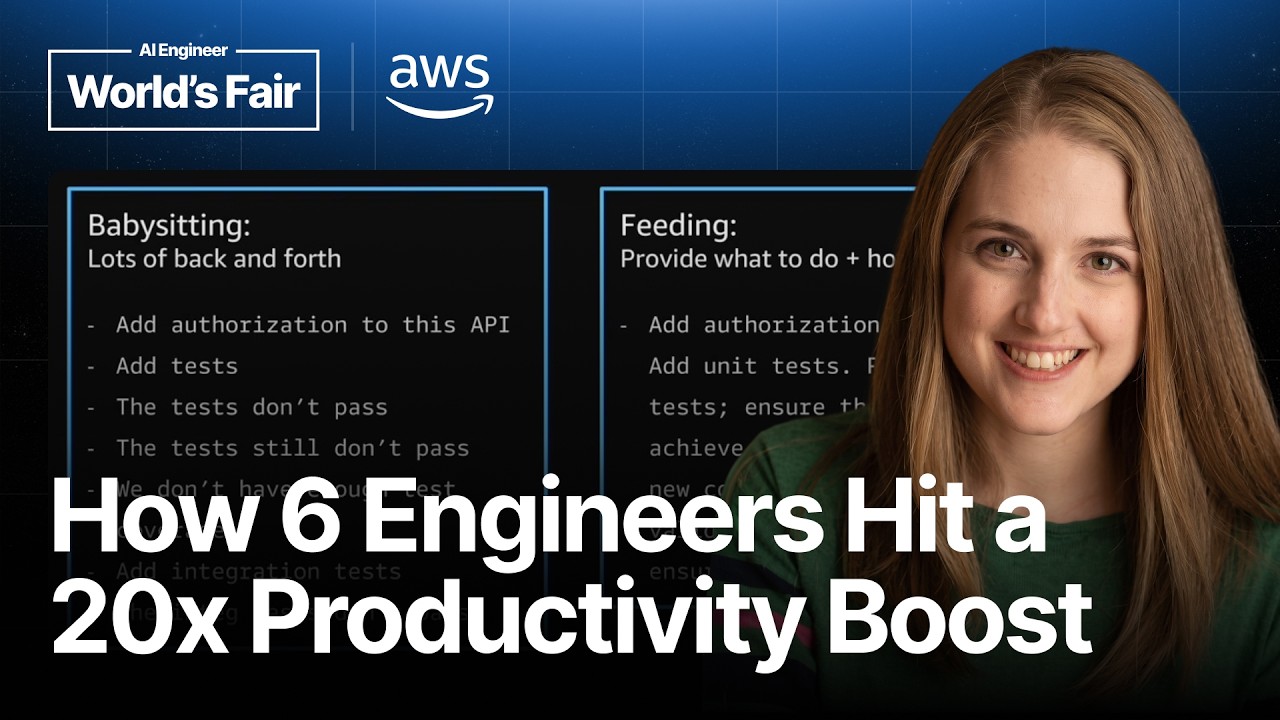
Clare Liguori, a Senior Principal Engineer at AWS, reveals how Amazon teams are achieving 4.5x to 10x productivity gains through 'frontier development' with AI coding assistants like Kuro. She emphasizes that success isn't about the tools, but about fundamentally changing how engineers work, outlining five core habits: investing in agent context, embracing an initial slowdown for long-term speedup, feeding agents comprehensive instructions instead of micromanaging, making design intent explicit before coding, and shifting left with local, deterministic testing. Liguori also addresses new challenges like burnout and decision-making becoming the primary bottleneck in highly accelerated development cycles.