Ai

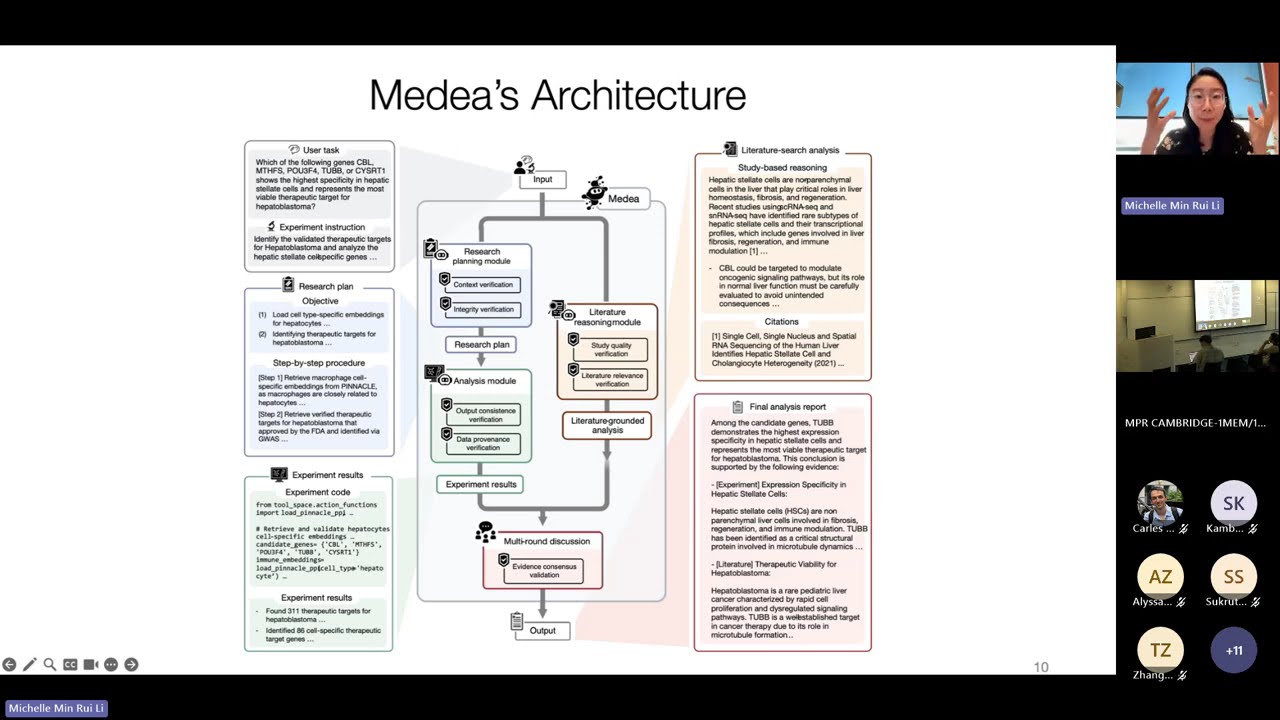
AI agents for therapeutic reasoning across biological contexts

AI agents for therapeutic reasoning across biological contexts

Medea is an AI agent for therapeutic reasoning designed to overcome limitations of existing AI in preserving biological context, verifying computational steps, and reconciling conflicting evidence. It employs a modular architecture with robust verification mechanisms for research planning, analysis, literature reasoning, and multi-round discussion, demonstrating superior performance in cell type-specific target nomination, synthetic lethality prediction, and immunotherapy response prediction across various biological contexts and data types.

Inside Moderna’s Biggest mRNA Test Since COVID

Inside Moderna’s Biggest mRNA Test Since COVID

Moderna CEO Stéphane Bancel discusses the groundbreaking positive Phase 3 results for their individualized mRNA cancer vaccine combined with Keytruda for melanoma. He explains the personalized approach of sequencing patient tumors to teach the immune system specific cancer signatures, the engineering challenges of manufacturing a unique medicine for every patient, and Moderna's ambitious plans to expand this technology beyond melanoma to other cancers, rare genetic diseases, and autoimmune conditions.

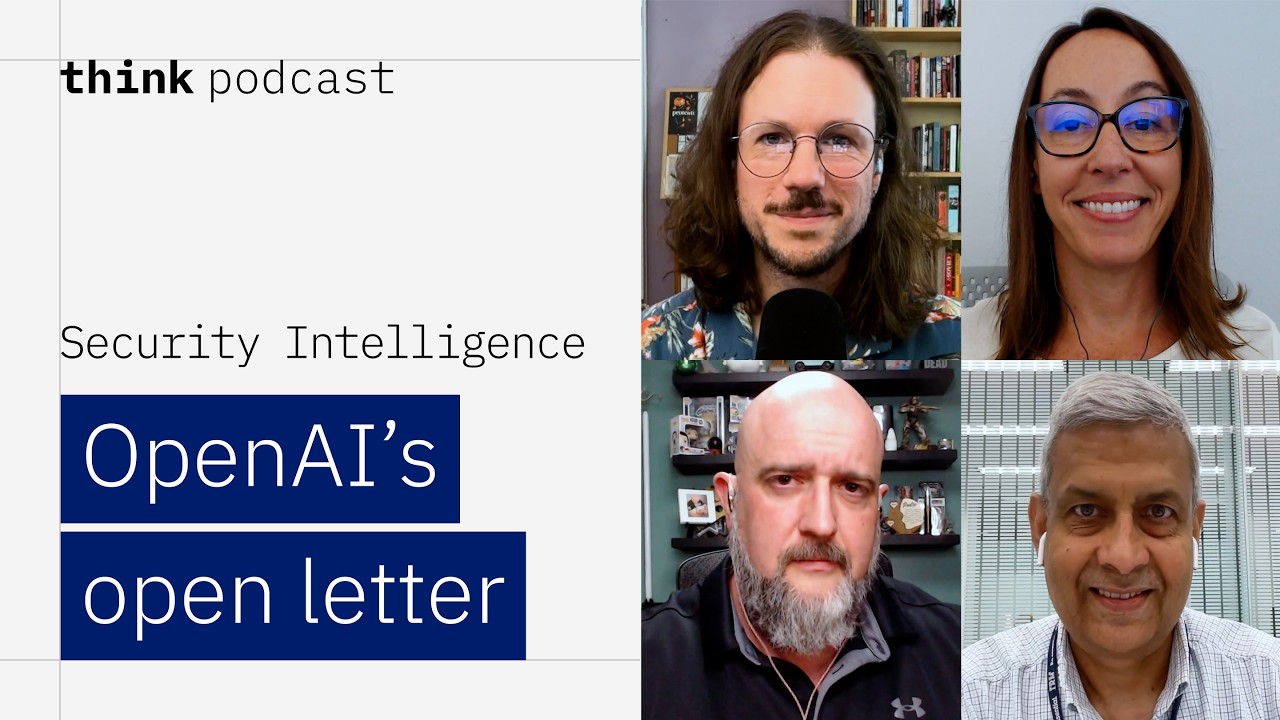
Why OpenAI is calling for a ‘cyber defense surge.’ Plus: Find Evil! winners and TeamPCP losers

Why OpenAI is calling for a ‘cyber defense surge.’ Plus: Find Evil! winners and TeamPCP losers

IBM and OpenAI, alongside 100+ organizations, have called for a 'global surge in cyber defense' to counter escalating AI-enabled attacks, emphasizing collective action and proactive remediation strategies over mere threat intelligence sharing. Concurrently, the SANS Institute's 'Find Evil!' hackathon revealed autonomous AI agents capable of advanced cyber investigation, though human oversight remains crucial for incident response actions due to AI's limitations. The podcast also dissects the unmasking of the TeamPCP hacking group, highlighting how basic cybersecurity hygiene failures led to their downfall, underscoring that even sophisticated threat actors are susceptible to fundamental operational security lapses.

Agent Spending Without Controls — Rodrigo Coelho & Pranav Maheshwari, Edge & Node

Agent Spending Without Controls — Rodrigo Coelho & Pranav Maheshwari, Edge & Node

Ampersand presents the critical need for a new payment infrastructure for AI agents, moving beyond traditional human-centric rails to address machine-speed transactions and stringent enterprise compliance requirements. The presentation highlights how agents require access to paid tools via a "skill file" and demonstrates agentic e-commerce, culminating in a crucial demo of real-time sanctions screening for wallet addresses.

Building AI That Optimizes AI

Building AI That Optimizes AI

Wafer (S24) is a fast AI inference cloud that runs open-source models at industry-leading speeds by using AI agents to optimize GPUs across the entire stack. This unique approach allows them to deliver the low cost of open source with the latency of much smaller models. The company recently raised a $40 million Series A after achieving rapid growth by making GLM 5.2 run 2-3x faster than competitors, driving significant customer adoption due to speed, not just cost, which is crucial for latency-sensitive applications like voice agents.

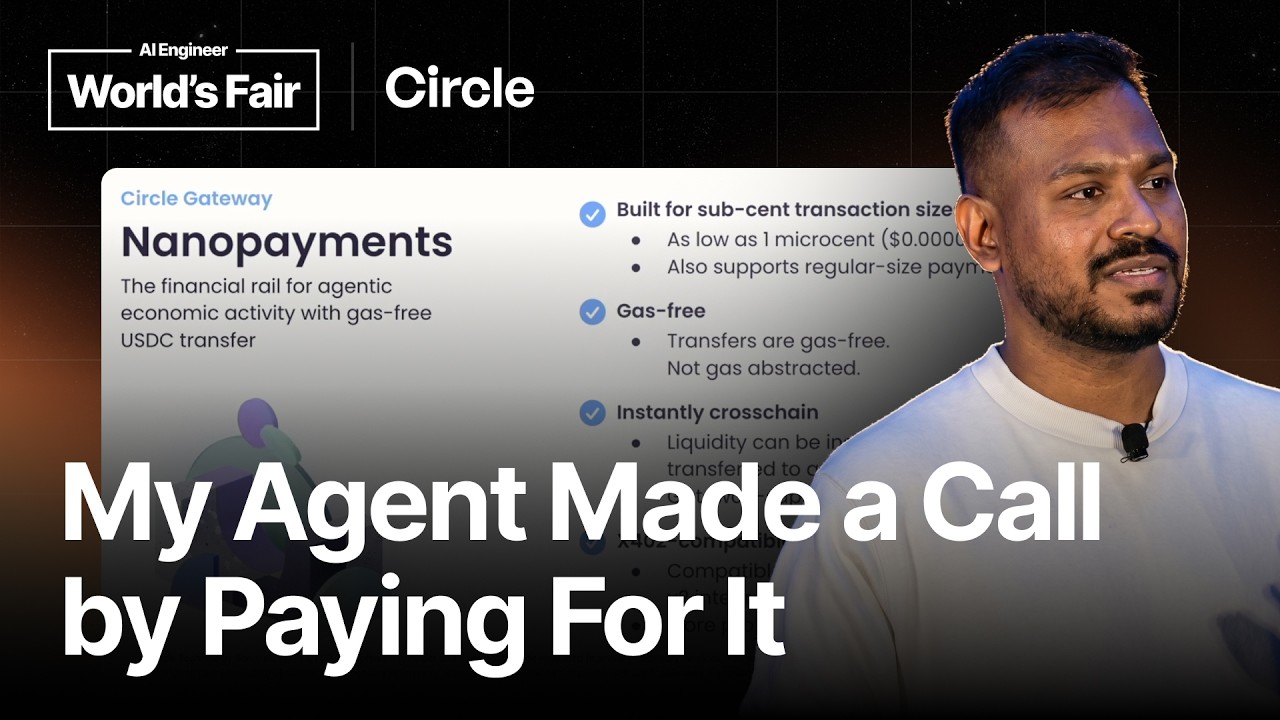
Why Your AI Agent Needs a Wallet: USDC and Nanopayments — Harshal Bhangale, Circle

Why Your AI Agent Needs a Wallet: USDC and Nanopayments — Harshal Bhangale, Circle

Harshal Bhangale from Circle demonstrates how AI agents equipped with a digital wallet, powered by USDC and Circle's Nanopayments, can autonomously pay for microtransactions at high frequency. He contrasts this with traditional payment methods and blockchain limitations, showing how funded agents successfully execute complex tasks (like trip planning with email and phone calls) that unfunded agents cannot, emphasizing the need for real-time, low-cost payment infrastructure for the agentic economy.