Ai

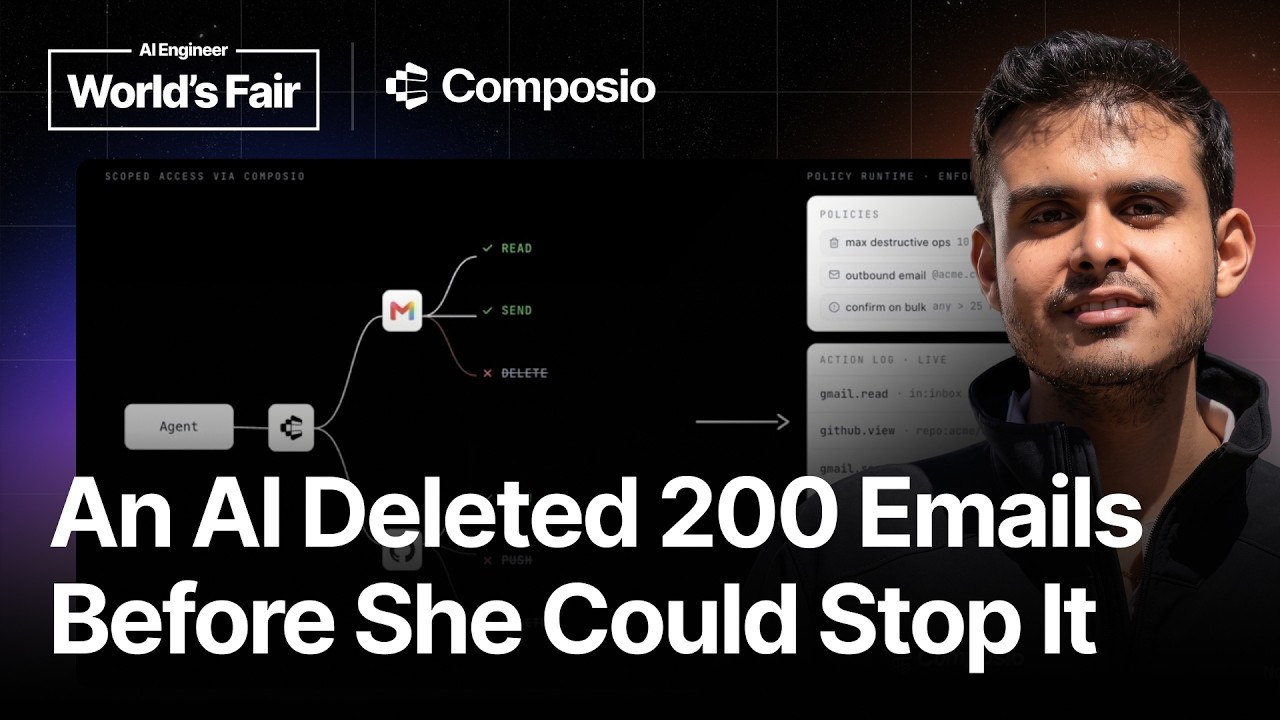
From coding to Knowledge work agents — Karan Vaidya, Composio

From coding to Knowledge work agents — Karan Vaidya, Composio

Karan Vaidya of Composio explains why AI agents have excelled in software engineering but struggle in other knowledge work domains. He identifies six critical primitives—centralization, history, context, verification, governance, and reversibility—that coding inherently provides but are largely absent in general knowledge work, hindering agent effectiveness and trust. The current bottleneck for AI agents is not the models, but the missing infrastructure around them.
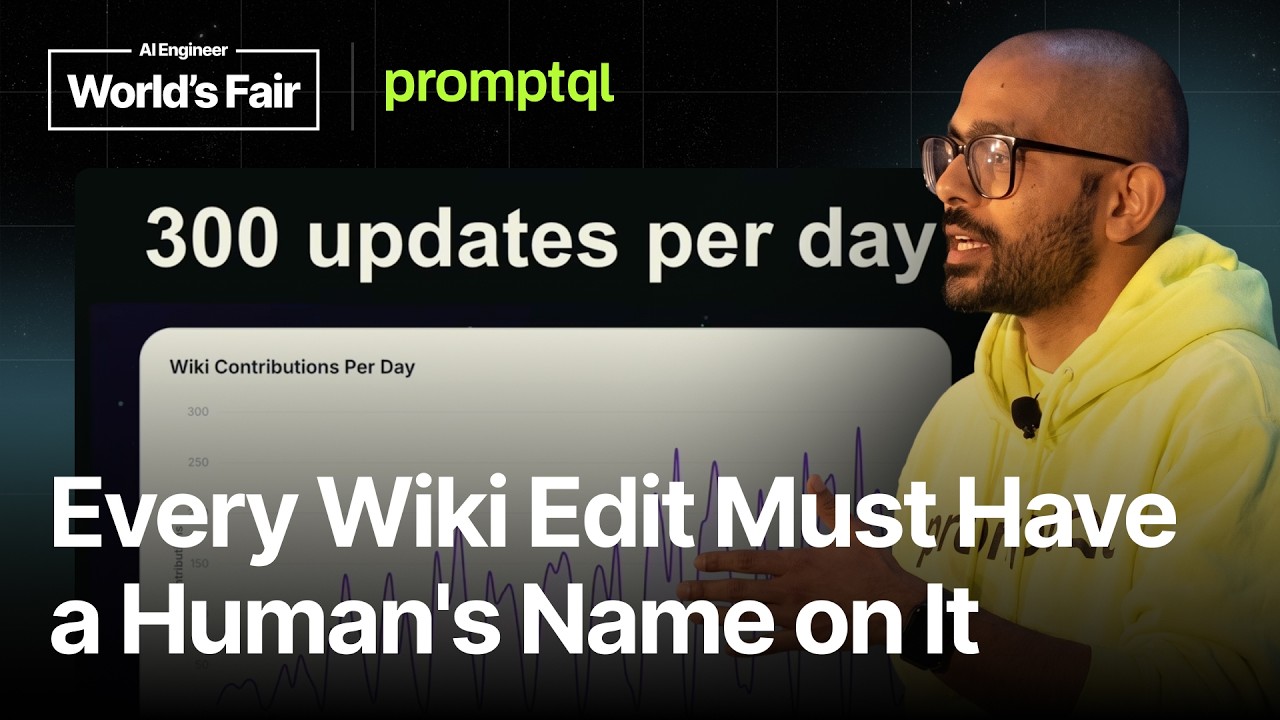

Your company brain will leak secrets: how we stopped it for big banks — Tanmai Gopal, PromptQL

Your company brain will leak secrets: how we stopped it for big banks — Tanmai Gopal, PromptQL

Tanmai Gopal, co-founder of PromptQL and creator of Hasura GraphQL, shares insights on building secure and effective 'company brains' for AI agents. He highlights the surprising metric of a continuously rising edit count as a sign of health, dismisses common pitfalls like siloed knowledge, and proposes a human-in-the-loop, unified wiki approach with granular access control and dynamic credential injection to prevent leaks and foster collaborative knowledge creation.

Why AI Agents Fail

Why AI Agents Fail

Abi Aryan discusses the shift from MLOps to LLMOps, framing generative AI deployment as a distributed systems challenge. She highlights the critical role of FinOps due to high model costs, the need for custom tooling over generic agent frameworks, and the importance of a 'decision layer' for agent autonomy. Observability is re-conceptualized as anomaly detection, and she points to dynamic RL environments and strong data engineering as future research priorities and essential skills for AI engineers.

Redefining Chip Architecture with Arm CEO Rene Haas

Redefining Chip Architecture with Arm CEO Rene Haas

Arm CEO Rene Haas discusses Arm's evolution from IP licensing to producing physical chips, the transformative role of AI in accelerating chip design and verification, and the critical supply chain bottlenecks impacting data center build-out. He also covers SoftBank's strategic capital deployment, the immense opportunities for Arm in the burgeoning robotics sector, and emphasizes why power-efficient CPUs remain fundamental to all AI workloads, from data centers to edge devices.

AI Internals Are Weird — Tom McGrath

AI Internals Are Weird — Tom McGrath

Tom McGrath, Chief Scientist at Goodfire, delves into neural network interpretability, intentional design, and the geometry of learned concepts. The discussion covers how models learn modularity and algorithmic structures like arithmetic, the limitations of current interpretability tools like sparse autoencoders, and the implications for alignment, reward hacking, and multi-agent systems.

The Inference Frontier: from 100 to 10,000 tokens per second — Sean Lie, Cerebras CTO

The Inference Frontier: from 100 to 10,000 tokens per second — Sean Lie, Cerebras CTO

Cerebras CTO Sean Lie discusses the