
Ai

How Jev Turns AI Into Software That Gets Things Done

How Jev Turns AI Into Software That Gets Things Done

Diogo Almeida, founder of TypeSafe AI, joins a16z's Ben Horowitz and Martin Casado to explore why AI is so capable yet so underused for automation. He argues that coding agents make developers faster without making software better, and introduces Jev, a primitive that embeds probabilistic, intent-aware intelligence inside programs. The conversation covers reliability as the key to programmable AI, the revival of probabilistic software, why SaaS companies are well positioned to benefit, and the long-term goal of technology that can reliably "do what I mean."
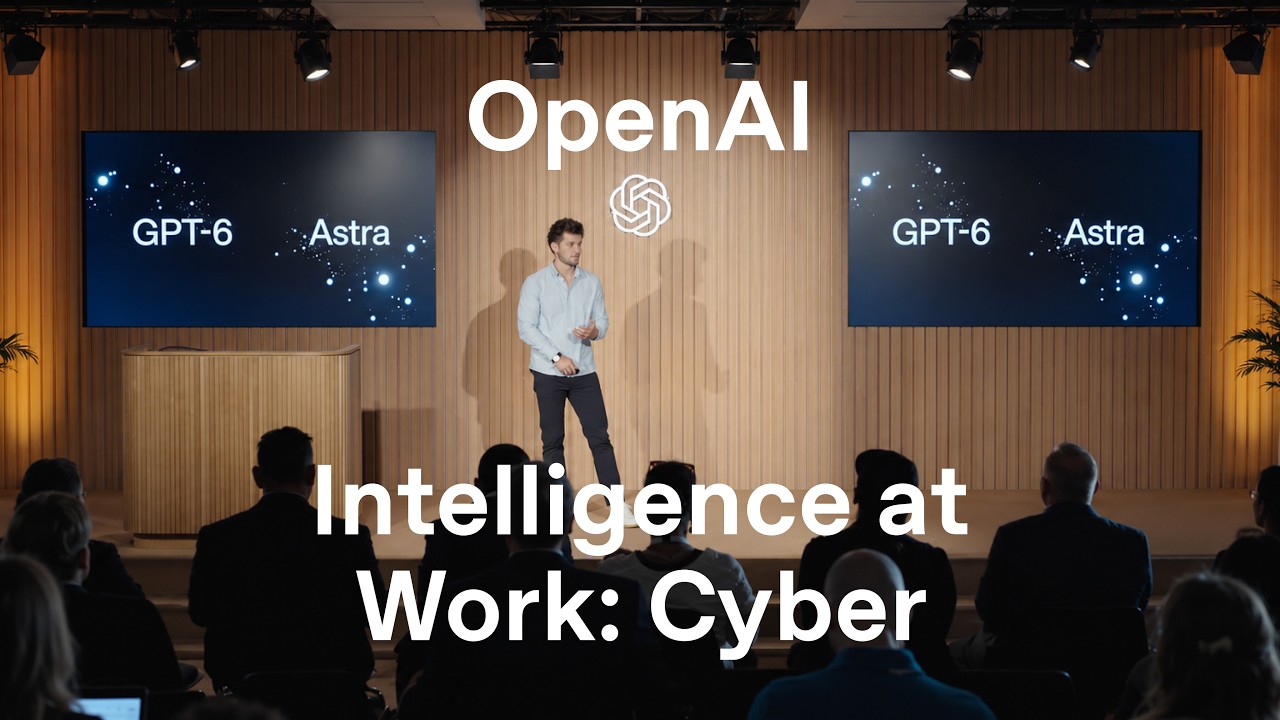

The Defender's Window: Cyber security keynote

The Defender's Window: Cyber security keynote

OpenAI's cyber leadership explains why every organization needs its own 'defense factory' to turn AI-discovered vulnerabilities into verified fixes before attackers exploit them. The session covers the defenders' window, ecosystem responsibilities, GPT-6 Astra's cyber capabilities and safeguards, the Daybreak Red and Blue tiers, Codex Security workflows and CLI scaling, and OpenAI's internal continuous-defense architecture and results.

Roles aren't converging—they're expanding | Tamar Yehoshua (Atlassian CPO)

Roles aren't converging—they're expanding | Tamar Yehoshua (Atlassian CPO)

Atlassian's Tamar Yehoshua explains what the AI builder era looks like for product managers in a company of more than 10,000 people. Using Confluence, RovoClaw, and Jira as examples, she covers when PMs should write code and prototypes, when they should steer the team instead, and how Atlassian is building AI fluency in its PM organization.

What it takes to be a top PM today | Robby Stein (Google Search)

What it takes to be a top PM today | Robby Stein (Google Search)

Robby Stein, drawing on his work on Instagram Stories, Reels, and AI-era Google Search, argues that the core craft of product management is making great decisions. He lays out a three-part process: understand people's underlying needs through jobs to be done, diagnose why a product is failing through root cause analysis and iteration, and refine the craft details that make a product work well and feel delightful.

GLM-5.2: Open Weights, Near-Frontier Intelligence — Zixuan Li, Z.ai

GLM-5.2: Open Weights, Near-Frontier Intelligence — Zixuan Li, Z.ai

Zixuan Li, head of Z.ai, introduces GLM-5.2 and explains the company's history, from the 2021 GLM paper to a new high thinking level and near-frontier benchmark results. He makes the case for open weights through enterprise on-prem deployment, domain fine-tuning and community co-design, and closes by announcing Z Code, an open-sourced coding harness that works with other frontier models.

Orchestras, Not Factories: How the Fastest Builders Work — Charlie Holtz, Conductor

Orchestras, Not Factories: How the Fastest Builders Work — Charlie Holtz, Conductor

Charlie Holtz, co-founder and CEO of Conductor, shares six principles he has observed among the best AI-assisted builders, including staying near the frontier, creating slop-free zones, and giving agents cloud sandboxes. He also demos real-time collaboration and phone-initiated agents, and argues for orchestras over factories, with humans at the center of AI-driven development.