Vision language action models

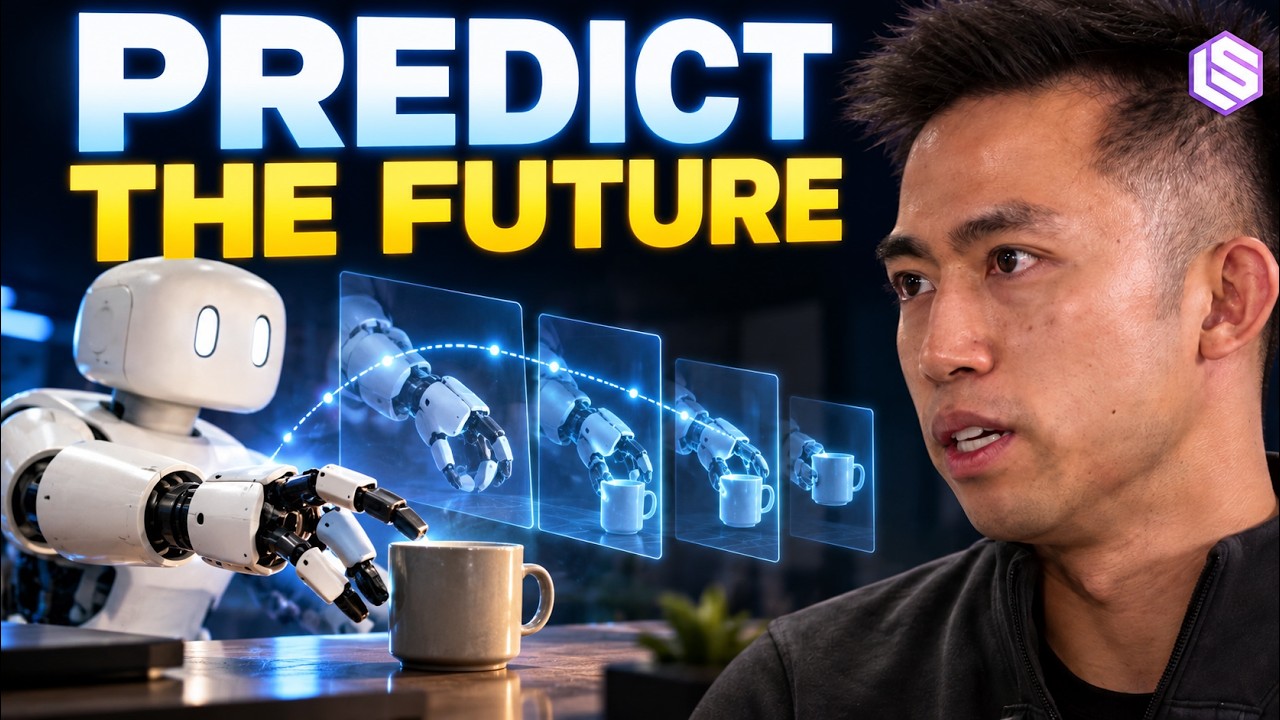
Robots That Predict the Future: Dyna-2 & Physical AI — Jason Ma, Dyna Robotics

Robots That Predict the Future: Dyna-2 & Physical AI — Jason Ma, Dyna Robotics

Dyna Robotics is pioneering physical AI with Dyna-2, a world-action model trained on over a million hours of human video, predicting future states and generating robot actions. Co-founder Jason Ma explains how this enables robots to learn new tasks from minimal demonstrations, tackles the robotics data bottleneck with synthetic data and self-improving models, and details their full-stack approach, including custom semi-humanoid hardware for real-world deployments at Din Tai Fung. The discussion delves into diffusion transformers, agentic harnesses for hour-long workflows, the "Bitter Lesson" of scaling data, and the distinction between world-action models and VLAs, all driven by a deployment-first research culture.
Robot-Use Agents: Why General-Purpose Models May Win in Robotics

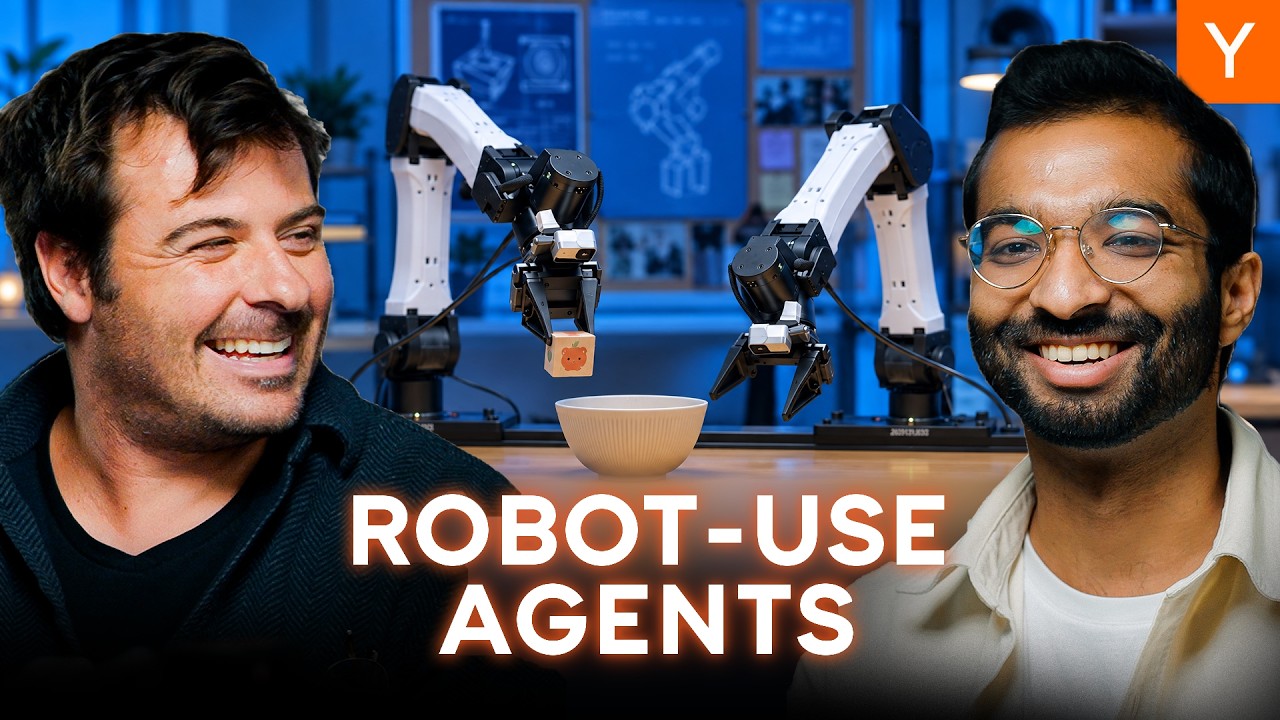
Robot-Use Agents: Why General-Purpose Models May Win in Robotics

A discussion with the founders of Waddle Labs and RoboCurve on how general-purpose language models are beginning to control robots. The conversation covers the lineage from RT-2 and code-as-policies to in-context learning, harness design, skill consolidation, Platonic representations, and the path toward general-purpose robots.

Why Robotics Still Isn't Solved - But Could Be Soon | YC Paper Club

Why Robotics Still Isn't Solved - But Could Be Soon | YC Paper Club

This Paper Club delves into the current state of robotics, addressing roadblocks like the sim-to-real gap and embodiment drift. Speakers present advancements in multi-scale memory for long-horizon tasks, self-supervised embodied reasoning, zero-shot dexterous manipulation via massive simulation, and the economic imperative of teleoperation-first robotics companies, concluding with optimizations for efficient, real-time World Action Models.

Robotics: why now? - Quan Vuong and Jost Tobias Springberg, Physical Intelligence

Robotics: why now? - Quan Vuong and Jost Tobias Springberg, Physical Intelligence

Quan Vuong and Jost Tobias Springenberg from Physical Intelligence (PI) discuss their mission to create a universal model for controlling any robot. They detail their approach, which centers on Vision-Language-Action (VLA) models, a purpose-built data engine for scaled data collection, and the evolution of their models toward open-world generalization.