Vector databases

The Index is never done

The Index is never done

Exa's Jon details how their company maintains a massive, continuously updated semantic index of 100 billion pages to serve AI agents. The talk covers Exa's unique incremental indexing system, a custom data processing framework called "Skeleton" that handles 100,000 pages per second, and "Pythia," an elastic, cost-aware GPU orchestration system for managing both real-time ingestion and large-scale index re-embeddings.
AI Is Exposing Your Data: An AI Security Problem You Can't See

AI Is Exposing Your Data: An AI Security Problem You Can't See

Jeff Crume explains how AI agents, RAG pipelines, prompts, tools, and models move sensitive data through modern AI systems, and why traditional DLP falls short. He outlines a unified approach built on data lineage, workload and workforce visibility, proactive risk identification, and compliance reporting.

Stop Chunking Like It's 2022 — Yuval Belfer, AI21 Labs

Stop Chunking Like It's 2022 — Yuval Belfer, AI21 Labs

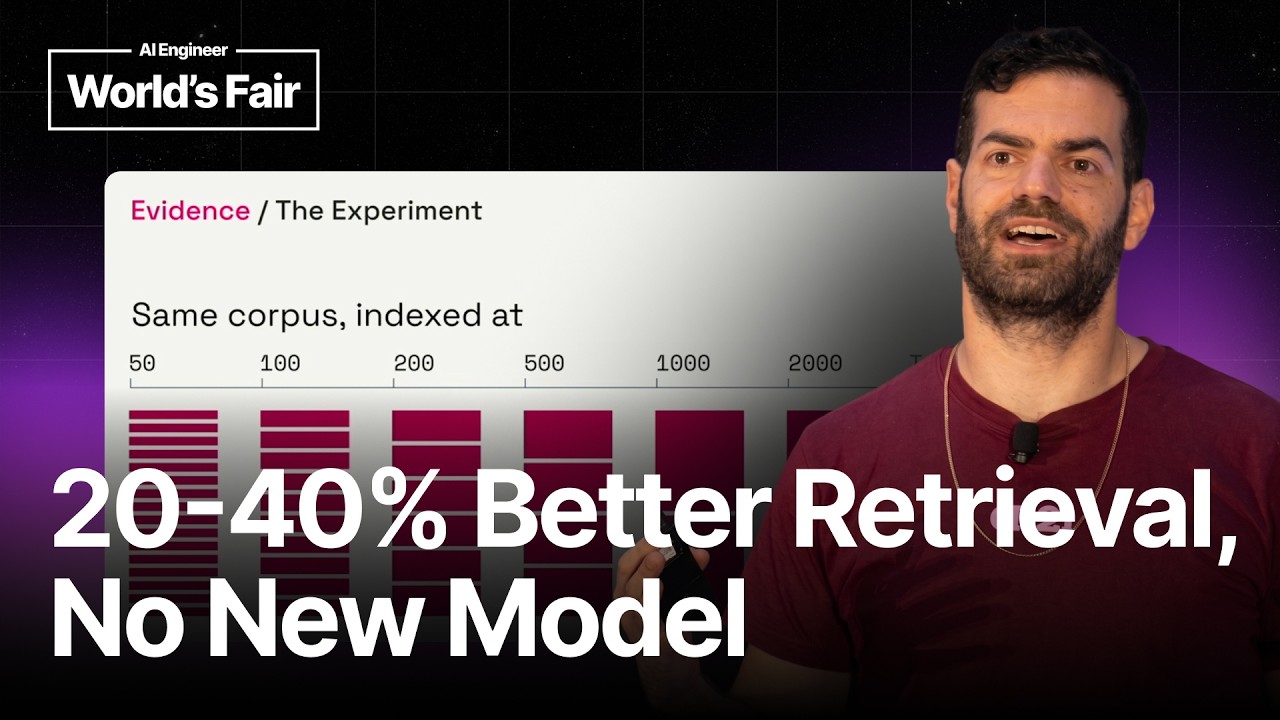
Yuval Belfer addresses the fundamental challenge in Retrieval Augmented Generation (RAG): the optimal chunk size is query-dependent, but chunking decisions are fixed during indexing. This "information problem" leads to significant recall loss, as shown by experiments demonstrating a 20-40% gap between fixed chunking and an oracle. His proposed solution, multiscale indexing, involves creating multiple document copies with different chunk sizes, querying all of them, retrieving whole documents, and merging results using Reciprocal Rank Fusion, yielding substantial recall improvements with minimal latency increase.

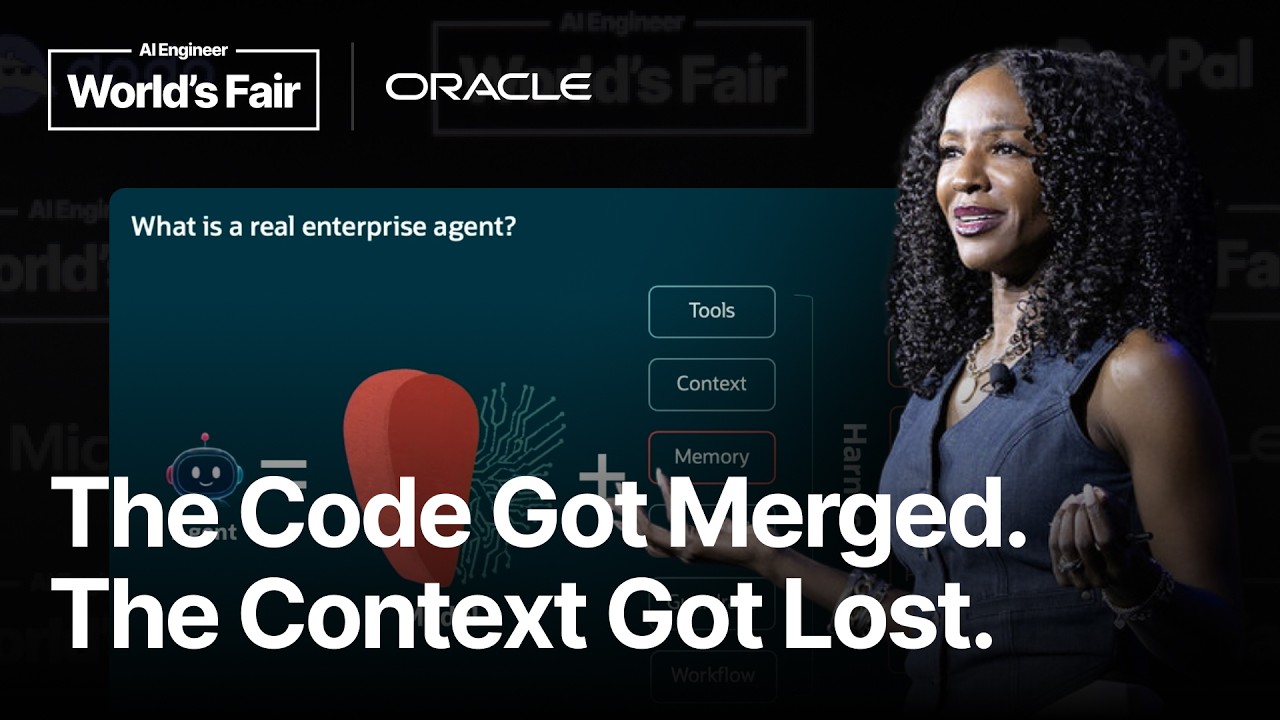
No Memory, No Harness: Why the Database Is the Last Line of Defense — Kay Malcolm, Oracle

No Memory, No Harness: Why the Database Is the Last Line of Defense — Kay Malcolm, Oracle

Kay Malcolm discusses how AI, while boosting individual performance, often hinders overall team productivity due to fragmented context. She introduces the concept of an "agent harness" with "memory" as its central nervous system, vital for sharing context. Drawing on personal experiences with database sprawl, she highlights the inefficiencies of storing diverse memory types across multiple data stores. Malcolm then presents Oracle's AI database (26AI) as a unified solution, capable of natively managing all memory types in a single platform, thereby enhancing team collaboration and solving the context problem for enterprise AI agents.

Supabase: Cash Does Not Equal Success

Supabase: Cash Does Not Equal Success

Paul Copplestone, CEO of Supabase, discusses the company's rapid rise as a leading dev tool. He explains their strategic bet on open-source Postgres, the pivotal "Open Source Firebase" rebrand, and how three distinct "chapters" of AI — from vector databases and code generation to advanced AI agents — have dramatically accelerated Supabase's growth and forced a re-evaluation of developer experience and internal operations.

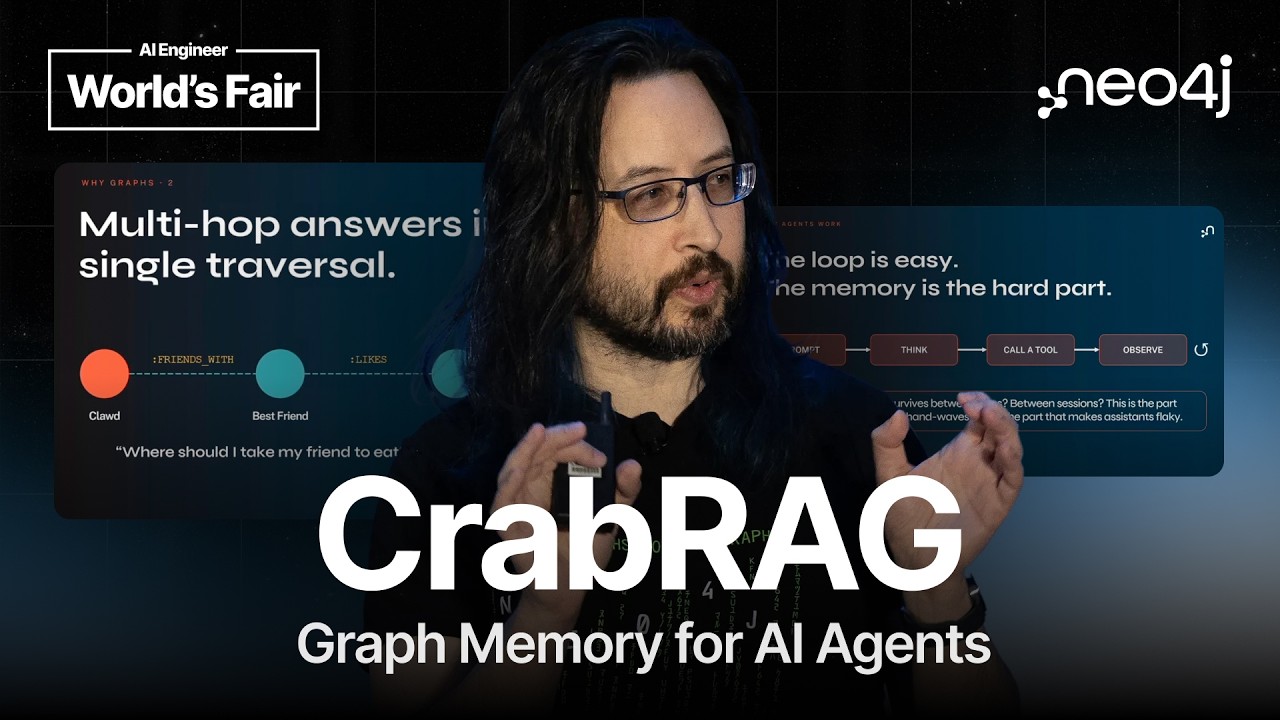
CrabRAG: Why Automated Assistants Need Graph Memory, Not More Tokens — Stephen Chin, Neo4j

CrabRAG: Why Automated Assistants Need Graph Memory, Not More Tokens — Stephen Chin, Neo4j

Stephen Chin demonstrates how current LLM agent memory systems, relying on markdown files or vector databases, lead to token inefficiency, hallucinations, and a lack of multi-hop reasoning. He showcases graph databases as a superior alternative, providing precise, explainable, and auditable answers for complex, large-scale problems through a live demo of a home lab digital twin.