User experience

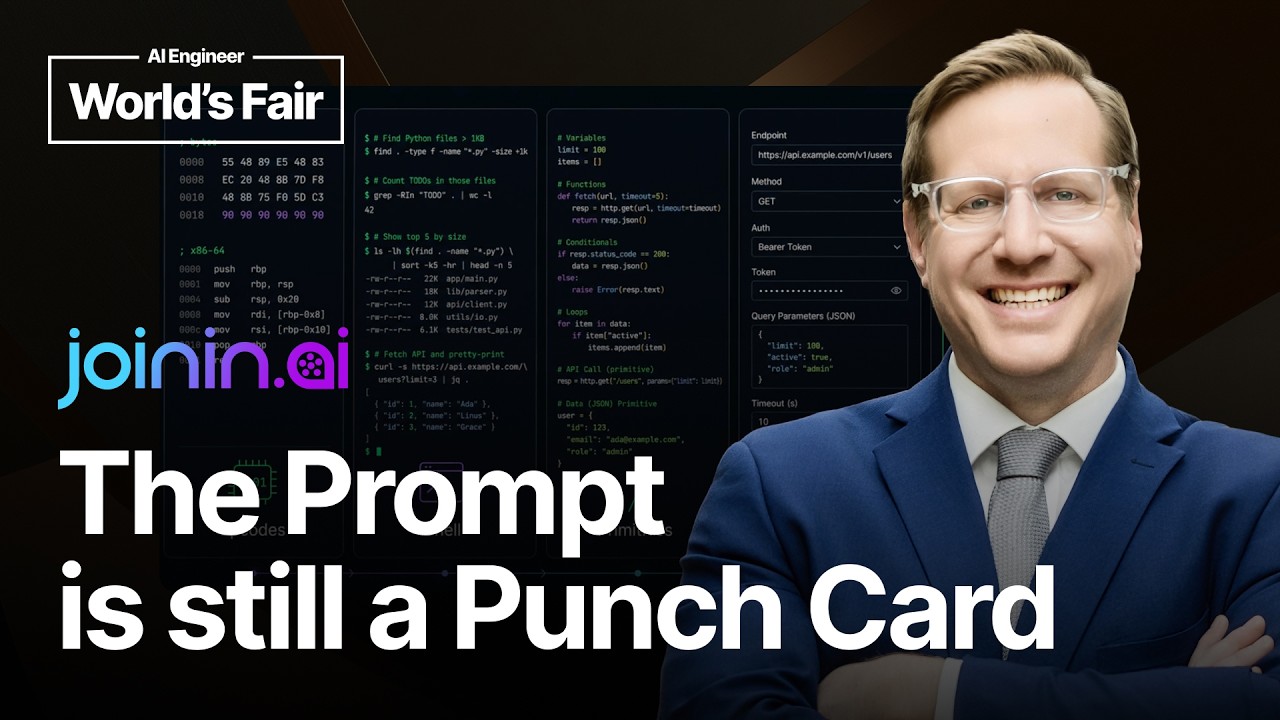
The Prompt Is Still a Punch Card - Ted Johnson, JoinIn AI

The Prompt Is Still a Punch Card - Ted Johnson, JoinIn AI

Ted Johnson argues that current AI interfaces, particularly prompting, operate on an outdated "batch processing" protocol akin to punch cards. Despite advanced LLM capabilities, this interface design forces humans to adapt to machines, hindering natural interaction. He advocates for a shift towards human-compatible interfaces where AI actively participates in real-time conversation, leveraging its intelligence to remove user burdens and amplify human potential.

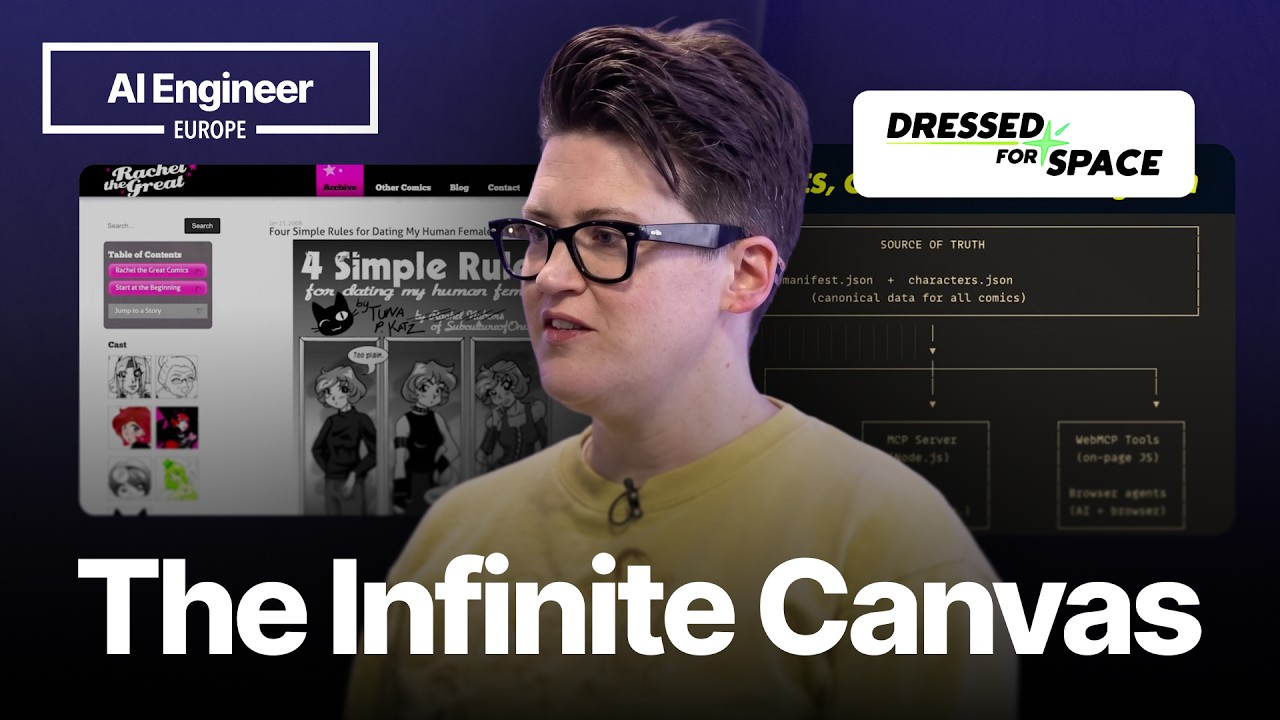
Your Agent Is an Infinite Canvas — RL Nabors, Dressed for Space

Your Agent Is an Infinite Canvas — RL Nabors, Dressed for Space

RL Nabors makes a case against chat as the permanent UI for agents, arguing it's the "terminal" to the future "iPhone" of rich, interactive experiences. She demonstrates how to build these experiences using web technologies, introducing MCP Apps for in-agent UIs and WebMCP for making existing websites agent-callable, positioning the web platform as the ultimate "infinite canvas".

The Latency Goldilocks Zone Explained

The Latency Goldilocks Zone Explained

Rafael Borger and Daniel Wolbert from iFood discuss the engineering and product strategy behind ILO-Agent, their conversational AI for 200 million users. They cover hyper-personalized recommendation systems, the "Latency Goldilocks Zone" where AI responses can be too fast for users to trust, and the architectural challenges of building multi-channel agents for text and voice.

Why Your AI UX Is Broken (and It's Not the Model's Fault) — Mike Christensen, Ably

Why Your AI UX Is Broken (and It's Not the Model's Fault) — Mike Christensen, Ably

Mike Christensen from Ably critiques the standard HTTP streaming (SSE) approach for AI chat applications, highlighting its fragility and limitations. He introduces the "durable session" pattern, a persistent, shared resource built on pub/sub principles, to create resilient, multi-device AI experiences with live, bidirectional control.

Agents need more than a chat - Jacob Lauritzen, CTO Legora

Agents need more than a chat - Jacob Lauritzen, CTO Legora

Jacob Lauritzen, CTO of Legora, argues that as AI agents tackle more complex work, the bottleneck shifts from task execution to planning and review. He proposes a framework for human-agent collaboration based on increasing 'trust' and 'control', and advocates for moving beyond simple chat interfaces to high-bandwidth, domain-specific artifacts like documents and structured reviews for more effective collaboration.

How Stripe Built Their New Website

How Stripe Built Their New Website

Stripe's Head of Design, Katie Dill, provides a behind-the-scenes look at their recent homepage redesign. She discusses the strategic shift from a product-list to a narrative-driven approach, the intricate design process behind key elements, and how AI is fundamentally changing their design workflow and empowering their team to fight the "gravitational pull to mediocrity".