Tpu

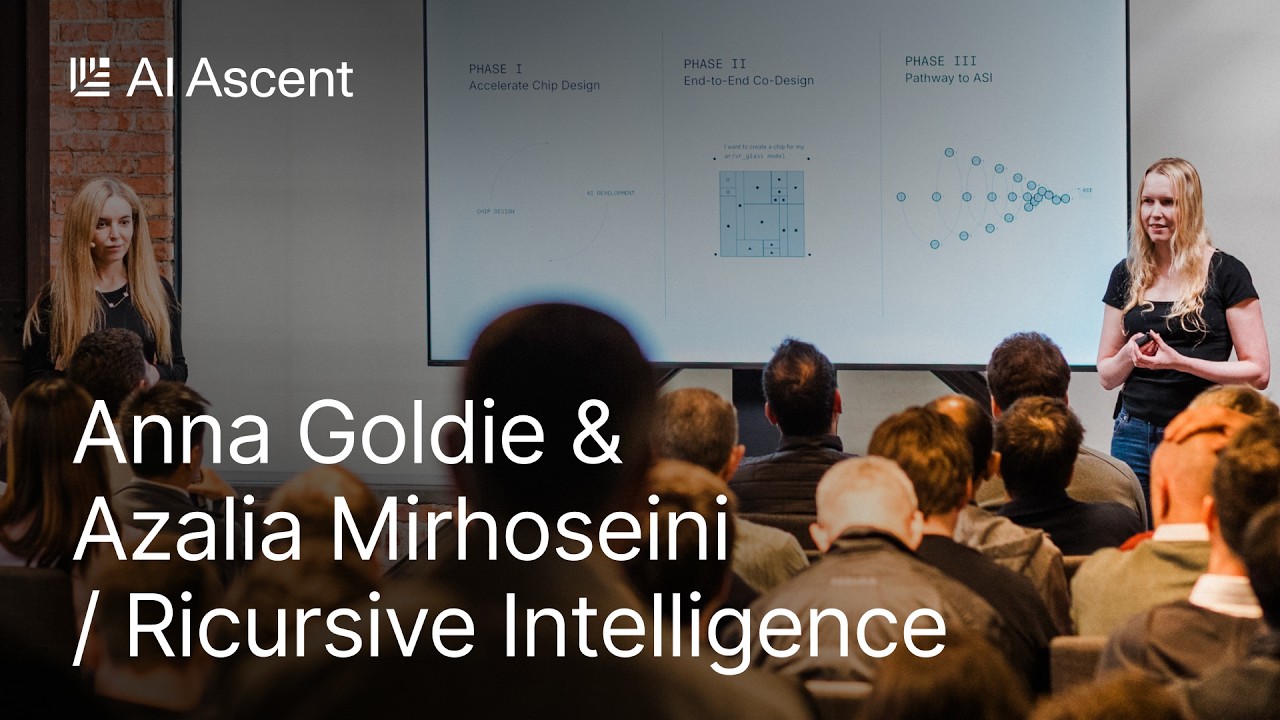
AI That Designs Its Own Chips: Ricursive's Anna Goldie and Azalia Mirhoseini

AI That Designs Its Own Chips: Ricursive's Anna Goldie and Azalia Mirhoseini

Co-founders of Ricursive Intelligence, Anna Goldie and Azalia Mirhoseini, outline their thesis that AI should design the chips that train AI. They detail their three-phase plan to first accelerate chip design with AI tools 100,000x faster than current software, then become a 'design-less' platform for custom silicon, and finally achieve vertical integration by building their own chips and models.

The Moonshot Podcast Season 2, Episode 6: Silicon Horizons

The Moonshot Podcast Season 2, Episode 6: Silicon Horizons

This podcast episode explores two X moonshot projects aimed at revolutionizing computer chips. Project Positron focused on creating specialized chips for real-time AI inference, acting as 'brains for robots'. Project Bodger took a meta-approach, using AI and inverse design to automate the chip design process itself, aiming to overcome the limitations of Moore's Law.

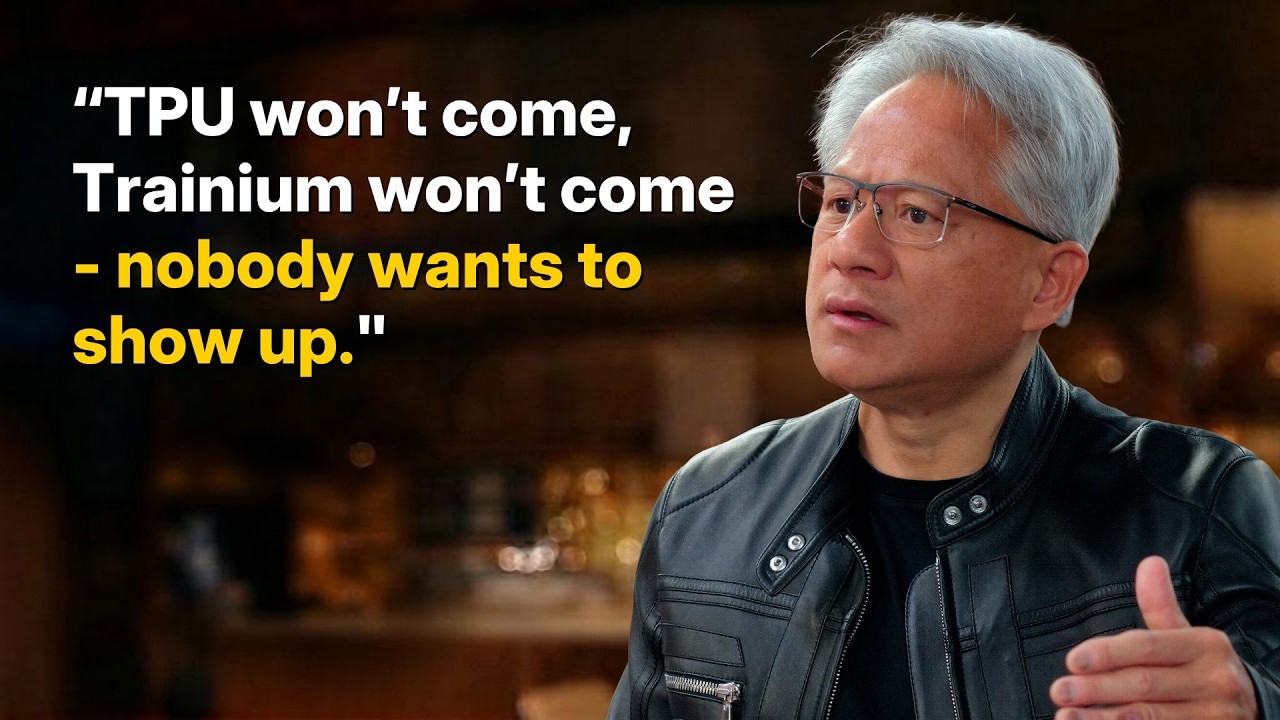
Jensen Huang – Will Nvidia’s moat persist?

Jensen Huang – Will Nvidia’s moat persist?

Nvidia CEO Jensen Huang discusses the company's core strategy, which he defines as transforming electrons into tokens by orchestrating a vast supply chain. He details how Nvidia's true moat lies in its ecosystem and its ability to manage supply bottlenecks. Huang contrasts Nvidia's versatile 'accelerated computing' platform with competitors like TPUs, arguing programmability via CUDA is key to AI innovation. He also presents a strong case against broad AI chip export controls on China, warning it could backfire by forcing the creation of a competing tech stack. Finally, he explains why Nvidia invests in the ecosystem rather than becoming a hyperscaler itself.

CROSS — Leveraging AI ASICs for Homomorphic Encryption

CROSS — Leveraging AI ASICs for Homomorphic Encryption

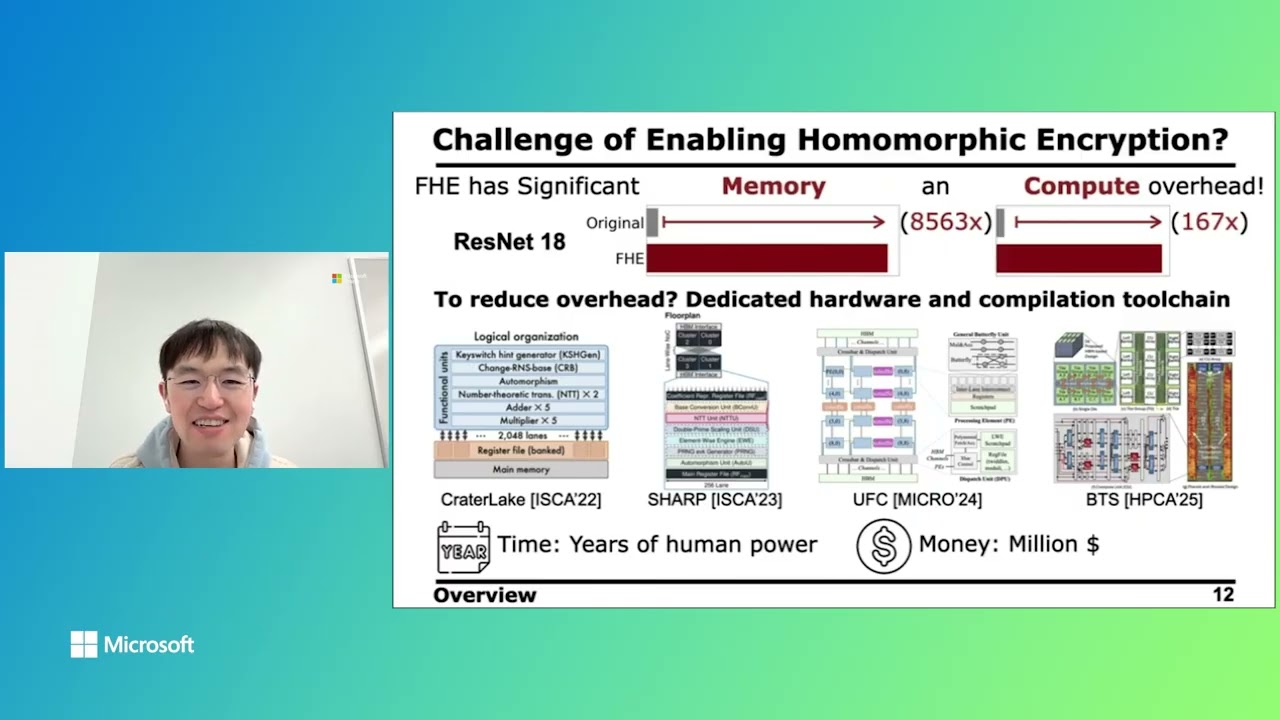
The talk presents CROSS and Morph, two compiler frameworks that enable existing AI accelerators, like Google's TPUs, to efficiently execute cryptographic workloads. CROSS focuses on Homomorphic Encryption (HE) and Morph on Zero-Knowledge Proofs (ZKP), demonstrating how to transform high-precision modular arithmetic into low-precision matrix operations that TPUs excel at, thereby achieving state-of-the-art performance and energy efficiency without any hardware modifications.

AlphaGenome author roundtable

AlphaGenome author roundtable

A summary of the Google DeepMind team's discussion on AlphaGenome, their unified DNA sequence-to-function model. It covers the scientific motivation, the engineering breakthroughs in processing long DNA sequences at high resolution, the addition of complex biological modalities like splicing and contact maps, and the future direction of the research.

How Ricursive Intelligence’s Founders are Using AI to Shape The Future of Chip Design

How Ricursive Intelligence’s Founders are Using AI to Shape The Future of Chip Design

Anna Goldie and Azalia Mirhoseini of Ricursive Intelligence discuss how their work on Google's AlphaChip, which used AI to design TPUs, is now being extended to automate the entire chip design process. They explain their vision for a 'designless' industry and a recursive self-improvement loop where AI designs better chips, which in turn accelerates AI development.