Tool use

Field Guide to Fable — Thariq Shihipar, Anthropic

Field Guide to Fable — Thariq Shihipar, Anthropic

Thariq Shihipar from Anthropic introduces Fable, their newest model, as a major leap forward, emphasizing "capability overhang" where tool use unlocks unprecedented intelligence. He provides a "field guide" on working with Fable, discussing evolving prompt engineering, advanced tool interactions (like HTML reports), and strategies for identifying project unknowns. He concludes by challenging the necessity of traditional tradeoffs, advocating for ambitious development that is both good, fast, and cheap, and urging AI engineers to prove the transformative power of AI.
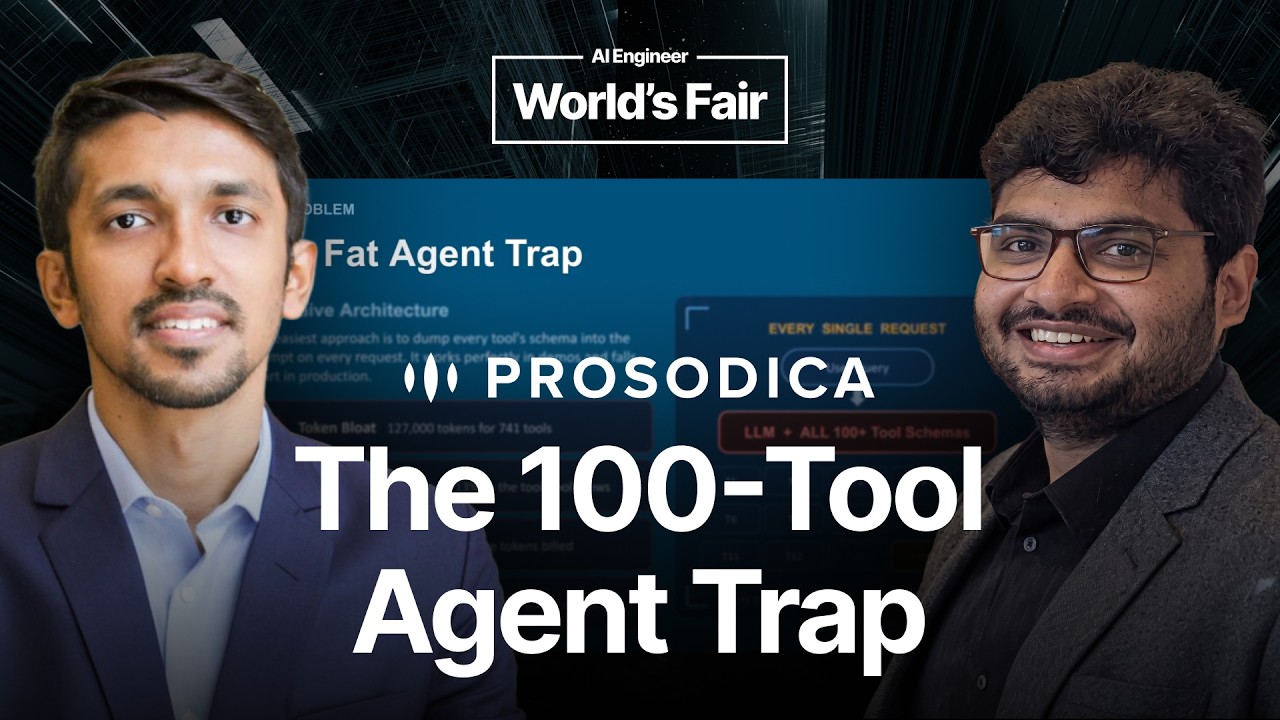
The 100-Tool Agent Is a Trap - Sohail Shaikh & Ankush Rastogi, Prosodica

The 100-Tool Agent Is a Trap - Sohail Shaikh & Ankush Rastogi, Prosodica

This session unveils the "Fat Agent" trap in LLM agent architectures, where loading an entire tool catalog into the system prompt causes severe latency, cost, and accuracy problems. It presents the Semantic Tool Router pattern, a practical solution leveraging Just-in-Time Context Injection and vector search (RAG for tools) to dynamically provide only relevant tools, dramatically reducing prompt size, enhancing performance, and improving reliability across frontier models like GPT-4o and Gemini 2.0.

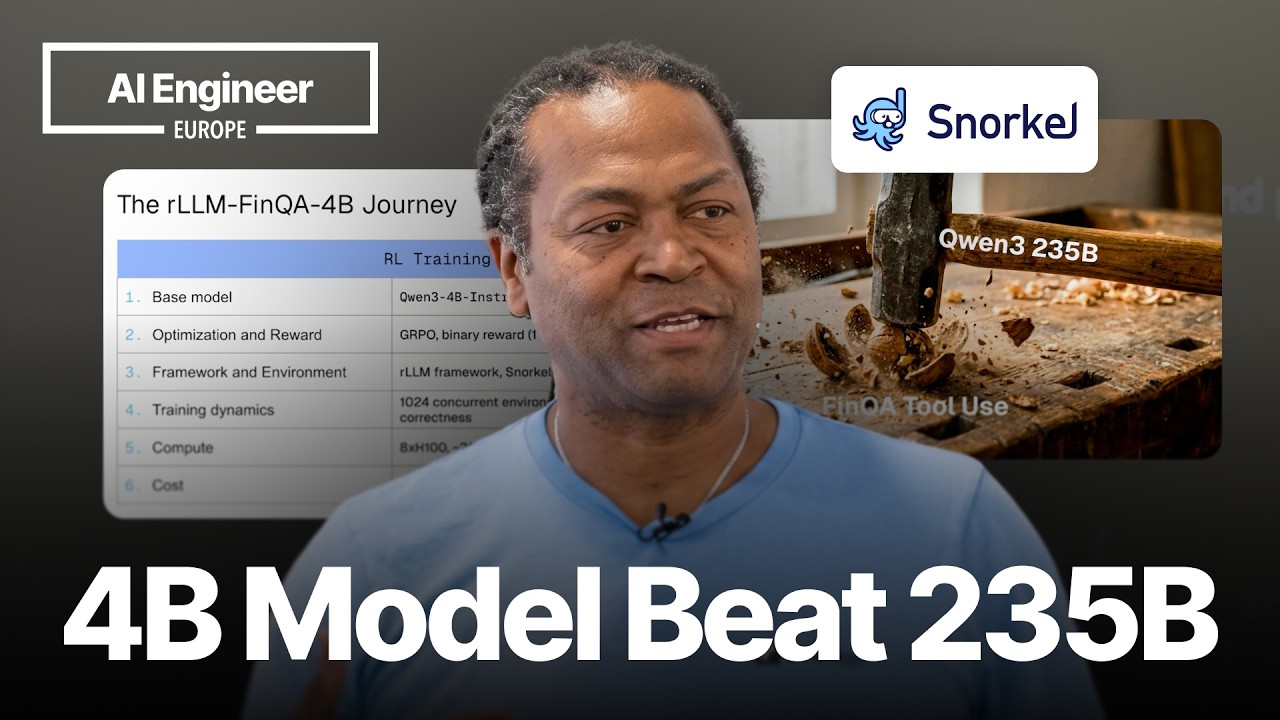
Stop Making Models Bigger, Make Them Behave — Kobie Crawdord, Snorkel

Stop Making Models Bigger, Make Them Behave — Kobie Crawdord, Snorkel

Snorkel.ai's research demonstrates how a 4-billion-parameter model, fine-tuned with Reinforcement Learning for under $500, significantly outperformed a 235-billion-parameter model on financial analysis tool-use tasks. The key was cultivating 'tool discipline' and error correction capabilities, rather than relying on sheer model size or deeper reasoning. Single-table training generalized effectively to harder multi-table problems, emphasizing the importance of targeted behavioral fixes identified through detailed evaluation rubrics.

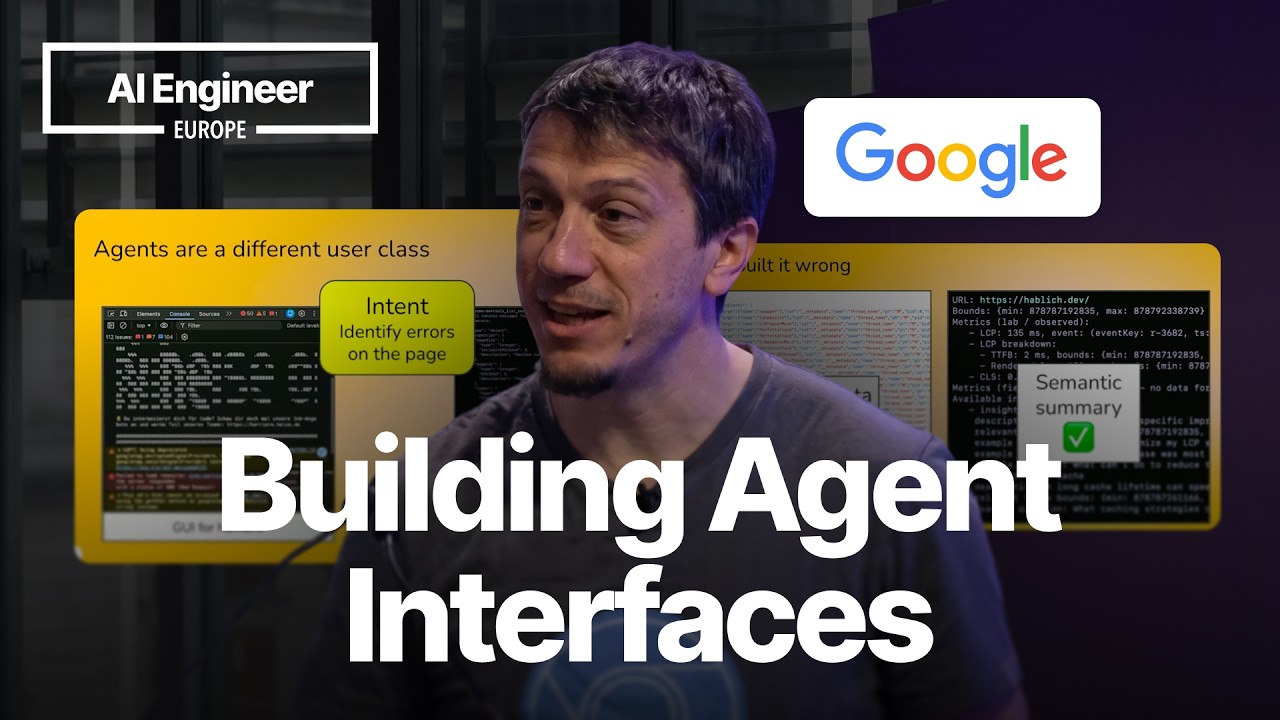
Building Agent Interfaces: Lessons from Chrome DevTools (MCP) for Agents — Michael Hablich, Google

Building Agent Interfaces: Lessons from Chrome DevTools (MCP) for Agents — Michael Hablich, Google

Michael Hablich from the Chrome DevTools team shares hard-won engineering lessons on building effective and secure interfaces for AI agents. The talk covers moving from raw data to semantic summaries, measuring interface efficiency with 'tokens per successful outcome', designing for error recovery, and the critical importance of trust boundaries and deliberate friction in UI design for agents.

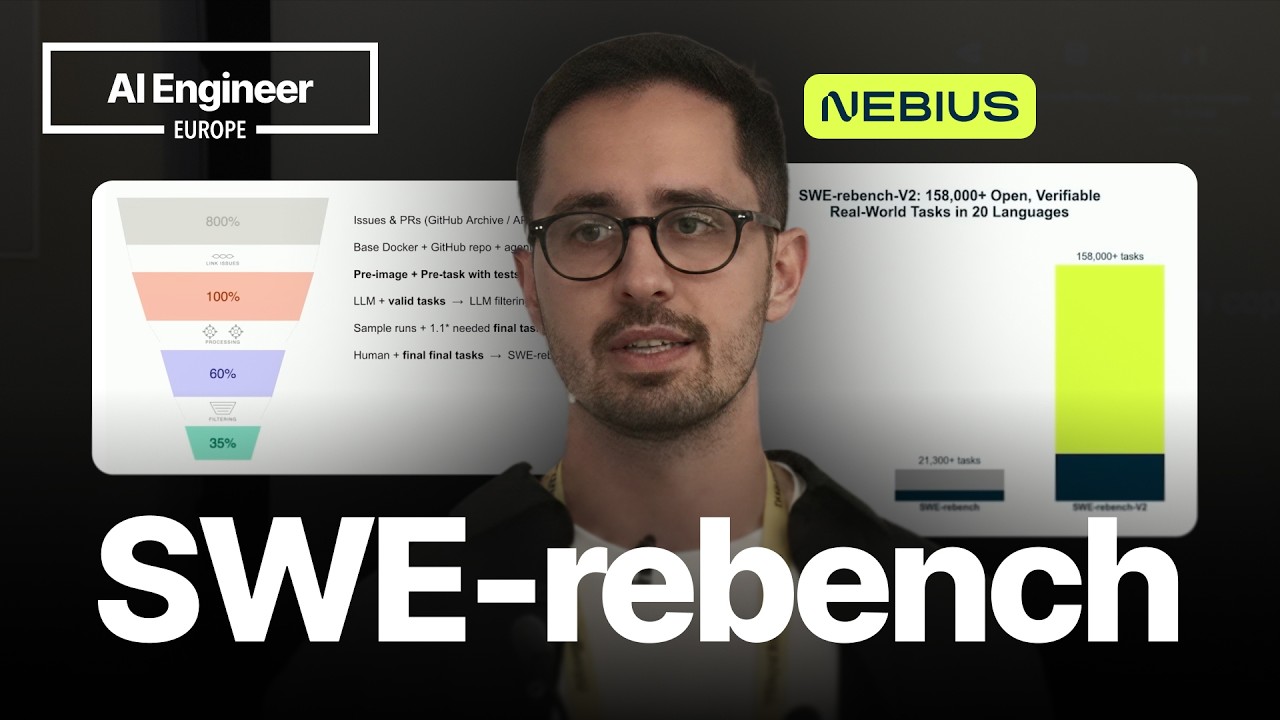
SWE-rebench: Lessons from Evaluating Coding Agents — Ibragim Badertdinov, Nebius

SWE-rebench: Lessons from Evaluating Coding Agents — Ibragim Badertdinov, Nebius

Ibragim Badertdinov from Nebius AI shares lessons from building and maintaining SWE-ReBench, a monthly leaderboard that evaluates coding agents on fresh, real-world software engineering tasks. The talk covers the anatomy of a good benchmark task, the challenges of filtering out noisy or flawed problems, and fascinating examples of how advanced models like Claude Code "cheat" by exploiting the environment. Finally, it explains how the same pipeline used for evaluation has produced large-scale, high-quality training datasets like SWE-bench, used by frontier AI labs.

Give Your Agent a Computer — Nico Albanese, Vercel

Give Your Agent a Computer — Nico Albanese, Vercel

Nico Albanese from Vercel demonstrates how to build a stateful, learning AI agent from scratch using AI SDK v6. The workshop covers the core components: a tool loop, provider-executed tools like web search, end-to-end type safety, and Vercel's new persistent named sandboxes, which give the agent a file system to persist state, memory, and even self-generated tools across sessions.