Team collaboration

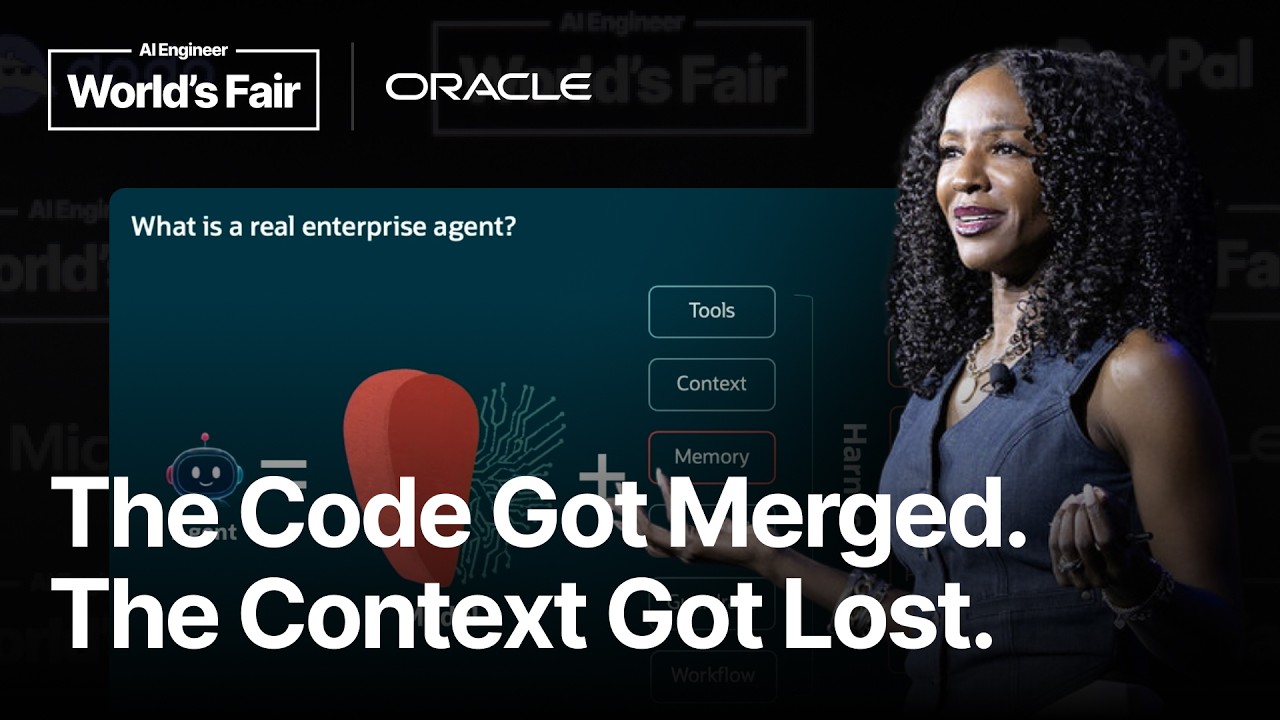
No Memory, No Harness: Why the Database Is the Last Line of Defense — Kay Malcolm, Oracle

No Memory, No Harness: Why the Database Is the Last Line of Defense — Kay Malcolm, Oracle

Kay Malcolm discusses how AI, while boosting individual performance, often hinders overall team productivity due to fragmented context. She introduces the concept of an "agent harness" with "memory" as its central nervous system, vital for sharing context. Drawing on personal experiences with database sprawl, she highlights the inefficiencies of storing diverse memory types across multiple data stores. Malcolm then presents Oracle's AI database (26AI) as a unified solution, capable of natively managing all memory types in a single platform, thereby enhancing team collaboration and solving the context problem for enterprise AI agents.
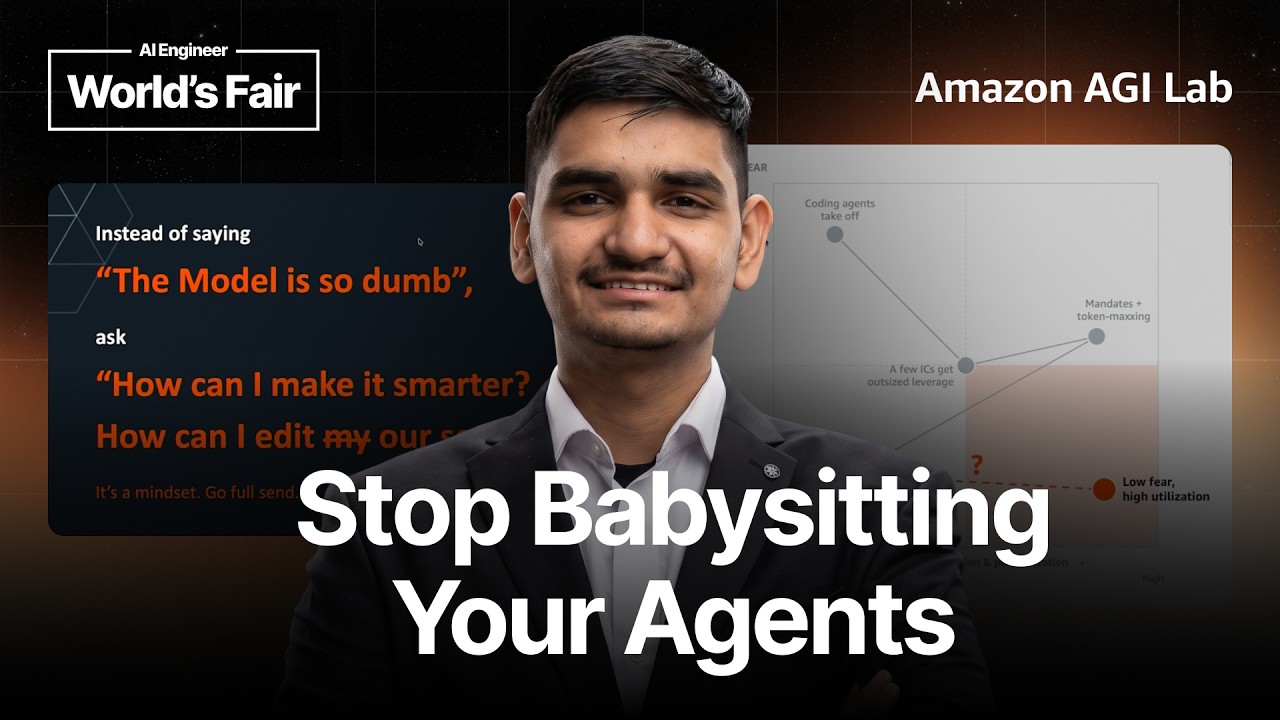
Agents, codebases, and teams — Aditya Khandelwal, Amazon AGI Lab

Agents, codebases, and teams — Aditya Khandelwal, Amazon AGI Lab

Aditya Khandelwal argues that scaling AI agent adoption within engineering teams is a leadership challenge, not an individual contributor problem. He highlights common pitfalls like agent "babysitting" and "slop," and provides a playbook emphasizing progressive disclosure, high-value automation, robust feedback loops, and a critical mindset shift to successfully integrate agents into team workflows.

Multiplayer agentic engineering — Arjun Singh, Superconductor

Multiplayer agentic engineering — Arjun Singh, Superconductor

Arjun Singh, co-founder of Superconductor, discusses the six crucial lessons learned from integrating AI agents into their software development workflow. He emphasizes the importance of building "multiplayer agentic engineering" systems where human teams and AI agents collaborate seamlessly, focusing on model agnosticism, pervasive agent interfaces, transparent work visibility, automated signal-to-code conversion (like their "meeting bot"), secure isolated cloud environments, and internal code-base benchmarking to optimize cost, quality, and speed.

Velocity Sickness: What Happens When Your Whole Team Gets 10x Faster — Matt Dailey, Ref.

Velocity Sickness: What Happens When Your Whole Team Gets 10x Faster — Matt Dailey, Ref.

Matt Dailey introduces "velocity sickness" – the stress of increased AI output without impact. He proposes shifting from ephemeral chat-based agent interactions to durable, shared documents as the "decision layer" to separate planning from implementation, enabling teams to own their code and prioritize ideas effectively.

Realtime multiplayer, automation, and you! — Idan Gazit, GitHub

Realtime multiplayer, automation, and you! — Idan Gazit, GitHub

Idan Gazit, head of GitHub Next, discusses the future of AI in software development, moving beyond personal productivity to enabling group collaboration and advanced automation. He introduces two prototypes: "Agentic Workflows" for autonomous, secure code upgrades and task execution using natural language, and "ACE," a real-time collaborative development environment designed to integrate AI into team workflows, addressing the 95% of development work beyond mere typing.

Developer Productivity at a Developer Productivity Startup • Robert-Jan "RJ" Huijsman • GOTO 2025

Developer Productivity at a Developer Productivity Startup • Robert-Jan "RJ" Huijsman • GOTO 2025

Robert-Jan Huijsman, Founding Engineer at Reboot.dev, outlines a pragmatic approach to developer productivity by tackling friction and non-determinism in both human collaboration and software development. He shares Reboot.dev's strategies, including async workstreams, full-stack typing, unit testing with AI, and foundational engineering principles like retries, durable execution, and strong consistency, to build reliable and efficient systems.