Structured output

Is Speculative Decoding Worth It? Profiling vLLM on NVIDIA Blackwell — Akamai

Is Speculative Decoding Worth It? Profiling vLLM on NVIDIA Blackwell — Akamai

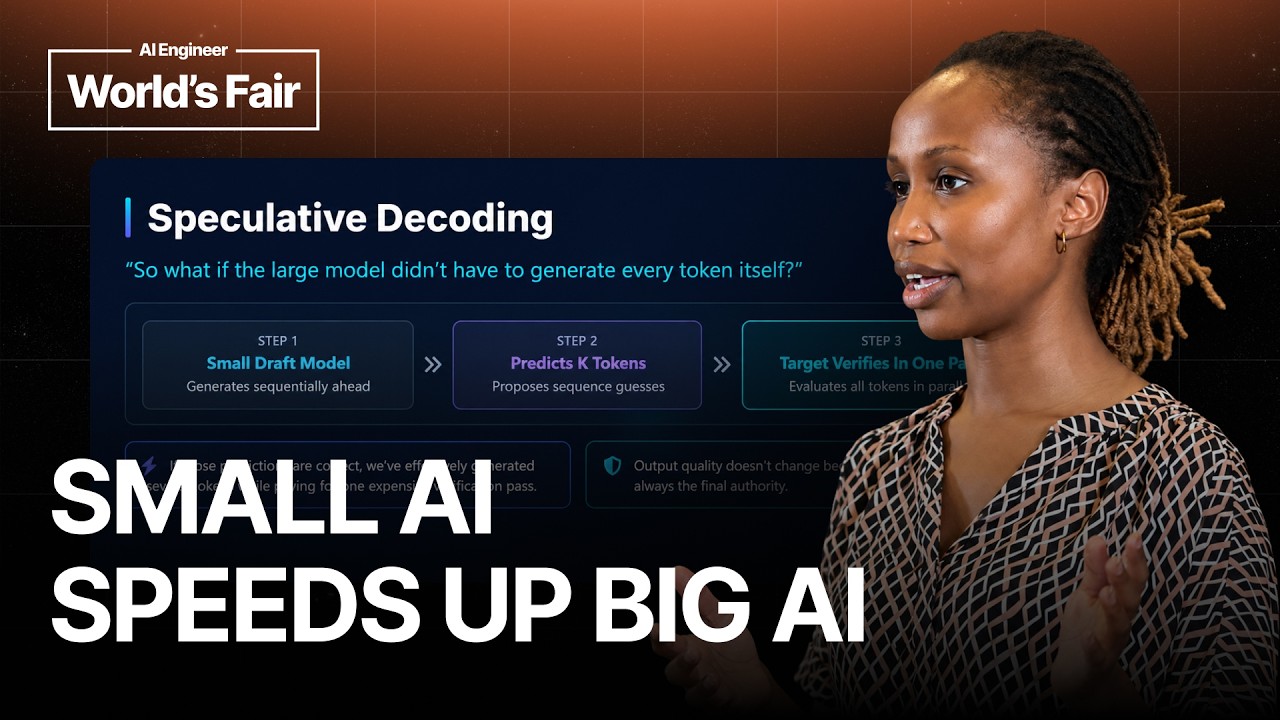
Sheilah Kirui explains speculative decoding for LLMs, detailing how a small draft model proposes tokens for a larger target model to verify in a single pass, accelerating the decoding phase. She covers the memory costs of hosting two models, criteria for choosing an effective draft model, and demonstrates its benefits for structured output (1.6x faster with high acceptance) versus its limited gains for creative tasks. The talk concludes by outlining when speculative decoding is most advantageous, considering VRAM availability, batch size, workload type, and context length.
Your Coding Agent Is 6 Months Out of Date — Jakub Hojsan, Exa

Your Coding Agent Is 6 Months Out of Date — Jakub Hojsan, Exa

Jakub Hojsan, a forward deployed engineer at Exa, explains how search built for coding and code-review agents closes the gap left by model knowledge cutoffs. He covers why agents need explicit rules for when to search, how query-dependent highlights cut a 100,000-character page to about 500 characters without added latency, and how Exa compares with native web search on transparency, cost, and model-provider independence, with a preview of Exa Agent.

Building AI Agents in Kotlin • Anton Arhipov • YOW! 2025

Building AI Agents in Kotlin • Anton Arhipov • YOW! 2025

Anton Arhipov from JetBrains introduces Koog, a lightweight, Kotlin-native framework for building tool-using LLM agents. This session covers the rationale for using Kotlin in AI, the architecture of Koog agents, and how its graph-based DSL enables the creation of structured, type-safe, and reproducible agent workflows, moving beyond simple prompt-chaining to sophisticated orchestration.

DSPy: The End of Prompt Engineering - Kevin Madura, AlixPartners

DSPy: The End of Prompt Engineering - Kevin Madura, AlixPartners

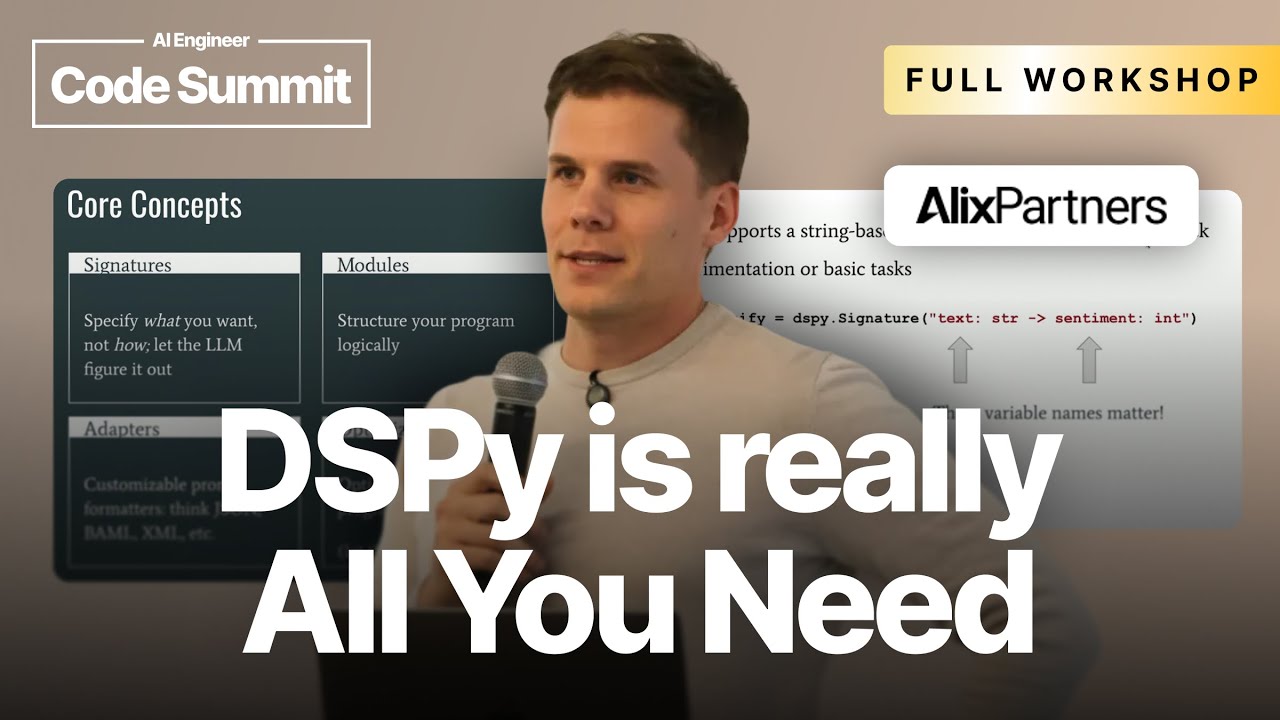
An in-depth guide to DSPy, a framework for programming with language models, not just prompting them. Learn its core concepts—Signatures, Modules, Adapters, and Optimizers—and see real-world examples of building robust, testable, and transferable AI applications for the enterprise.

Prompt Engineering for LLMs, PDL, & LangChain in Action

Prompt Engineering for LLMs, PDL, & LangChain in Action

Martin Keen explains the evolution of prompt engineering from an art to a software engineering discipline. He introduces LangChain and Prompt Declaration Language (PDL) as tools to manage the probabilistic nature of LLMs, ensuring reliable, structured JSON output through concepts like contracts, control loops, and observability.