Sre

Always-on agents run production without the on-call tax — Justin Smith, Resolve AI

Always-on agents run production without the on-call tax — Justin Smith, Resolve AI

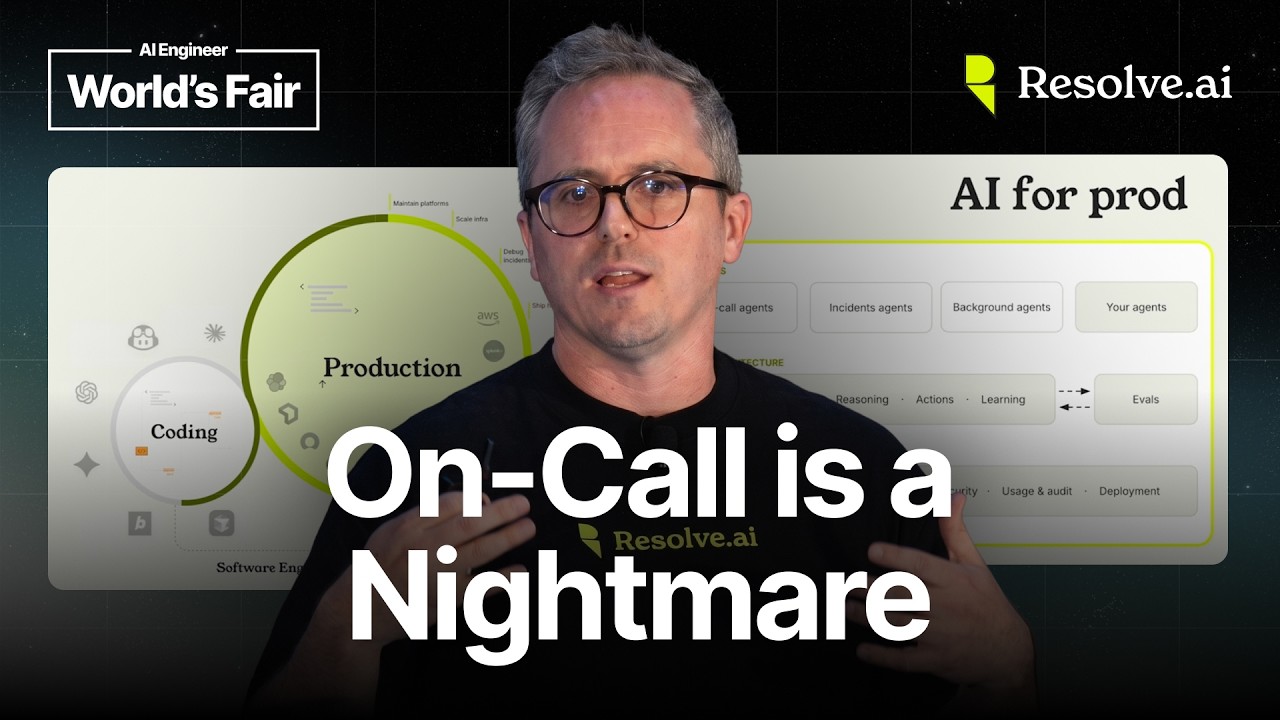
Justin Smith from Resolve AI discusses how AI agents address the increasing operational burden on engineers, highlighting that 70% of an engineer's time is spent running code. He introduces Resolve AI's background agents, which autonomously monitor deployments, perform health checks, generate reports, and answer engineering questions by leveraging deep production context and a self-learning knowledge system, effectively reducing the "on-call tax" and managing system complexity.
Sandboxing, Agent Harnesses, and Agent Teamwork

Sandboxing, Agent Harnesses, and Agent Teamwork

Shahram Anver, CEO of Cleric, details how AI agents for SRE are evolving beyond fast triage to continuous learning and operational memory. He discusses Cleric's architectural shifts, from complex early designs to simpler, sandboxed query agents, and the unique challenges SRE agents face in diverse production environments. A core focus is on human-agent interaction, redefining roles as managers overseeing agents, and how agents learn from unstructured data like Slack to build robust, actionable knowledge for autonomous, self-healing infrastructure. The discussion also touches on the future of software, differentiating between durable systems and rapidly developed "skills" or "vibe-coded" solutions.

Fighting AI with AI — Lawrence Jones, Incident

Fighting AI with AI — Lawrence Jones, Incident

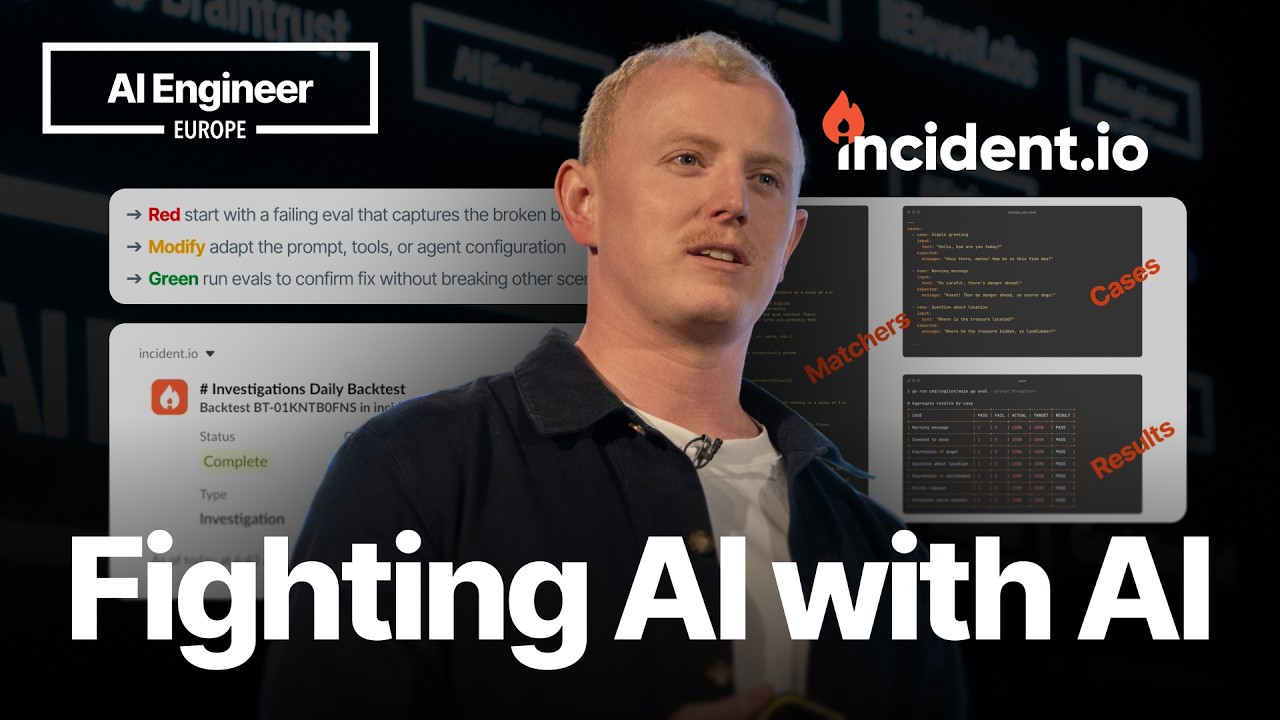
Lawrence Jones from Incident.io explains why their team needed AI to debug their complex AI SRE product. He details three powerful patterns: a CLI for agents to manage large evaluation files, serializing debug UIs into downloadable file systems for agent-based tracing, and multi-agent pipelines for fleet-scale failure analysis.

Platform Engineering: From Theory to Practice • Liz Fong-Jones & Lesley Cordero

Platform Engineering: From Theory to Practice • Liz Fong-Jones & Lesley Cordero

Liz Fong-Jones and Lesley Cordero explore the evolution of platform engineering from its DevOps and SRE roots, discussing the challenges of building effective developer platforms, the importance of psychological safety, the complexities of open source sustainability, and the delicate balance between centralized platform teams and developer autonomy.

Reliability Engineering Mindset • Alex Ewerlöf & Charity Majors • GOTO 2025

Reliability Engineering Mindset • Alex Ewerlöf & Charity Majors • GOTO 2025

Alex Ewerlöf, author of "Reliability Engineering Mindset," discusses the significant gap between Google's idealized SRE practices and the resource-constrained reality of most companies. The conversation focuses on making Service Level Objectives (SLOs) practical by tying Service Level Indicators (SLIs) directly to business impact, using them as a data-driven communication tool to negotiate reliability costs, and moving from a "best practice" to a "fit practice" mindset.

AI Agents: Transforming Anomaly Detection & Resolution

AI Agents: Transforming Anomaly Detection & Resolution

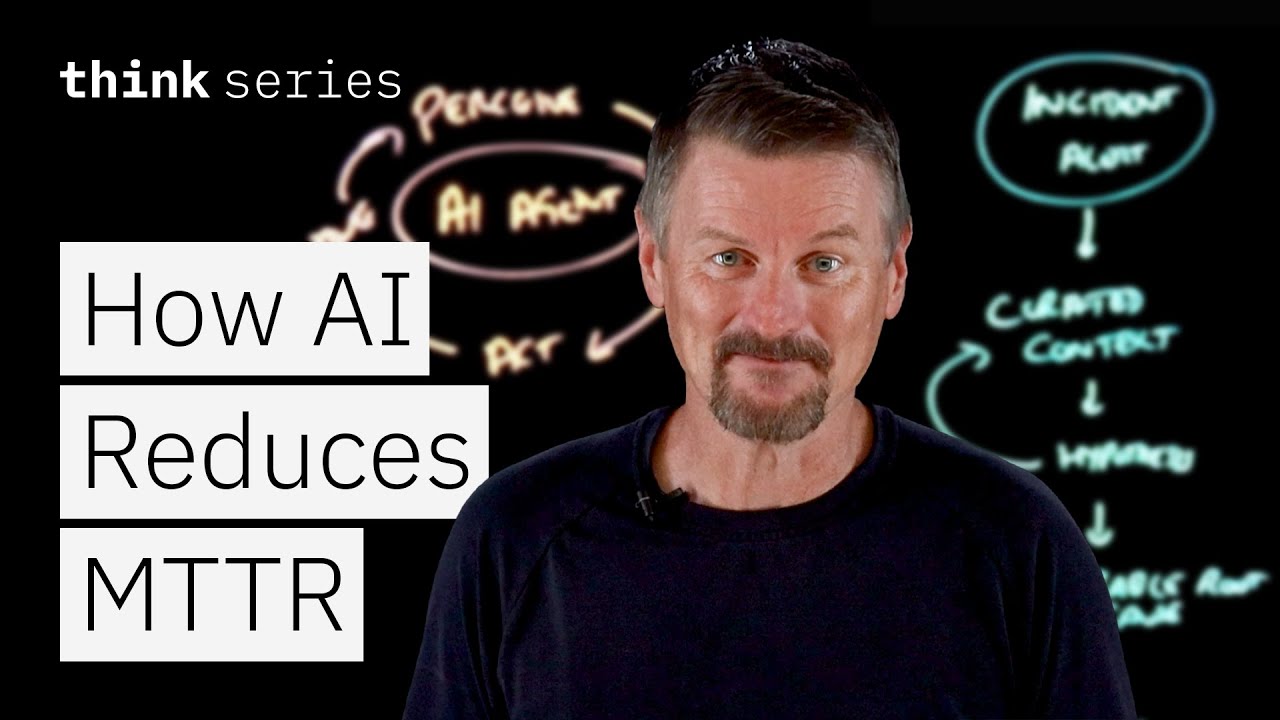
Martin Keen explores how agentic AI can significantly reduce IT downtime and Mean Time To Repair (MTTR) by moving beyond naive data dumps and embracing context-aware analysis. The key lies in using topology-aware correlation to curate relevant data for an AI agent, which can then systematically identify the root cause, provide explainable insights, and generate actionable remediation steps, ultimately augmenting human SREs rather than replacing them.