Sglang

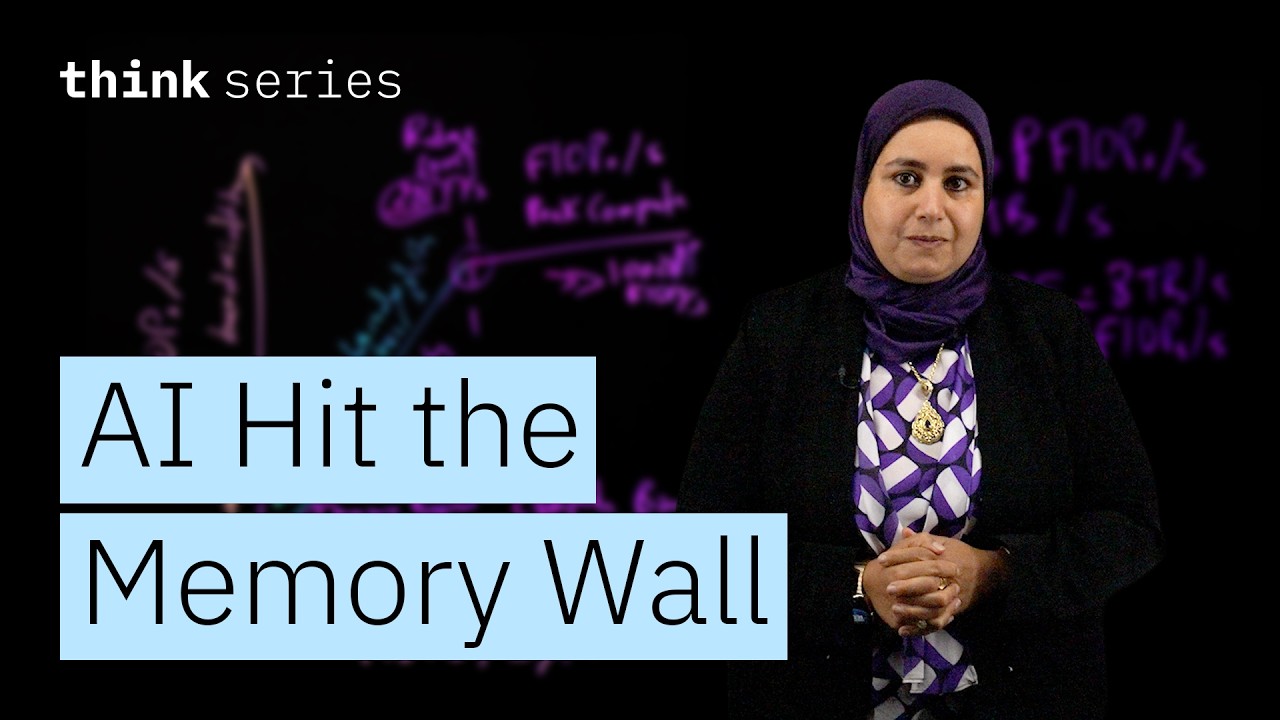
The AI Memory Wall: Why LLMs & AI Accelerators Hit a Bottleneck

The AI Memory Wall: Why LLMs & AI Accelerators Hit a Bottleneck

A walkthrough of the memory wall, explaining why raw chip compute growth has not translated into proportional AI workload speedups. It covers arithmetic intensity, the roofline model and ridge points for the B200 GPU, why LLM decode is memory-bound while prefill is compute-bound, and how batching and continuous batching shift workloads toward higher efficiency.
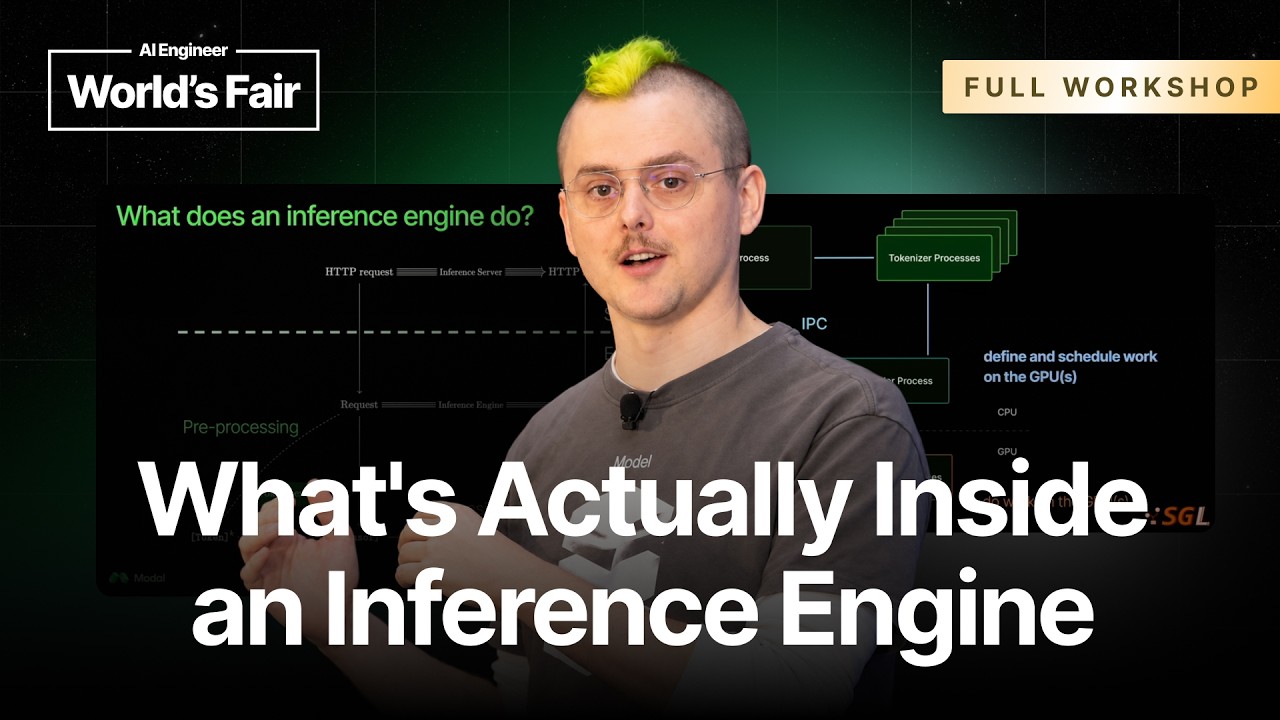

What Is an Inference Engine, Anyway? — Charles Frye, Modal

What Is an Inference Engine, Anyway? — Charles Frye, Modal

Charles Frye explains the architecture, performance engineering, and operational challenges of LLM inference engines. He dissects workload types, core components like schedulers and kernel backends, and advanced techniques such as KV caching, CUDA graphs, and speculative decoding, concluding with essential strategies for observability and debugging in production environments.

Large clusters for small models — Daniel Svonava, Superlinked

Large clusters for small models — Daniel Svonava, Superlinked

Daniel Svonava argues that small open-source models, when specialized and properly served, can achieve frontier performance for specific tasks, offering significant cost savings and latency improvements over large, generalized models or managed endpoints. He highlights challenges with existing serving infrastructure for a fleet of diverse small models and introduces Superlinked's open-source solution, which leverages a pull-based, centralized queuing system, a Rust sidecar for runtime abstraction, and an autoresearch loop for automated model tuning, enabling high throughput (e.g., half a million embedding tokens/sec on one GPU) and efficient deployment of specialized models and LoRAs.

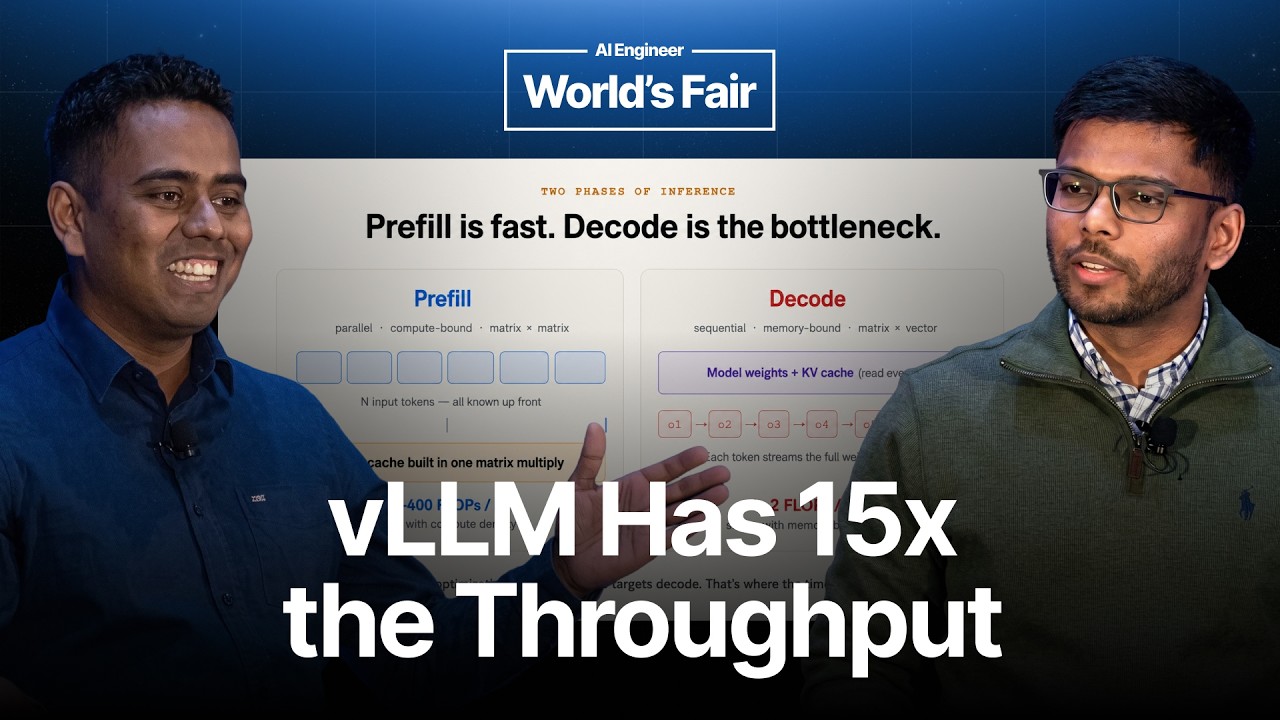
Deep dive on LLM Inference at Scale — Harshul Jain, Audible & Tanmay Sah, Independent AI Researcher

Deep dive on LLM Inference at Scale — Harshul Jain, Audible & Tanmay Sah, Independent AI Researcher

A workshop by Harshul Jain and Tanmay Sah breaks down LLM inference optimization from first principles, addressing memory, TTFT, and throughput issues. It covers foundational concepts like KV cache mathematics and the prefill/decode phases, then dives into model-side optimizations (quantization, attention variants like GQA, FlashAttention) and serving-side techniques (Paged Attention, continuous batching, prefix caching, KV quantization). The session concludes with benchmarks of popular inference engines like vLLM and SGLang, highlighting their strengths for different workloads, and outlines future research directions.

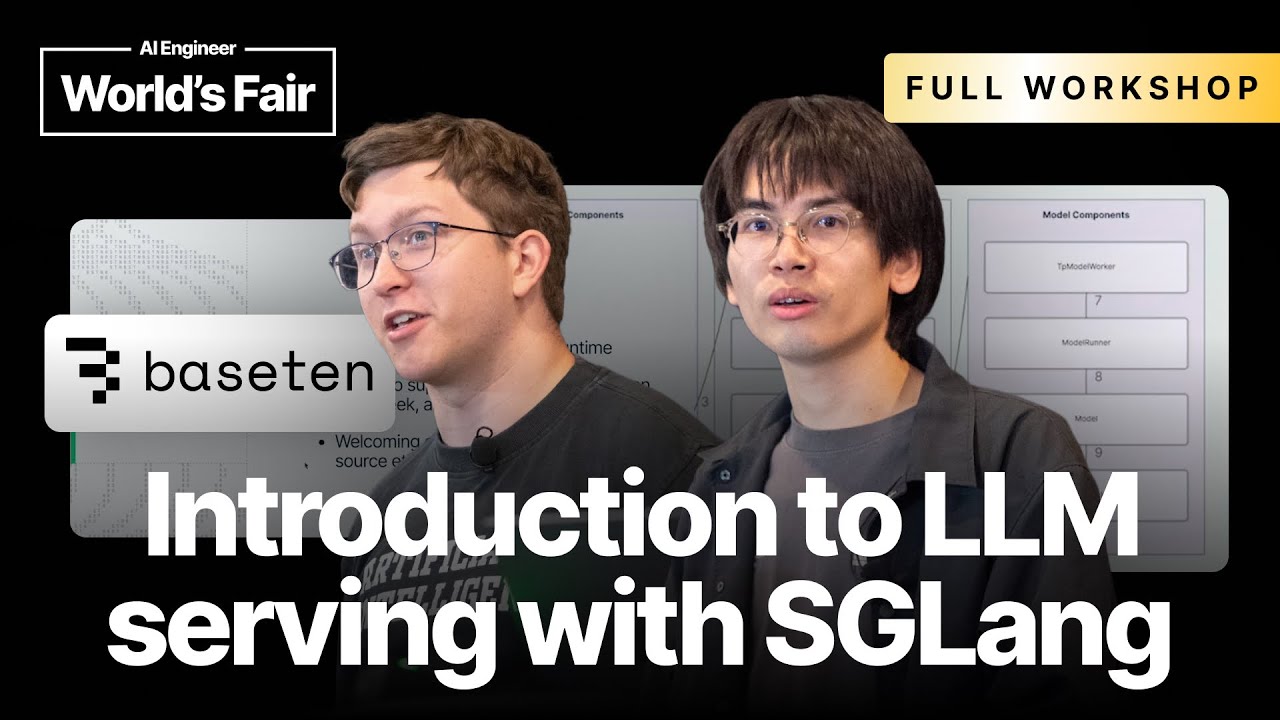
Introduction to LLM serving with SGLang - Philip Kiely and Yineng Zhang, Baseten

Introduction to LLM serving with SGLang - Philip Kiely and Yineng Zhang, Baseten

A deep dive into SGLang, an open-source serving framework for LLMs. This summary covers its core features, history, performance optimization techniques like CUDA Graph and Eagle 3 speculative decoding, and how to contribute to the project.