Three experts discuss the evolving landscape of data in AI, covering its critical role in model performance, challenges in sourcing and evaluating expert data, the development of advanced data generation techniques for diffusion models, and the complexities of multilingual pre-training.
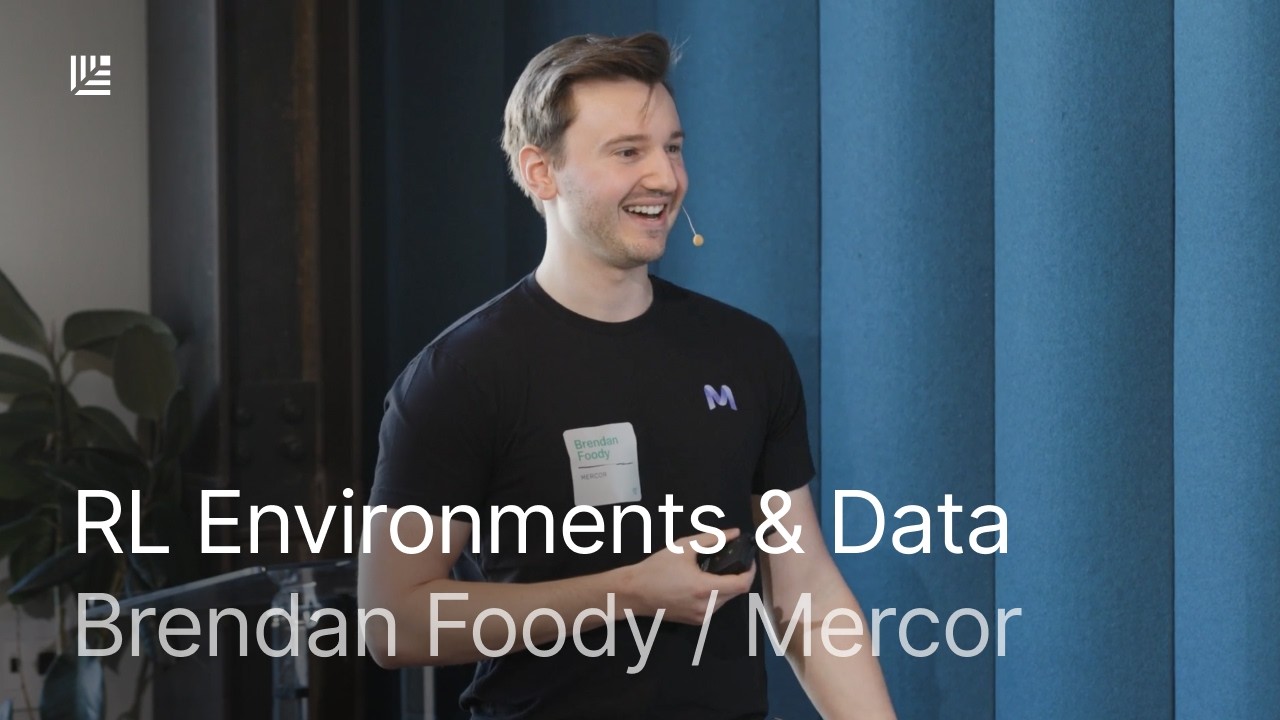
RL Environments Explained: How AI Agents Learn Real-World Work | Brendan Foody, Mercor
Mercor CEO Brendan Foody elucidates the concept of RL environments, essential for training advanced AI agents. He breaks down their three core components—worlds, apps, and tasks—and details Mercor's evolution from crowdsourced data to expert-driven, "agentic" data. Foody underscores the indispensable role of human experts in defining frontier tasks and creating robust verifiers, exemplified by a real legal RL environment. He shares post-training results demonstrating significant performance gains with modest compute, discusses data pricing and quality, demystifies synthetic data, and explores future directions like ultra-long-horizon tasks and virtual co-workers. The talk emphasizes that data sets are becoming a critical moat for application-layer companies, enabling them to own their intelligence.
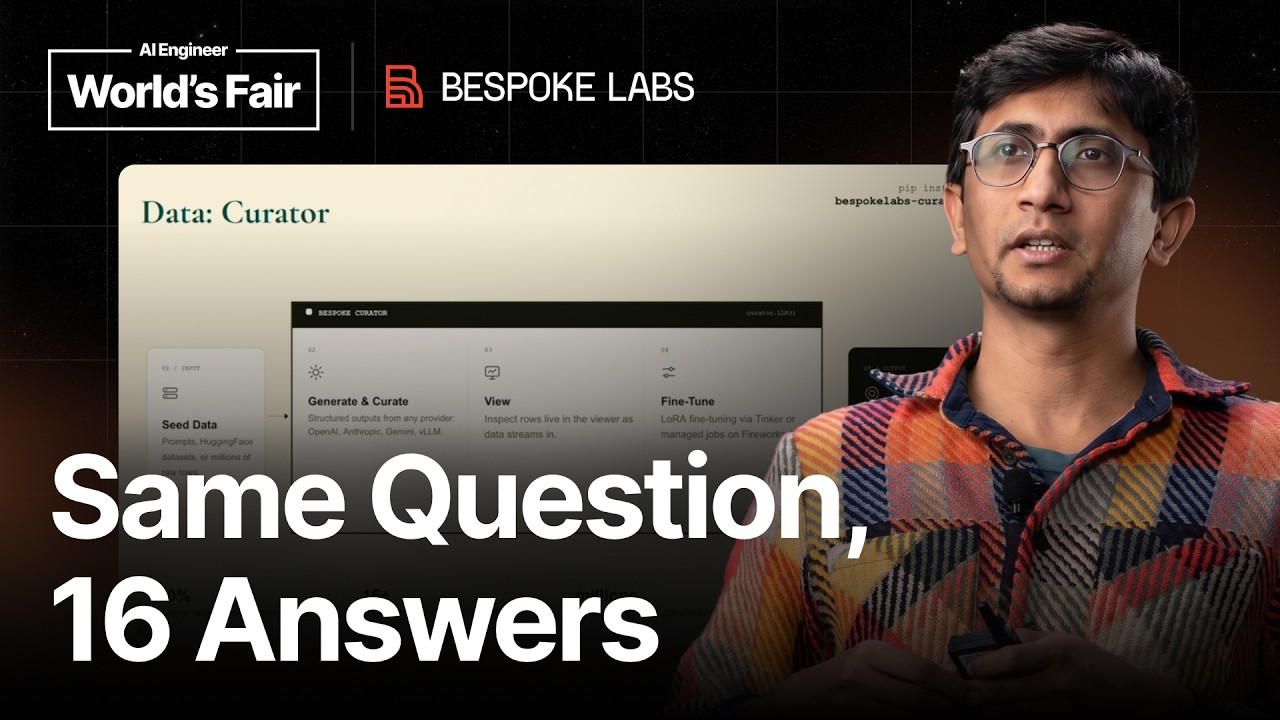
Data and Environment Curation for Post-Training LLMs — Mahesh Sathiamoorthy, Bespoke Labs
Mahesh Sathiamoorthy of Bespoke Labs argues that high-quality data and curated RL environments are the true bottlenecks for post-training LLMs, especially for building reliable, autonomous agents. He grounds this in experiences with OpenThoughts, a reasoning dataset, highlighting counterintuitive lessons like the importance of diverse reasoning traces and the fact that stronger teachers aren't always best. A key takeaway, reinforced by their Curator tooling, is that a disciplined curation stack is essential for transforming base models into capable, post-trained agents for real-world applications like credit card compliance.