Pipecat

The New Primitives: Building AI Native Software — Kwindla Kramer, Daily

The New Primitives: Building AI Native Software — Kwindla Kramer, Daily

Kwindla Hultman Kramer argues that current AI agents are akin to 1995 web pages – a foundational primitive, not the ultimate destination. Drawing a historical parallel, he predicts the emergence of "AI native software" that will build upon and surpass agents, much like web applications evolved from simple web pages. He illustrates this through computing history, highlighting transformative shifts like VisiCalc's impact on accounting and the vision of Apple's Knowledge Navigator, and concludes by showcasing a game, Gradient Bang, that demonstrates the core primitives of this future AI native software.

Full Workshop: Realtime Voice AI — Mark Backman, Daily

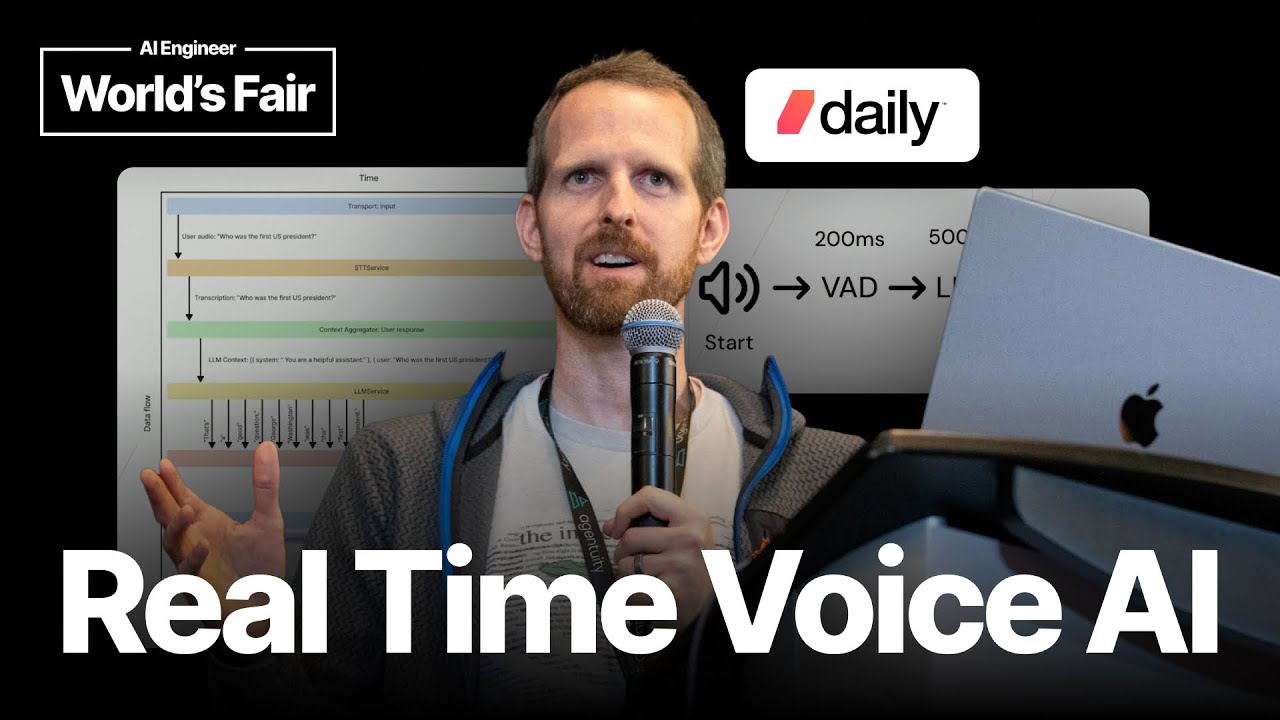
Full Workshop: Realtime Voice AI — Mark Backman, Daily

An in-depth look at building real-time, production-grade voice AI agents using the open-source Pipecat framework. This summary covers the core concepts of voice AI pipelines, the shift to speech-to-speech models like Gemini Live, and advanced techniques for managing latency, context, and turn-taking.

Pipecat Cloud: Enterprise Voice Agents Built On Open Source - Kwindla Hultman Kramer, Daily

Pipecat Cloud: Enterprise Voice Agents Built On Open Source - Kwindla Hultman Kramer, Daily

A deep dive into the challenges of building production-grade, low-latency voice AI agents, and how the open-source, vendor-neutral framework Pipecat provides a comprehensive solution for development, deployment, and scaling. Learn about voice AI architecture, the trade-offs between speech-to-speech and text-based models, and practical deployment strategies.

Your realtime AI is ngmi — Sean DuBois (OpenAI), Kwindla Kramer (Daily)

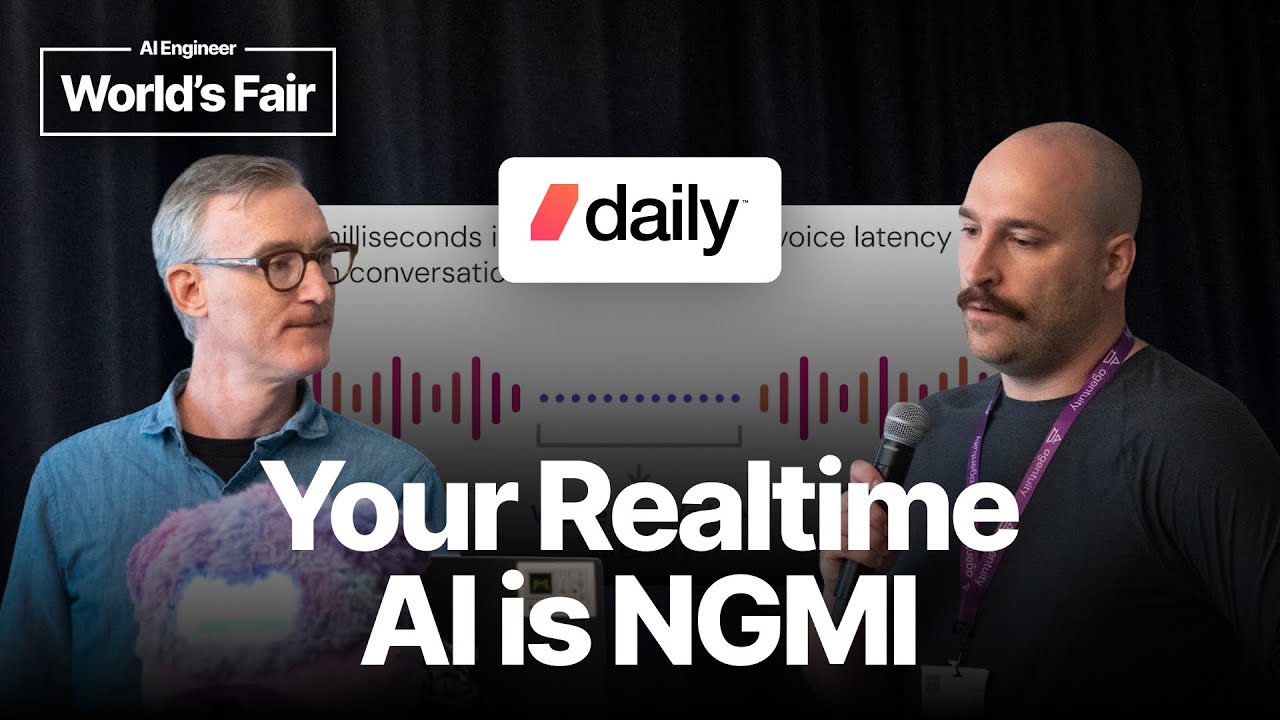
Your realtime AI is ngmi — Sean DuBois (OpenAI), Kwindla Kramer (Daily)

Sean DuBois (OpenAI, Pion) and Kwindla Hultman Kramer (Daily, Pipecat) argue that to build successful real-time AI applications, developers must start from the network layer up, prioritizing WebRTC over WebSockets to manage latency effectively and enable advanced features like interruption and state management.