Model architecture

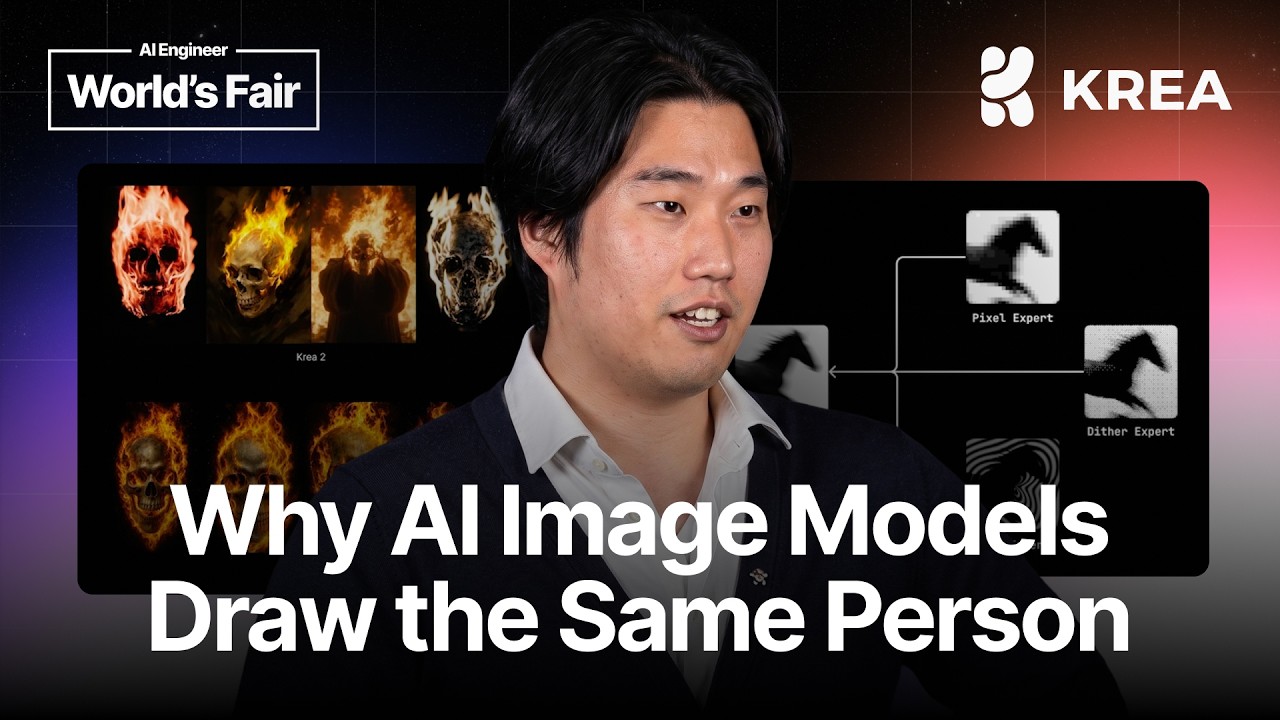
Training Krea 2: What matters in generative model training — Sangwu Lee, Krea.ai

Training Krea 2: What matters in generative model training — Sangwu Lee, Krea.ai

The talk by Sangwha Lee discusses Krea 2's open-source medium variant, emphasizing stylistic diversity and rapid iteration over the consistency-focused approach of larger models. A significant portion details their robust data curation pipeline, including unique methods for deduplication, filtering out AI-generated images, utilizing sparse autoencoders for unsupervised tagging, and ensuring world knowledge coverage. He outlines an LLM-inspired multi-stage training process, culminating in a prompt expander, and shares insights on fast iteration and future directions for image generation, highlighting the increasing integration of VLM advancements.

Compression at the Edge — Chris Alexiuk, NVIDIA

Compression at the Edge — Chris Alexiuk, NVIDIA

This panel discussion explores the critical role of model compression, particularly quantization, in democratizing AI. It delves into how massive models like GLM 5.2 can be shrunk by over 80% without equivalent performance loss, thanks to techniques like mixed-precision quantization and understanding uneven layer importance. The discussion covers NVIDIA's NVFP4 format, challenges posed by new model architectures, the preference for KL divergence over accuracy benchmarks, and the vision of future AI running efficiently on all local devices.

Thinking Machines Lab drops Inkling & Meta’s Muse Spark 1.1

Thinking Machines Lab drops Inkling & Meta’s Muse Spark 1.1

This episode covers Thinking Machines' Inkling, an open-source, customizable model prioritizing architecture over benchmarks; Meta's Muse Spark 1.1, positioned for agent orchestration and enterprise use; OpenAI's GPT-5.6 Sol's 8% score on ARC-AGI-3, reigniting AGI debates; and Anthropic's "J-space" paper, exploring internal model reasoning and its implications for AI safety and interpretability.

Why a Nation Can't Outsource Its Frontier AI - Alistair Pullen (Cosine AI)

Why a Nation Can't Outsource Its Frontier AI - Alistair Pullen (Cosine AI)

Alistair Pullen, CEO of Cosine, discusses the UK's sovereign AI initiative, born from US export controls. He outlines Cosine's unique economic model, competing with "millions" against "billions" by licensing models instead of hosting inference. Pullen delves into why open models lag frontier systems, emphasizing active parameters and post-training data. He explains Cosine's innovative approach to "slop" through process-based RL and credit attribution, advocating for runtime proof in code review. The conversation covers their hierarchical "Swarm" sub-agent system, the challenges of memory, and advanced synthetic data generation, concluding on the geopolitical impact of export controls as an unexpected catalyst for UK AI.

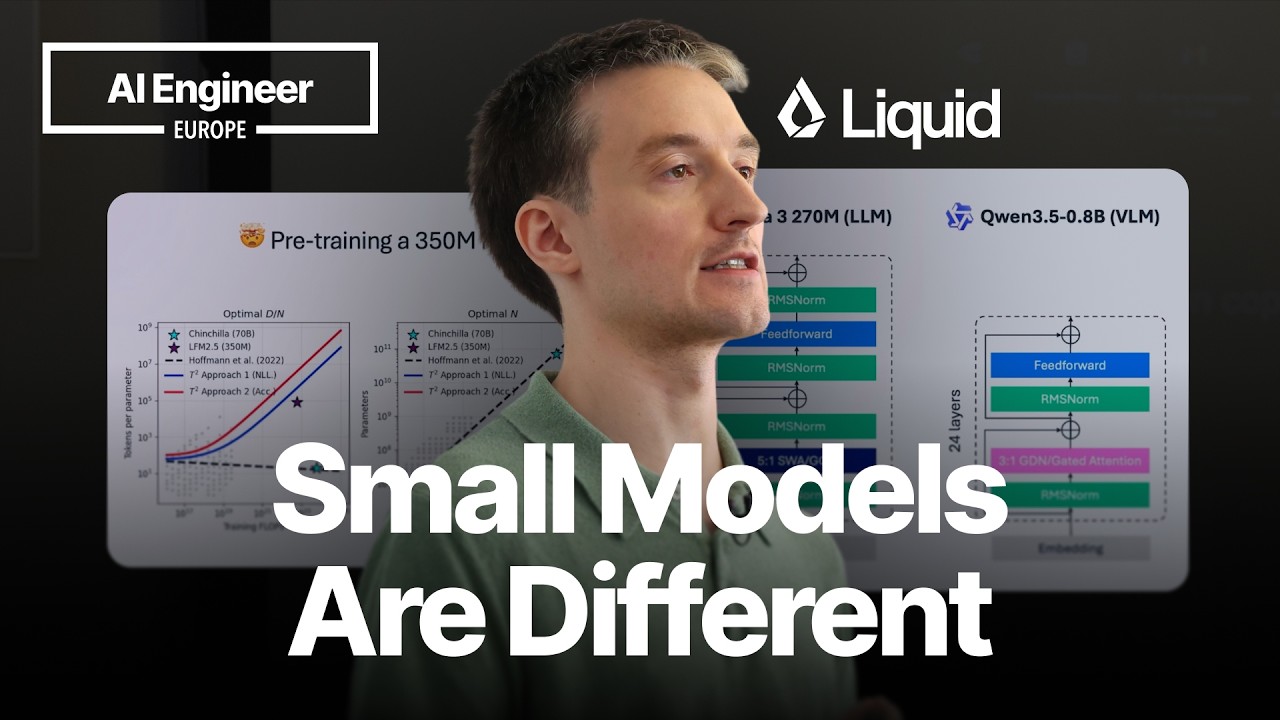
Everything I Learned Training Frontier Small Models — Maxime Labonne, Liquid AI

Everything I Learned Training Frontier Small Models — Maxime Labonne, Liquid AI

Maxime Labonne from Liquid AI shares a playbook for post-training frontier small models (under 1GB) for on-device deployment. The talk breaks down the LFM2.5 recipe, which includes on-policy preference alignment and agentic reinforcement learning, and addresses unique challenges at the 1B scale, such as capability interference and 'doom loops', offering concrete solutions to build efficient models for tasks like data extraction and tool use.

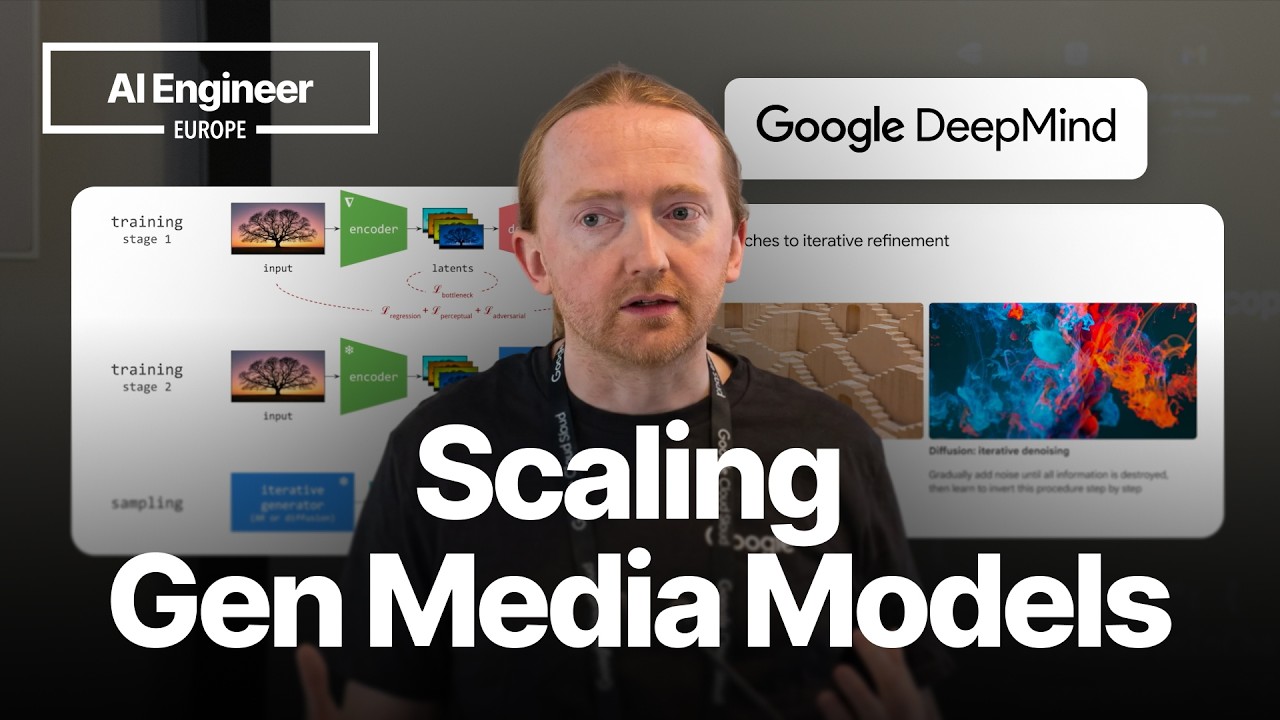
Building Generative Image & Video models at Scale - Sander Dieleman (Veo and Nano Banana)

Building Generative Image & Video models at Scale - Sander Dieleman (Veo and Nano Banana)

Sander Dieleman from Google DeepMind provides a behind-the-scenes look at the key components of training large-scale diffusion models for audio-visual data. The talk covers the entire pipeline, from the critical role of data curation and latent representations to the mechanics of diffusion, network architectures, sampling with guidance, and advanced control signals.