Model agnosticism

The Software Factory: From Bug Report to Production Code — Davis Palmie, Factory

The Software Factory: From Bug Report to Production Code — Davis Palmie, Factory

Davis Palmie of Factory explains the software factory, a system of agents that turns bug reports and user feedback into production code. He covers leadership concerns about cost, model choice, engineering roles, and org structure, argues that coding was never the bottleneck, and lays out principles for a factory: model agnosticism, sovereign deployment, and SDLC-wide integration. He also describes eight pillars of agent readiness, starting with narrow use cases like incident triage, and closes with why outcome metrics should replace token counts.
Building AI Agents for Everyone

Building AI Agents for Everyone

Gumloop co-founders Max Brodeur-Urbas and Rahul Behal discuss how a visual workflow builder evolved into an enterprise agent platform, what they learned from more than 1,100 customer calls, how a power user at Instacart opened the door to enterprise sales, and why the people who understand a task should be the ones automating it. The conversation covers enterprise requirements, pricing transparency, model neutrality, and the IT-led buying dynamics that shape adoption.

Notion's Token Town — Sarah Sachs, Notion

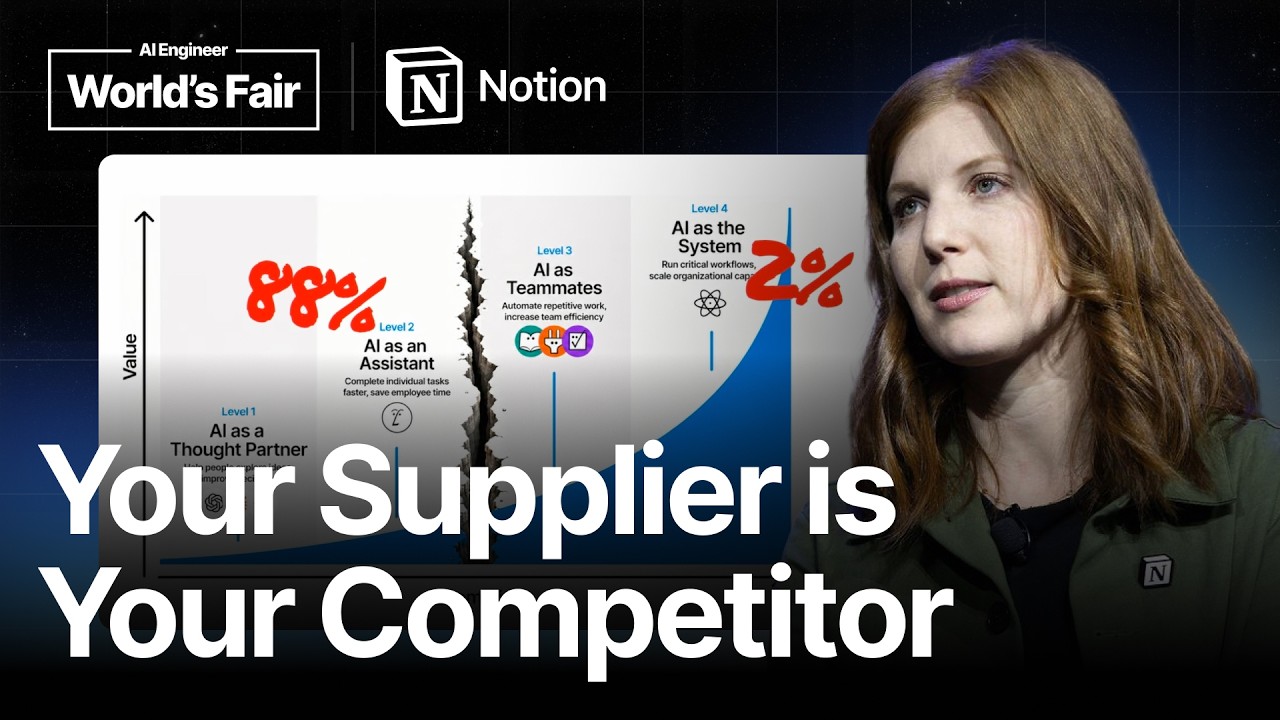
Notion's Token Town — Sarah Sachs, Notion

Sarah Sachs, Head of AI Engineering at Notion, discusses the economic traps of AI model contracts and advocates for a "win on product" strategy. She details how Notion maintains optionality and leverage by treating suppliers as competitors, implementing a model-agnostic "AI Switzerland" approach with an auto model, leveraging open-weight models, and prioritizing data flywheels and orchestration over token economics to build sustainable AI products.

The Model-Agnostic AI Platform Betting That No Single Lab Will Win

The Model-Agnostic AI Platform Betting That No Single Lab Will Win

Stanislas Polu, co-founder of Dust, shares his journey from Stripe to OpenAI and his motivations for building Dust. He discusses Dust's model-agnostic approach, the challenges of fundraising in an environment dominated by Frontier Labs, the strategic decision to build in France, and critical insights into pricing models and defensibility for AI product companies amidst commoditized intelligence.

Podcast Crossover: AIE, AGI, frontier lab strategy with ​ ⁨@matthew_berman⁩  and @swyxtv

Podcast Crossover: AIE, AGI, frontier lab strategy with ​ ⁨@matthew_berman⁩ and @swyxtv

Matt, the organizer of the AI.engineer conference, shares insights into its origin, the challenges of early adoption, and its current value as a neutral ground for AI labs. He delves into AI hardware trends, discussing specialized chips like Etched, and gives a nuanced take on Anthropic's Fable, addressing performance concerns and compute limitations. The conversation then explores OpenAI's rumored equity offer to the US government, discussing implications for regulation and societal involvement. Matt shares his perspective on AI existential risk and alignment, emphasizing the need for pragmatic engineering solutions. Finally, he outlines the limitations of current LLMs, the critical need for data efficiency, and offers strategic advice for "Agent Labs" navigating the "model capability overhang" versus multi-model agnosticism.