MC p gateway

A Bank Built Its Own Coding Agent. It Took Off — Felipe Felisola Caso & Francesco Galletta, Monzo

A Bank Built Its Own Coding Agent. It Took Off — Felipe Felisola Caso & Francesco Galletta, Monzo

Felipe Felisola Caso and Francesco Galletta from Monzo explain how an internal Slack agent grew from a viral emoji trigger into a teammate authoring over 10% of merged PRs and running more than 1,800 tasks a day. They attribute its speed to existing platform capabilities, an MCP gateway, a sandboxed orchestration system suited to a regulated bank, and an agent designed as a composable building block for incidents, on-call data quality and non-engineer contributions.
Paving the Road to Production: Governed Enterprise AI Agents — Harish Gaggar, Credit Karma

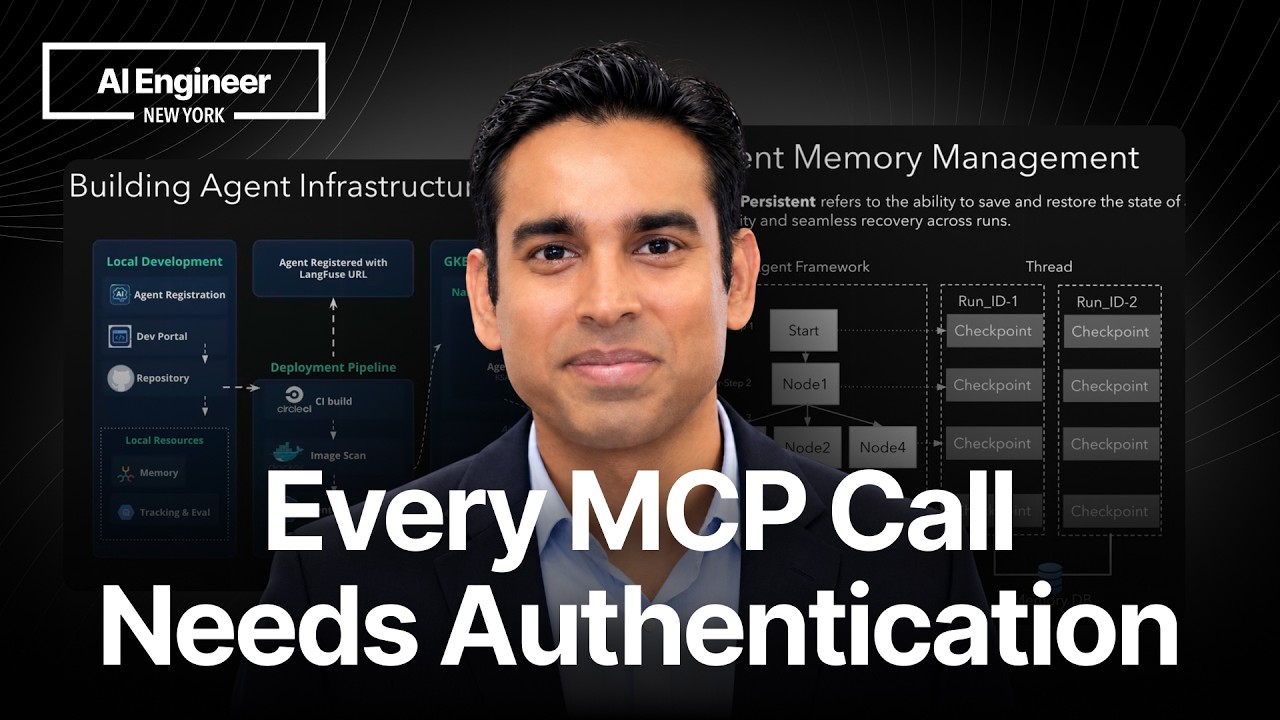
Paving the Road to Production: Governed Enterprise AI Agents — Harish Gaggar, Credit Karma

Harish Gaggar of Intuit Credit Karma walks through an internal paved path for taking enterprise AI agents from experiments to production. The talk covers portal-based registration and provisioning, a centralized authenticated MCP gateway with custom reviewed MCP servers, gateway monitoring with OpenTelemetry, Tempo, Prometheus, and Grafana, LangGraph workflows with policy checks and human approval, durable memory through threads and checkpoints, agent tracking and evaluation records, PII filtering, and context optimization for token reduction.

An AI Future Without the Lock-In — Remy Guercio, Tailscale

An AI Future Without the Lock-In — Remy Guercio, Tailscale

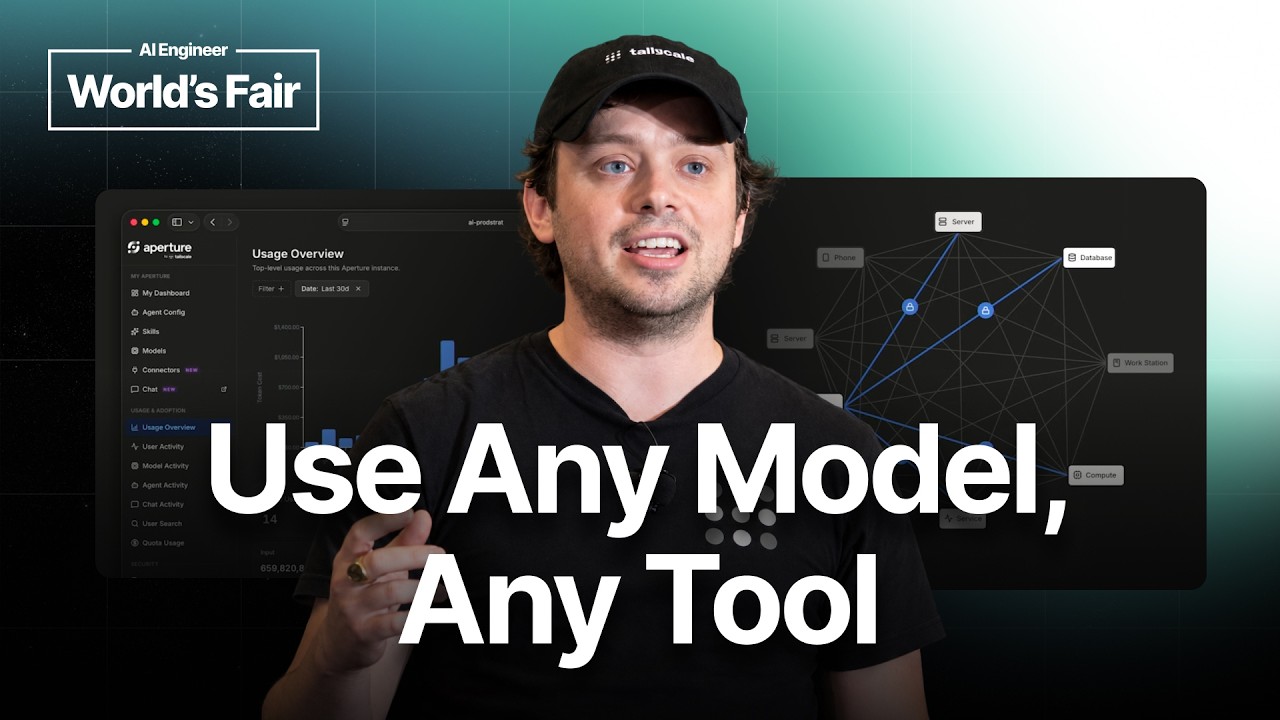
Remy Guercio of Tailscale argues that the era of unlimited AI budgets is over and that teams need to escape lock-in while proving real ROI. He breaks an internal AI deployment into four layers (models, data connectors, interfaces, and sandboxes) and presents an AI gateway as the way to keep each layer swappable. He demonstrates how Tailscale's Aperture uses tailnet identity instead of shared API keys, sets per-model budgets, serves as both an LLM and MCP gateway, centralizes authentication for coding agents, and provides logs for diagnosing agent behavior.

No, That's Not a Software Factory — Ryan Cooke, WorkOS

No, That's Not a Software Factory — Ryan Cooke, WorkOS

Ryan Cooke of WorkOS argues that software factories should be judged by customer outcomes rather than PR counts or AI-generated code volume. He describes how WorkOS embedded its product engineering process into its factory through TARS, Horizon, a PM agent that drafts Hilltop docs, and an internal MCP gateway connected to Snowflake, along with bug triage, owned sandboxes, a memory layer and outcome-focused metrics.

Agentic SDLC at Uber — Uday Kiran Medisetty & Adam Huda, Uber

Agentic SDLC at Uber — Uday Kiran Medisetty & Adam Huda, Uber

Uber has transformed its software development with an agentic AI-powered factory, leading to a dramatic increase in engineer productivity. The presentation details six key infrastructure components: a unified model gateway with strict PII and safety guardrails, an MCP gateway for streamlined agent tool access and token optimization, agentified dev pods for rapid execution, a managed skills marketplace, a comprehensive context graph, and the Cortana AI assistant. Adam Huda then demonstrates an end-to-end feature development workflow, highlighting a critical shift to inner-loop validation (stopping short of CI) and automated, managed maintenance loops. The ultimate takeaway is that the bottleneck has moved from technical execution to strategic decision-making: "should we build it?" rather than "can we build it?"