Loop engineering

What Is Loop Engineering? Building Better AI Agents

What Is Loop Engineering? Building Better AI Agents

Martin Keen explains loop engineering as the next step beyond prompt engineering: designing systems where AI agents act, observe, adjust, and repeat toward verifiable goals. The discussion covers goal design, triggers, context and persistent state, tools via MCP and APIs, verifier subagents, and why humans must remain in the loop to manage comprehension debt, intent debt, and cognitive surrender.
Harness Engineering: How to Build a Software Factory — Dru Knox, Tessl

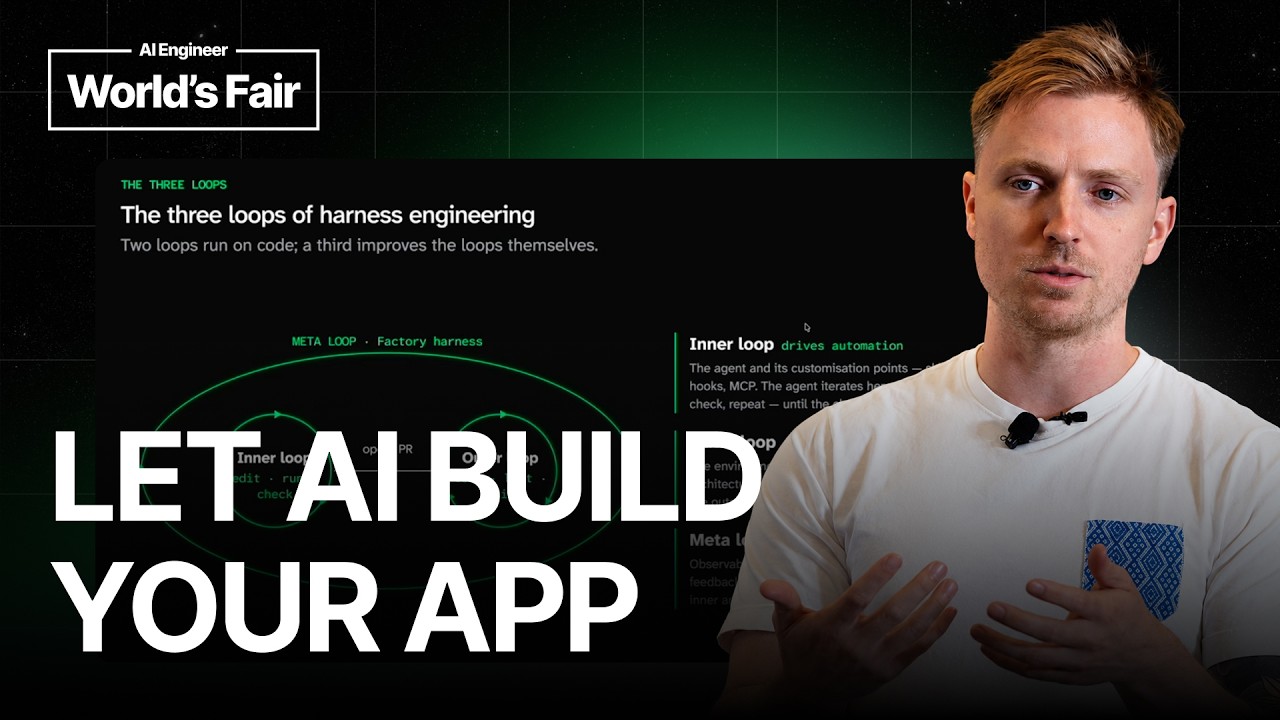
Harness Engineering: How to Build a Software Factory — Dru Knox, Tessl

Dru Knox of Tessl discusses harness engineering, the discipline for building software factories with AI agents. He outlines a factory's three pillars—autonomy, automation, quality—and introduces inner, outer, and meta loops. Knox explains why this field is challenging and proposes a three-layer architecture: control plane, agent-ready stack, and improvement loops, concluding with key metrics to track progress towards an agent-driven software development future.

Your Agents Are in Solitary Confinement: Why MCP & A2A Aren't Enough — Vlad Luzin, Band

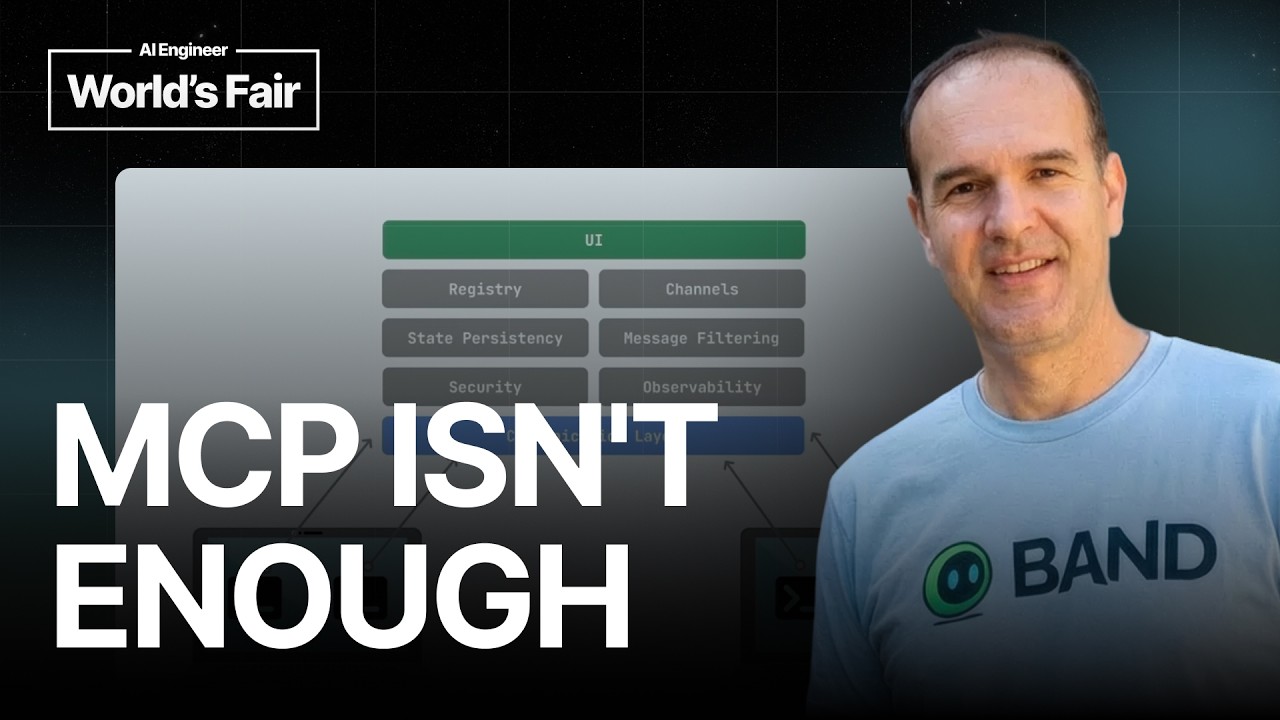
Your Agents Are in Solitary Confinement: Why MCP & A2A Aren't Enough — Vlad Luzin, Band

Vlad Luzin, co-founder and CTO of Band, argues that connecting AI agents is a distributed systems problem that current tools such as MCP, A2A and messaging platforms do not solve. He lays out what is required for real agent collaboration, including ordered real-time transport, persistence, runtime binding, agent-first abstractions and governance, then demonstrates Codex, LangGraph and Claude Code agents finding and working with each other under full human-in-the-loop visibility.

Why Your Agent Evals Are Missing the Real Failures (with Aishwarya Srinivasan)

Why Your Agent Evals Are Missing the Real Failures (with Aishwarya Srinivasan)

Aishwarya Srinivasan, co-founder of The Gen Academy, discusses the shift in AI and software engineering, highlighting how "cheap code" necessitates strong engineering judgment and a "whole-system eval" approach for agentic AI. She explains the resurgence of reinforcement learning for fine-tuning, the evolution from prompt to loop engineering, and introduces her MIND framework for living with AI. Srinivasan emphasizes experimentation as the most critical career skill and offers insights into what differentiates successful AI startups in today's competitive landscape.

Reading Group July 2026 - Loop Engineering

Reading Group July 2026 - Loop Engineering

This session provides an in-depth exploration of Loop Engineering, a paradigm shift from manual AI prompting to designing autonomous systems that orchestrate AI agents. Speakers share practical experiences, from building production-grade platforms with automated code generation and adversarial AI reviews to experimental loop structures and foundational infrastructure layers. Key discussions address challenges like managing token costs, preventing agent chaos, and implementing robust verification mechanisms for industrializing software development.