Llm inference

What Is an Inference Engine, Anyway? — Charles Frye, Modal

What Is an Inference Engine, Anyway? — Charles Frye, Modal

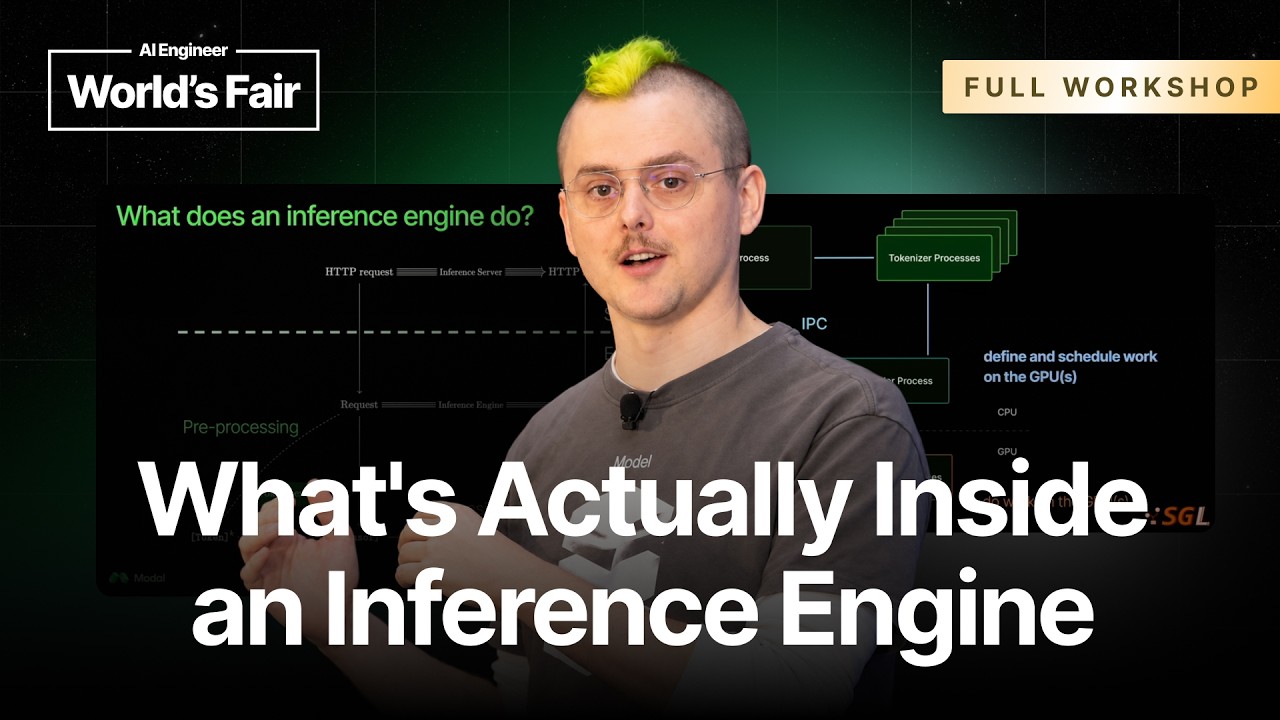
Charles Frye explains the architecture, performance engineering, and operational challenges of LLM inference engines. He dissects workload types, core components like schedulers and kernel backends, and advanced techniques such as KV caching, CUDA graphs, and speculative decoding, concluding with essential strategies for observability and debugging in production environments.

Operating Distributed Inference Systems at Scale — Nishant Gupta & Naman Ahuja, Meta

Operating Distributed Inference Systems at Scale — Nishant Gupta & Naman Ahuja, Meta

Meta's Nishant Gupta and Naman Ahuja explain how AI inference, the company's fastest-growing workload, requires a dedicated orchestration layer akin to Kubernetes for virtual machines. They detail the unique challenges of LLM serving compared to traditional microservices, emphasizing the intricate coupling of infrastructure layers, the distributed transaction nature of requests, and a seven-axis framework for scheduling. The talk concludes with the imperative to optimize for "cost per successful task" and the necessity of an inference-specific control plane to manage the complex interplay of latency, cost, and throughput.

Why Diffusion Will Win AI Inference with Inception Co-Founder and CEO Stefano Ermon

Why Diffusion Will Win AI Inference with Inception Co-Founder and CEO Stefano Ermon

Stefano Ermon, co-founder and CEO of Inception, discusses his company's radical bet on diffusion models to overcome the hardware and latency bottlenecks of autoregressive LLMs. He explains how parallel token generation in diffusion offers superior inference scaling and GPU utilization, expanding beyond images to discrete text and code generation. Ermon shares insights into Inception’s Mercury models, real-world applications like voice agents, the custom software stack required, and why efficiency will define the next era of AI competition.

Deep dive on LLM Inference at Scale — Harshul Jain, Audible & Tanmay Sah, Independent AI Researcher

Deep dive on LLM Inference at Scale — Harshul Jain, Audible & Tanmay Sah, Independent AI Researcher

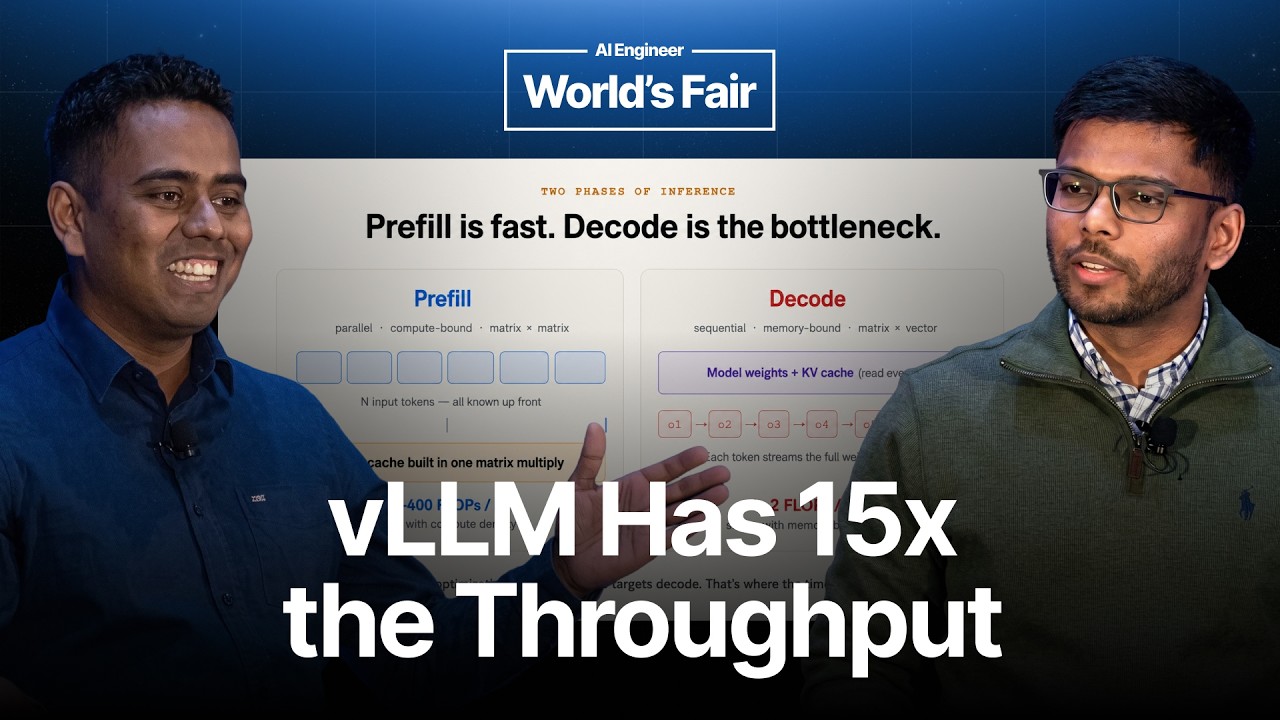
A workshop by Harshul Jain and Tanmay Sah breaks down LLM inference optimization from first principles, addressing memory, TTFT, and throughput issues. It covers foundational concepts like KV cache mathematics and the prefill/decode phases, then dives into model-side optimizations (quantization, attention variants like GQA, FlashAttention) and serving-side techniques (Paged Attention, continuous batching, prefix caching, KV quantization). The session concludes with benchmarks of popular inference engines like vLLM and SGLang, highlighting their strengths for different workloads, and outlines future research directions.

How Open Source Became AI's Backbone | Inferact with a16z

How Open Source Became AI's Backbone | Inferact with a16z

Simon Mo, CEO of Inferact and lead maintainer of vLLM, discusses how open-source AI, exemplified by vLLM, transformed into critical infrastructure. The conversation highlights the technical complexities of serving LLMs, the evolving economics and licensing of open-weight models, the need for control over guardrails, and the rapidly disappearing capability gap between open and proprietary AI.

How KV Cache Speeds Up LLMs for Faster AI Models on GPUs

How KV Cache Speeds Up LLMs for Faster AI Models on GPUs

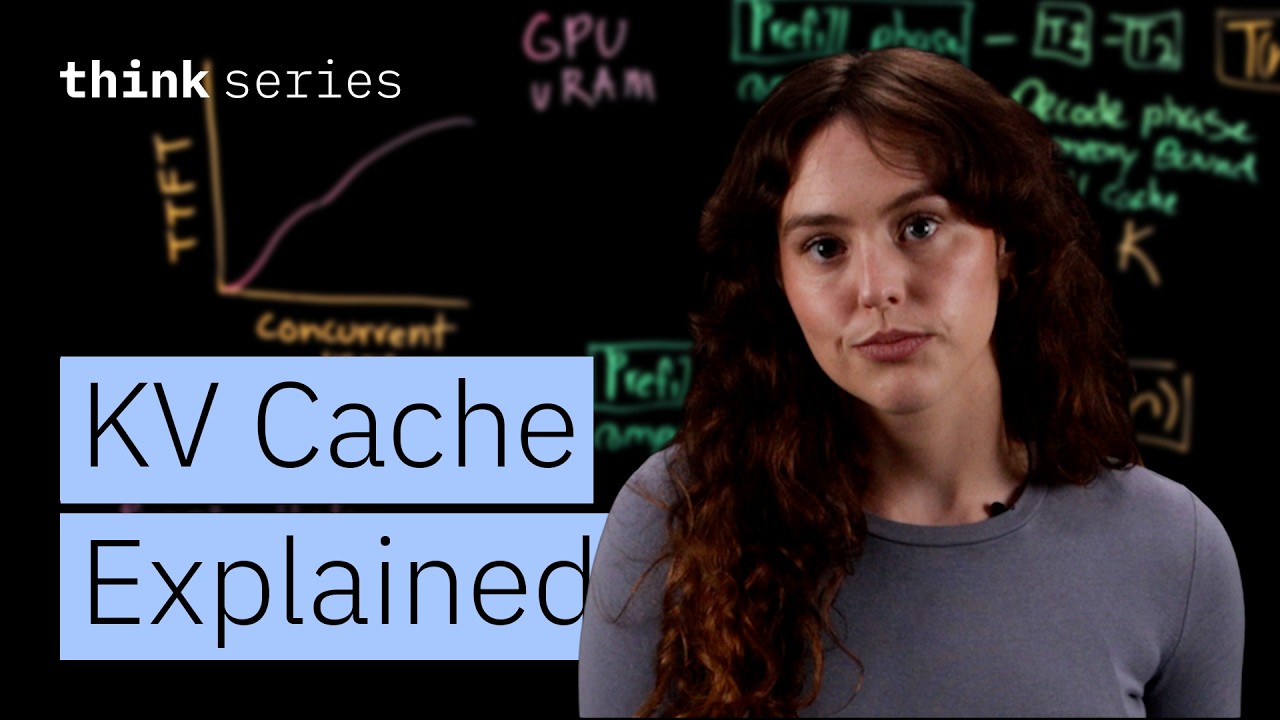
LLMs often slow down under heavy traffic due to inefficient GPU memory management during inference. This overview explains how KV cache and Paged Attention, implemented in VLLM, optimize memory usage across prefill and decode phases, significantly boosting LLM throughput, reducing latency, and improving GPU utilization through advanced context handling and specific tuning techniques like prefix caching and speculative decoding.