Llm agents

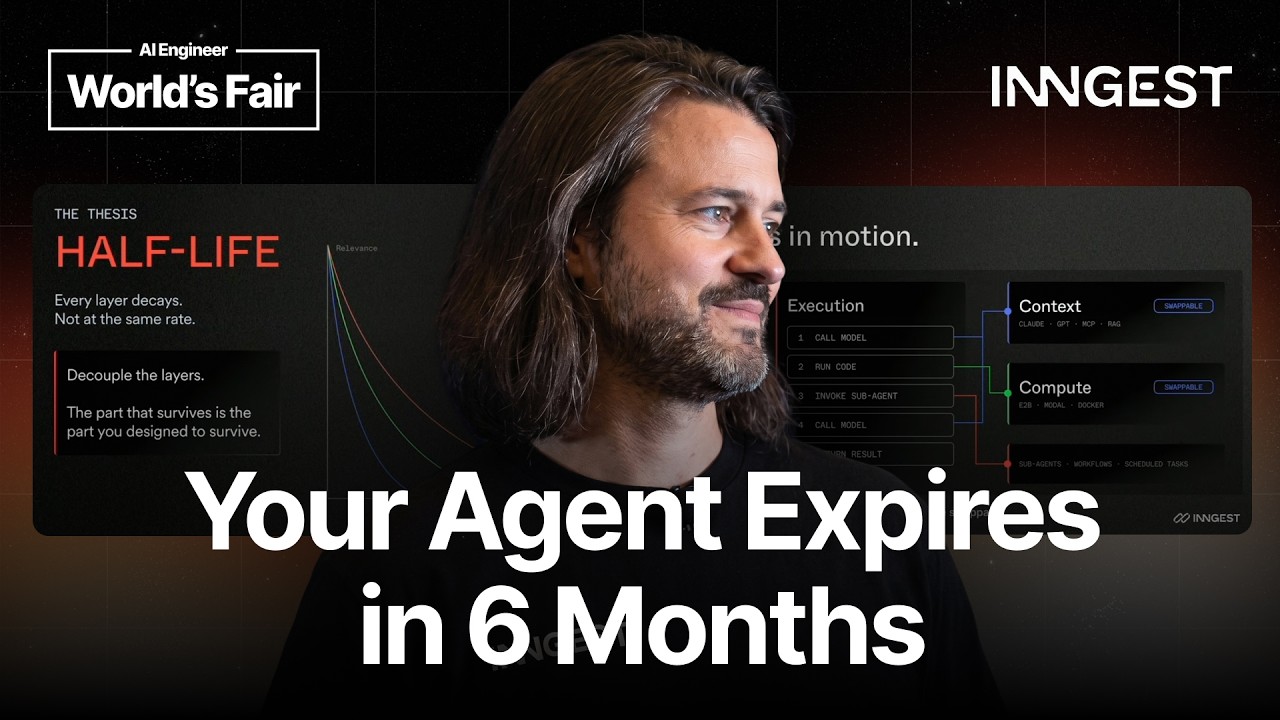
Your agent architecture has a half-life of 6 months — Dan Farrelly, CTO, Inngest

Your agent architecture has a half-life of 6 months — Dan Farrelly, CTO, Inngest

Dan Farrelly, CTO of Inngest, addresses the rapid obsolescence of AI agent architectures (a 6-month half-life) caused by fast-evolving models and frameworks. He proposes a solution: decouple agent systems into three conceptual layers (Execution, Context, Compute) and prioritize a stable, durable Execution Layer. This 'brain' layer, responsible for flow, state, and retries, offers resumability, flexible invocation patterns, and comprehensive observability, allowing the 'knowledge' and 'hands' layers to change frequently without necessitating full architectural rewrites.
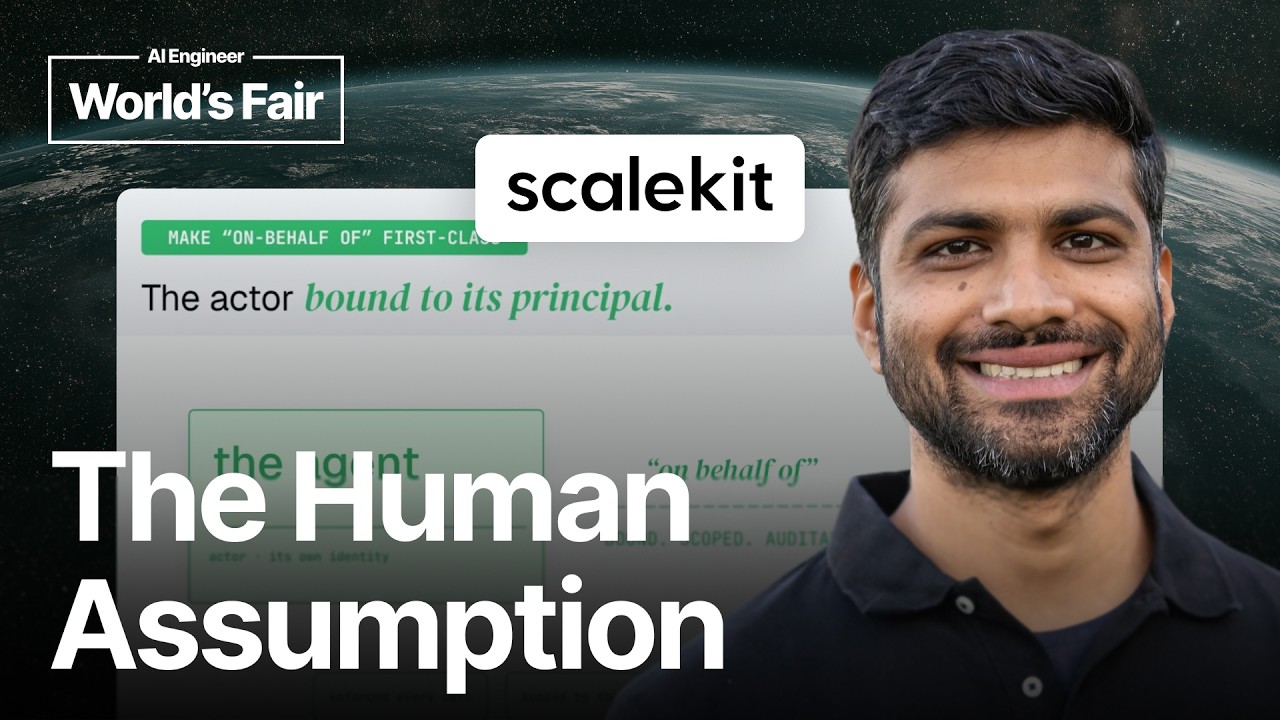

You Didn't Ship a Bug. You Just Wrote It for a Human. - Ravi Madabhushi, Scalekit

You Didn't Ship a Bug. You Just Wrote It for a Human. - Ravi Madabhushi, Scalekit

Ravi Madabhushi details how existing infrastructure, designed for human users, fails AI agents, leading to issues like rate limits and over-permissioning. He argues for treating agents as first-class principals with fine-grained, context-aware authorization and robust visibility to prevent non-deterministic and potentially rogue behaviors.

Fable 5 as Advisor: Anthropic's Two-Model Pattern for Smarter, Cheaper Agents (Ep. 1010)

Fable 5 as Advisor: Anthropic's Two-Model Pattern for Smarter, Cheaper Agents (Ep. 1010)

The episode explores Anthropic's "advisor strategy," a novel AI agent pattern that combines a fast, cheap "executor" model with a frontier-class "advisor" model. This allows for mid-task consultation within a single API call, resolving the tension between cost and capability. Benchmarks show simultaneous improvements in quality and cost reduction, demonstrating that AI progress is shifting towards intelligent model composition rather than just larger models.

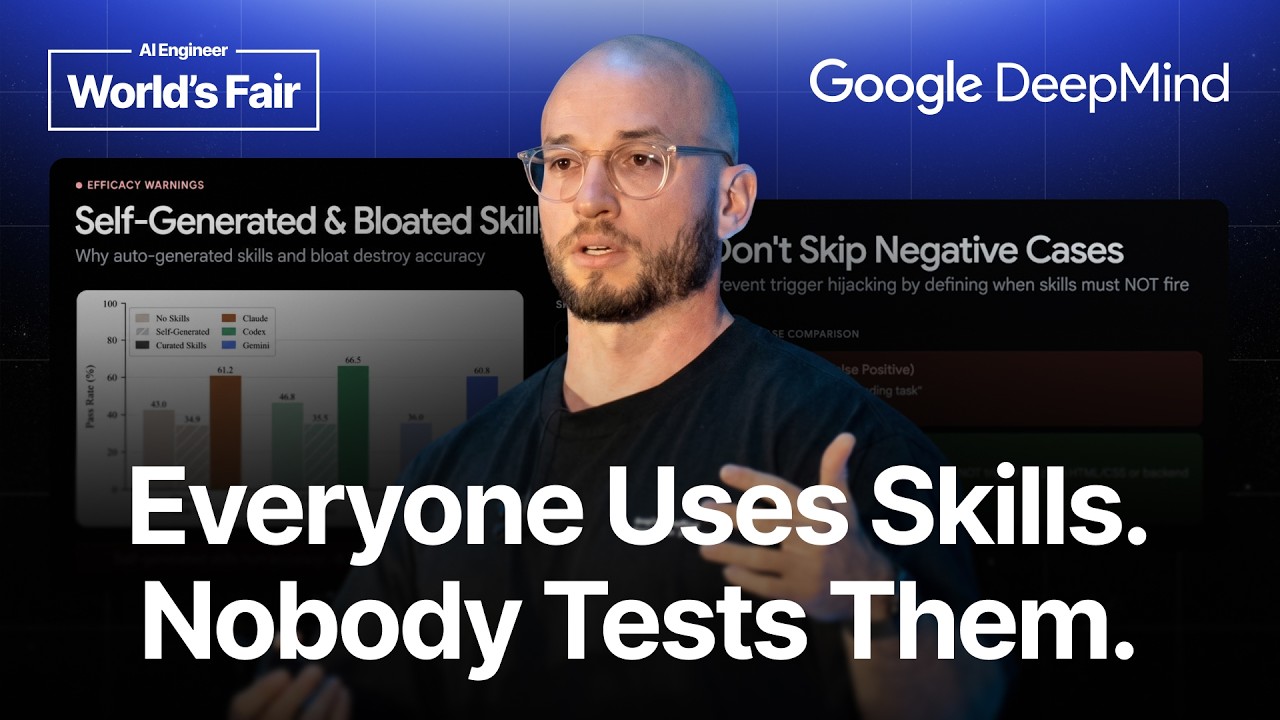
Don't Ship Skills Without Evals — Philipp Schmid, Google DeepMind

Don't Ship Skills Without Evals — Philipp Schmid, Google DeepMind

Philipp Schmid from Google DeepMind emphasizes the critical, often-overlooked need for rigorous evaluation of AI agent skills. He argues that shipping skills without testing is akin to deploying code without unit tests, leading to unreliable agent behavior. The talk covers what defines an agent skill, strategies for writing effective and correctly triggering skills, and a practical guide to building lightweight evaluation harnesses to catch failures proactively.

Should AI Engineers Still Read Code in 2026? The Z/L Continuum — Alex Volkov, ThursdAI

Should AI Engineers Still Read Code in 2026? The Z/L Continuum — Alex Volkov, ThursdAI

Alex Volkov introduces the "Z/L Continuum," a framework for navigating the tension between rapid AI-generated code production and the critical need for human review. He argues that the key lies in understanding that the continuum applies to tasks, not individuals, and presents a pragmatic routing table for verifying changes based on their criticality, highlighting the shift towards engineering systems that build and verify code, rather than meticulously inspecting every line. The talk also touches on emerging capabilities like Fable and "loops" and the importance of flexibility and human judgment in the evolving AI engineering landscape.

The 100-Tool Agent Is a Trap - Sohail Shaikh & Ankush Rastogi, Prosodica

The 100-Tool Agent Is a Trap - Sohail Shaikh & Ankush Rastogi, Prosodica

This session unveils the "Fat Agent" trap in LLM agent architectures, where loading an entire tool catalog into the system prompt causes severe latency, cost, and accuracy problems. It presents the Semantic Tool Router pattern, a practical solution leveraging Just-in-Time Context Injection and vector search (RAG for tools) to dynamically provide only relevant tools, dramatically reducing prompt size, enhancing performance, and improving reliability across frontier models like GPT-4o and Gemini 2.0.