Feature

Make Something Agents Want

Make Something Agents Want

The hosts explore the dawn of an agent-driven economy, spurred by tools like OpenClaw and social platforms like MoltBook. They discuss the critical shift for developers to build tools that AI agents, not just humans, will choose, focusing on the new go-to-market strategies, the rise of swarm intelligence, and the essential infrastructure required for this new paradigm.
Migrating from Neptune to Weights & Biases

Migrating from Neptune to Weights & Biases

A technical guide on migrating ML experiments from Neptune to Weights & Biases, covering the migration script, API-level code changes, and best practices for organizing projects and analyzing results in the W&B platform before the Neptune sunset.

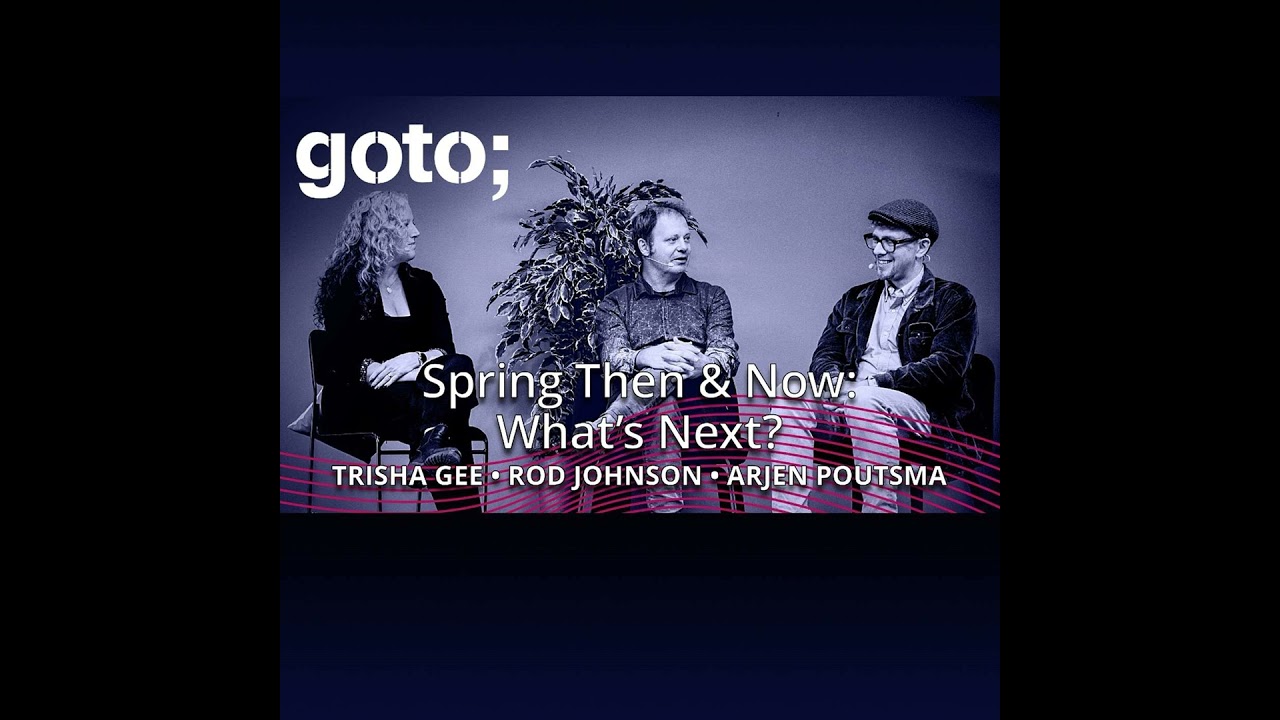
Spring Then & Now: What’s Next? • Rod Johnson, Arjen Poutsma & Trisha Gee

Spring Then & Now: What’s Next? • Rod Johnson, Arjen Poutsma & Trisha Gee

A panel discussion with Spring Framework creator Rod Johnson and veteran Arjen Poutsma, moderated by Trisha Gee. They discuss the evolution of Spring, the future of reactive programming in the age of virtual threads, their new AI agent framework Embabel, and the essential AI skills modern Java developers need to acquire.

Fast & Asynchronous: Drift Your AI, Not Your GPU Bill // Artem Yushkovskiy

Fast & Asynchronous: Drift Your AI, Not Your GPU Bill // Artem Yushkovskiy

Delivery Hero presents "Asya", an open-source framework that replaces traditional AI pipelines with a distributed, asynchronous actor model. This paradigm shift dramatically lowers GPU costs and improves scalability by treating each processing step as an independent, auto-scaling microservice on Kubernetes.

Rethinking Notebooks Powered by AI

Rethinking Notebooks Powered by AI

Vincent Warmerdam from marimo discusses the recent acquisition by Weights & Biases and the future of Python notebooks. He argues that notebooks should evolve from static scratchpads into dynamic, AI-powered applications, highlighting marimo's features for LLM integration, agentic workflows, and creating interactive, reproducible development environments.

Guide to Architect Secure AI Agents: Best Practices for Safety

Guide to Architect Secure AI Agents: Best Practices for Safety

AI agents offer immense power but come with significant security risks. This guide outlines a comprehensive architecture for securing AI agents using DevSecOps, robust access controls, threat monitoring, and a principle-of-least-privilege approach to mitigate dangers like prompt injection and data leaks.