Feature

Why AI Agents Don't Actually Understand You — Danielle Perszyk, Amazon AGI Lab

Why AI Agents Don't Actually Understand You — Danielle Perszyk, Amazon AGI Lab

Daniel from Amazon AGI Lab details a cognitive science-driven vision for human-aligned AI, focusing on collective intelligence, real-time interaction, and redefining reliability through user mind modeling. He emphasizes aligning AI representations with human cognition to foster generalization, prevent reduced human agency, and revolutionize areas like education, advocating for diverse AI systems and frontier research over immediate productization.
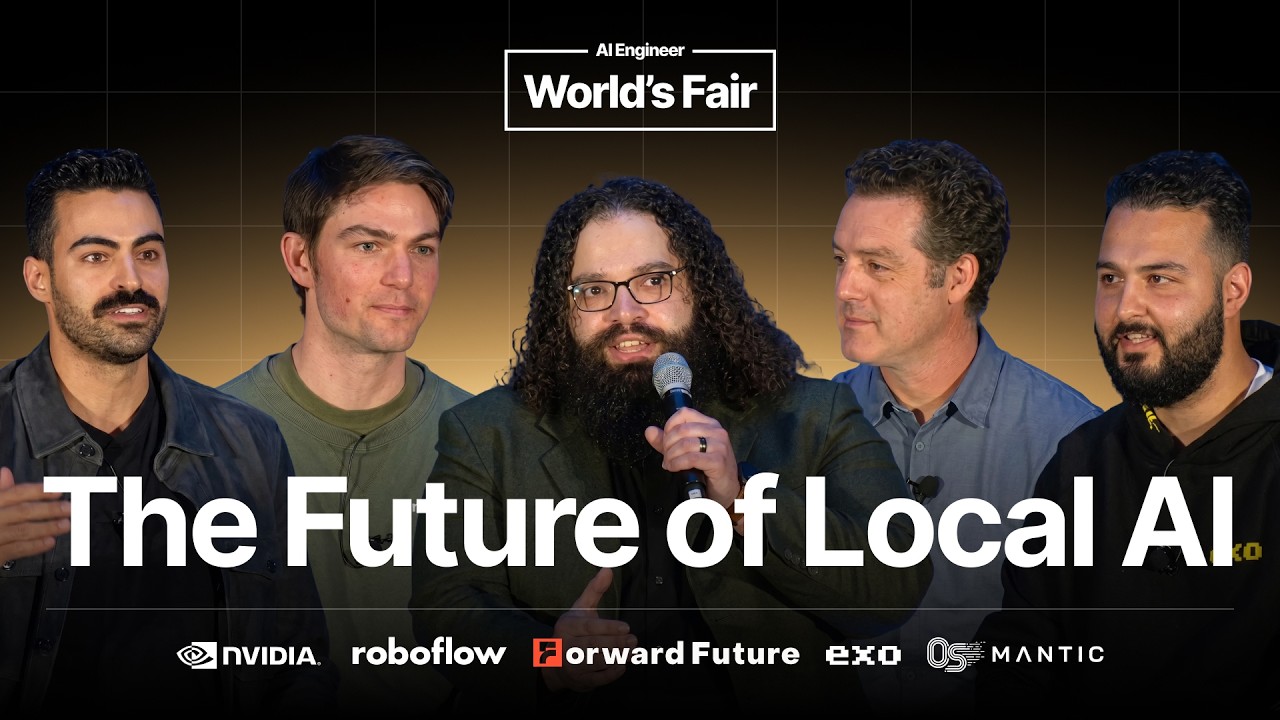

State of the Union: Why Local, Why Now — NVIDIA, Osmantic, Roboflow, EXO Labs, @matthew_berman

State of the Union: Why Local, Why Now — NVIDIA, Osmantic, Roboflow, EXO Labs, @matthew_berman

This panel discussion explores the inflection point of Local AI, driven by advanced models, improved hardware, and a robust ecosystem. Experts discuss how this shift addresses critical concerns around privacy, cost, sovereignty, and resilience, emphasizing the pivotal role of open-source AI and specialized models. They delve into technical optimizations, the evolution from generalized to specialized AI, and the challenges of making local AI accessible and performant for both enterprise and individual users.

Why Open Models Will Beat GPT and Claude

Why Open Models Will Beat GPT and Claude

This episode explores the strategic shift of enterprises towards open AI models driven by cost and data sovereignty, highlighting the evolving tooling and hybrid deployment strategies. It also delves into the "attenuation funnel" phenomenon, where increased code generation by AI tools doesn't proportionally translate to shipped software or end-user value, and introduces "neo-consulting"—a new business model challenging traditional consulting with outcomes-based pricing and AI-focused expertise.

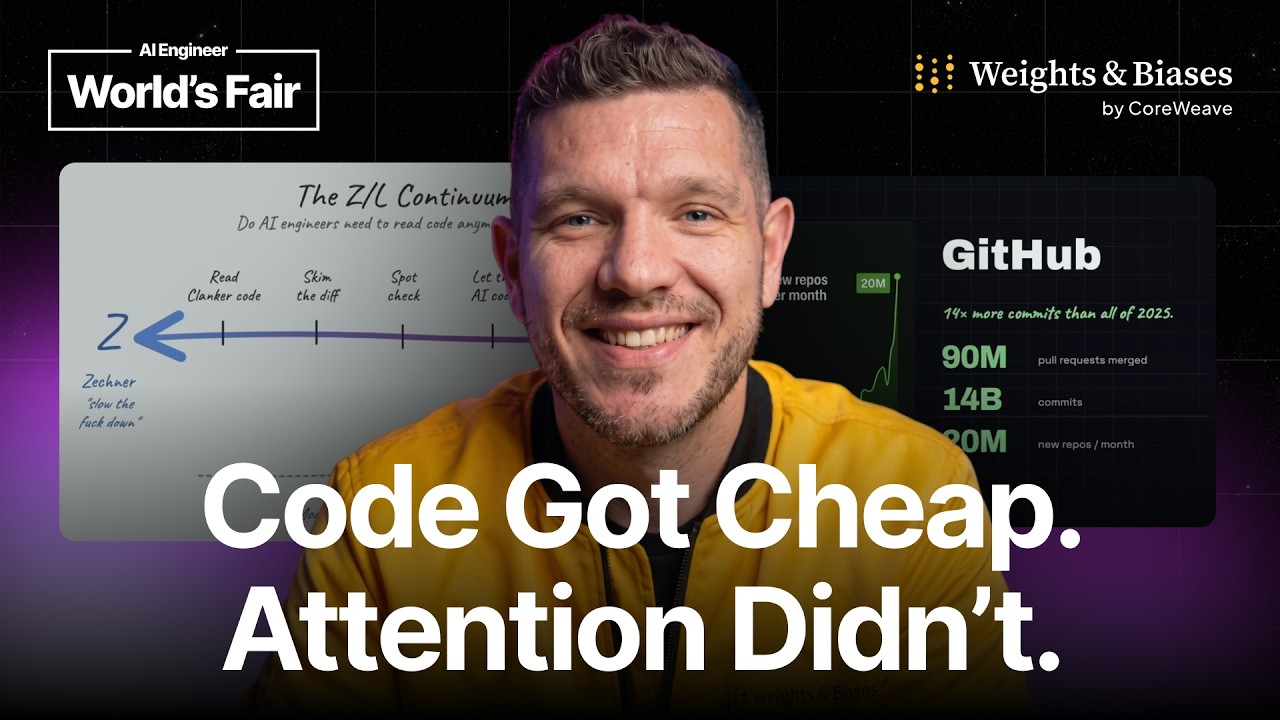
Should AI Engineers Still Read Code in 2026? The Z/L Continuum — Alex Volkov, ThursdAI

Should AI Engineers Still Read Code in 2026? The Z/L Continuum — Alex Volkov, ThursdAI

Alex Volkov introduces the "Z/L Continuum," a framework for navigating the tension between rapid AI-generated code production and the critical need for human review. He argues that the key lies in understanding that the continuum applies to tasks, not individuals, and presents a pragmatic routing table for verifying changes based on their criticality, highlighting the shift towards engineering systems that build and verify code, rather than meticulously inspecting every line. The talk also touches on emerging capabilities like Fable and "loops" and the importance of flexibility and human judgment in the evolving AI engineering landscape.

Understanding the inner thoughts of AI

Understanding the inner thoughts of AI

Neel Nanda, head of Google DeepMind's language model interpretability team, discusses the critical field of interpretability, likening it to the "neuroscience of AI." He explains why understanding the internal workings of "grown, not designed" neural networks is crucial for AI safety and scientific discovery. The episode explores cutting-edge techniques like Chain of Thought monitoring, mechanistic interpretability (steering and probing), and Sparse Autoencoders, highlighting their strengths and limitations in debugging, detecting deception, and uncovering hidden model objectives. Nanda emphasizes interpretability's role in building safe, aligned, and trustworthy AI as we approach AGI, acknowledging its pragmatic necessity despite inherent limits to full understanding.

Reddit cracks down on AI slop & the future of AI compute

Reddit cracks down on AI slop & the future of AI compute

This episode explores Reddit's aggressive AI spam combat strategy, revealing AI's dual role in fighting malicious AI. It then dissects Anthropic's Economic Index, highlighting how Claude integrates into daily life despite significant user selection bias. The discussion also covers Orin's $33M raise for a GPU compute marketplace, debating the fungibility of compute and the technical hurdles. Finally, Anthropic's chip ambitions are analyzed as an economic strategy to optimize models, reduce NVIDIA dependency, and manage rising token costs, with comparisons to existing hardware ecosystems and NVIDIA's market position.