Feature

SOTA Generative Media Panel — Dumitru Erhan, Shane Gu & Nicole Brichtova, Google DeepMind

SOTA Generative Media Panel — Dumitru Erhan, Shane Gu & Nicole Brichtova, Google DeepMind

This detailed discussion with Google AI researchers highlights the latest generative video models (NanoBanana 2 Lite, Gemini Omni Flash APIs) and their applications, including video editing, education, and localization. The conversation critically examines whether language is an adequate intermediate representation for AI, especially for sensory experiences like audio and taste, where human vocabulary is limited. It exposes the unreliability of human preferences in evaluating AI-generated content, citing the "Instagram filter effect" and "wedding ring" reward hacking as examples. The researchers emphasize the importance of high-quality, real-world data and the critical role of forward-deployed engineers in bridging the gap between cutting-edge research and practical applications.
Why Does AI Need Access to the Web?

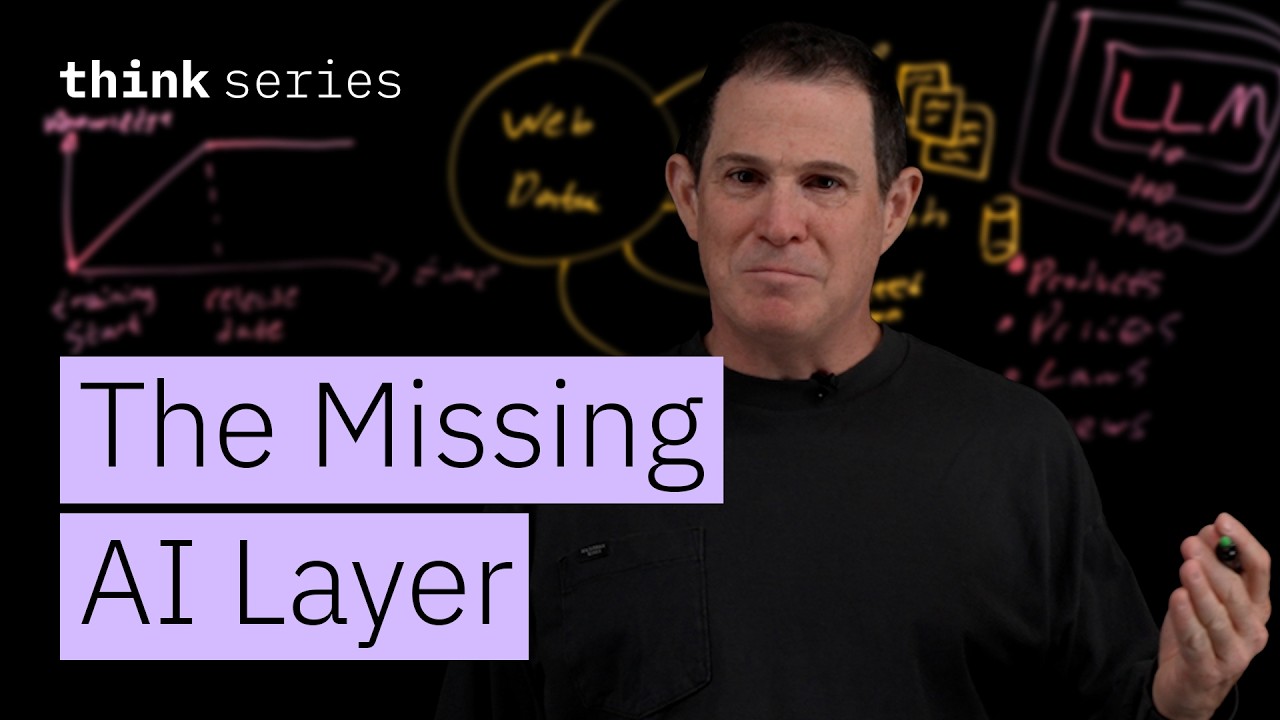
Why Does AI Need Access to the Web?

This video addresses the critical limitation of pre-trained LLMs: their static knowledge in a dynamic world, leading to hallucinations and costly mistakes for AI agents. It introduces the concept of 'knowledge layers' empowered by 'web data infrastructure' to provide AI with live, fresh, reliable, and properly formatted web data, thereby ensuring grounded and timely responses and eliminating the 'garbage in, garbage out' problem for real-world AI applications.

The Signal Layer: What to Build When Anything Can Be Built — Lena Hall, Akamai

The Signal Layer: What to Build When Anything Can Be Built — Lena Hall, Akamai

Lena Hall explores the paradox of AI's abundance: while it grants immense leverage, it also makes average work valueless as competitors gain the same capabilities. She argues that AI, acting as a "convergence machine," produces identical answers from common knowledge. The true challenge shifts from building to "pointing"—deciding which problems are worth solving. Hall emphasizes that "taste" is trainable by AI, but genuine "judgment" about future events or unique customer relationships is not. She identifies critical points of signal distortion in startups and large organizations and advocates for engineering a "thin signal layer" to preserve unique intent. Ultimately, in a world of infinite alternatives, the scarcest and most valuable commodity is trust, which cannot be automated or graded.

Agents Are Where Microservices Were in 2015 — Roberto Milev & Uday Kanagala, Navan

Agents Are Where Microservices Were in 2015 — Roberto Milev & Uday Kanagala, Navan

Roberto Milev and Uday Kanagala from Navan discuss the challenges and emerging best practices in building and operating AI agents, drawing parallels with microservices. They highlight the shift to stateful runtimes, innovative memory and context management using 'skills,' and crucial solutions for observability and testing non-deterministic systems. A central theme is the critical need for robust authorization and guardrails, given the blurring line of agentic action, and a preference for mastering single-agent loops before scaling to complex orchestrations. They conclude by outlining the solved and unsolved problems, with cost and debugging remaining significant hurdles.

Guardians of the State: An Air-Gapped AI Fortress for Consumer Data — Rachna Srivastava, DFPI

Guardians of the State: An Air-Gapped AI Fortress for Consumer Data — Rachna Srivastava, DFPI

Rachna Srivastava discusses building a legally defensible AI system for financial fraud detection, emphasizing that generative AI has eroded traditional trust. Her team at DFPI engineered an offline, hardware-secured data pipeline using Kafka, Spark, and semantic routing to ensure explainability, reproducibility, and auditability. They implemented a one-way data diode for secure learning and Apache Iceberg for time-travel queries, asserting that "trust is a physical property" built into the system's core.

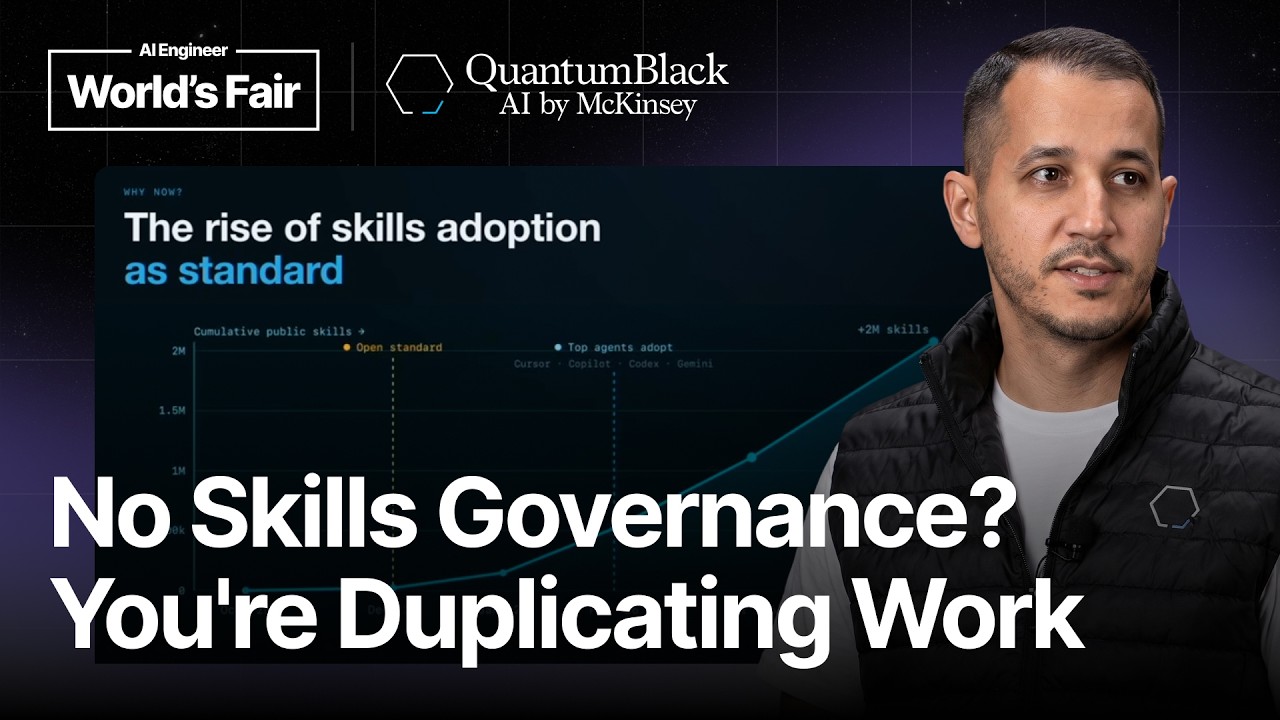
AI-Native Organisations Run on Skills: How to Structure and Scale Them — Imad Touil, QuantumBlack

AI-Native Organisations Run on Skills: How to Structure and Scale Them — Imad Touil, QuantumBlack

Imad Touil explores the critical need for governing AI skills within organizations, asserting that skills represent the true repository of enterprise know-how. He contrasts simplified coding agent loops with complex, real-world product lifecycles, demonstrating how ungoverned skills lead to technical debt—including duplication, quality degradation, security risks, and lack of discoverability. Proposing a microservices-inspired approach, Touil outlines a centralized skills platform and human-led governance model essential for achieving deterministic workflows, boosting productivity, and mitigating risks in AI-native enterprises.