Why Does AI Need Access to the Web?

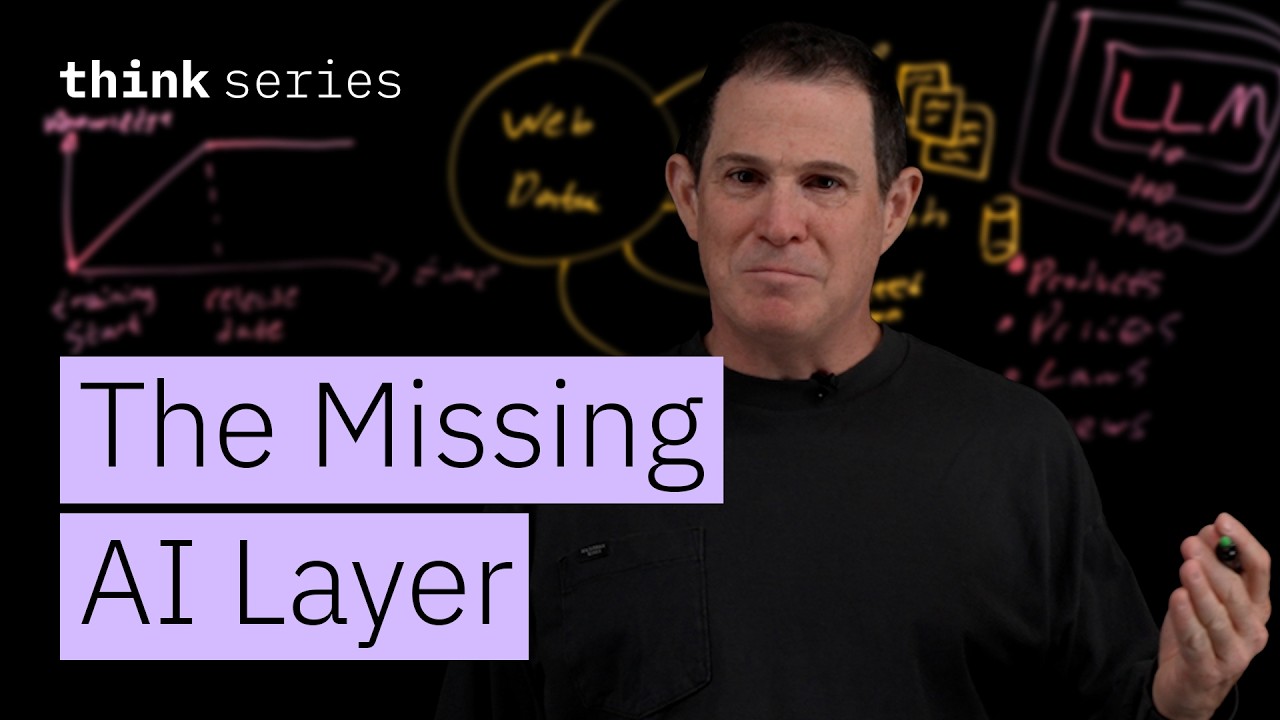
This video addresses the critical limitation of pre-trained LLMs: their static knowledge in a dynamic world, leading to hallucinations and costly mistakes for AI agents. It introduces the concept of 'knowledge layers' empowered by 'web data infrastructure' to provide AI with live, fresh, reliable, and properly formatted web data, thereby ensuring grounded and timely responses and eliminating the 'garbage in, garbage out' problem for real-world AI applications.
2 min read
Why Does AI Need Access to the Web?
source: https://www.youtube.com/watch?v=IRtSdLX_Obw

The Challenge of Static LLMs in a Dynamic World

Traditional Large Language Models (LLMs), despite their advanced parameters, share a fundamental limitation: they are pre-trained and their knowledge flatlines the moment they are released. The real world, however, is constantly changing, with new products, price shifts, legal updates, and news events occurring daily. This disconnect means LLMs remain a snapshot of past data, leading to significant problems.

For instance, if an LLM is asked about a new, unreleased phone, it might hallucinate a convincing but factually incorrect answer based on its historical training data, such as old blog posts speculating on future technology. While humans often recognize these confident but wrong answers, this missing knowledge poses a critical threat to AI agents.

The Peril of AI Agents Acting on Stale Information

Unlike humans, AI agents lack intuition and a

Share post

Stay In The Loop! Subscribe to Our Newsletter.

Get updates straight to your inbox. No spam, just useful content.

Recommended for You

AI on Your Lakehouse: Context Comes in Shapes, Not Queries — Zach Blumenfeld, Neo4j

AI on Your Lakehouse: Context Comes in Shapes, Not Queries — Zach Blumenfeld, Neo4j

AI agents often struggle with context in lakehouses, leading to confident but incorrect answers. This workshop by Zach Blumenfeld introduces three Neo4j graph shapes built on lakehouse data—Connections (semantic layer), Trees (document outlines), and Communities (themes)—to provide essential context, enabling agents to accurately navigate structured and unstructured data, answer complex estate-level questions, and overcome limitations of traditional Text2SQL and vector search.

Context Engineering 2.0: MCP, Agentic RAG & Memory // Simba Khadder

Context Engineering 2.0: MCP, Agentic RAG & Memory // Simba Khadder

Simba Khadder of Redis introduces Context Engineering 2.0, a new paradigm for AI agents that unifies structured data, unstructured data (RAG), and memory into a single, schema-driven surface. He critiques current methods like Text-to-SQL and direct API wrapping, proposing a unified context engine to provide reliable, observable, and performant data access for agents.