Evals

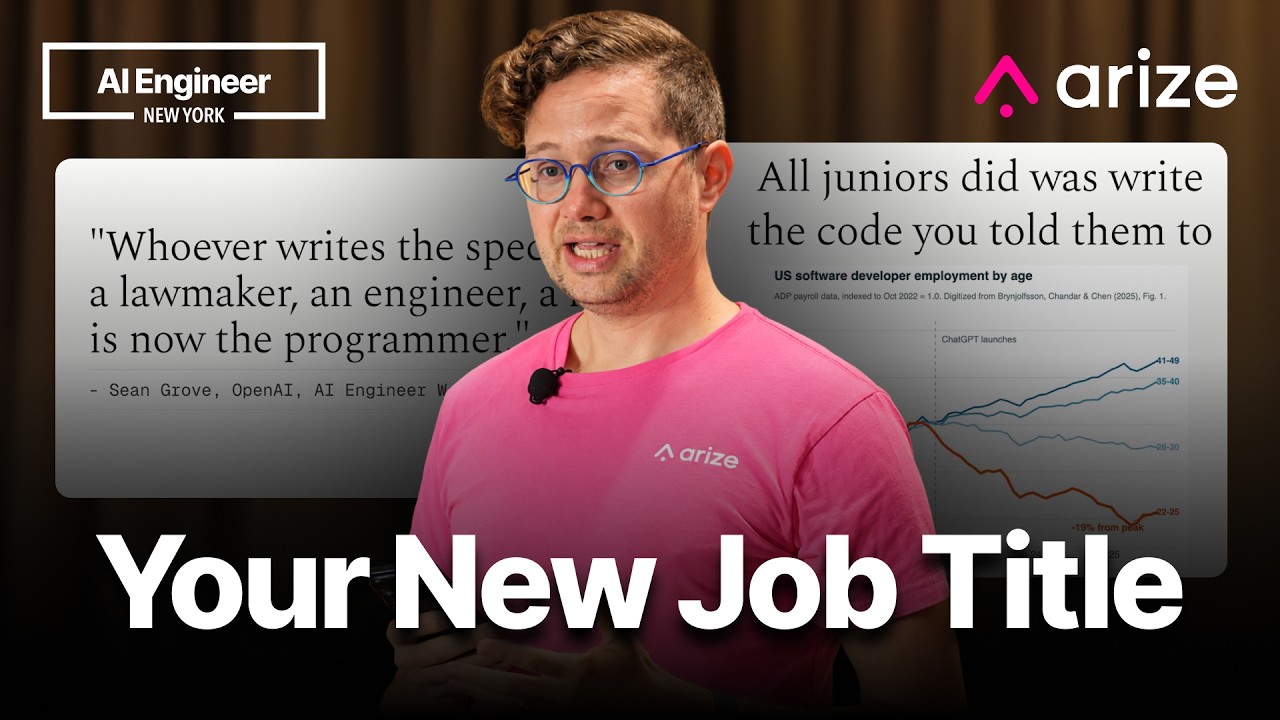
AI Writes the Code. So What's Left for Engineers? - Laurie Voss, Arize AI

AI Writes the Code. So What's Left for Engineers? - Laurie Voss, Arize AI

Laurie Voss, head of developer relations at Arize AI and co-founder of npm, argues that coding agents have made writing code nearly free, so the bottleneck keeps moving first to code review, then to operations and security. What agents can't take over is discovering what people actually need and defining what 'good' means. He introduces the product engineer as the role that remains, examines the collapse in junior engineering hiring, and offers practical advice for engineering leaders.
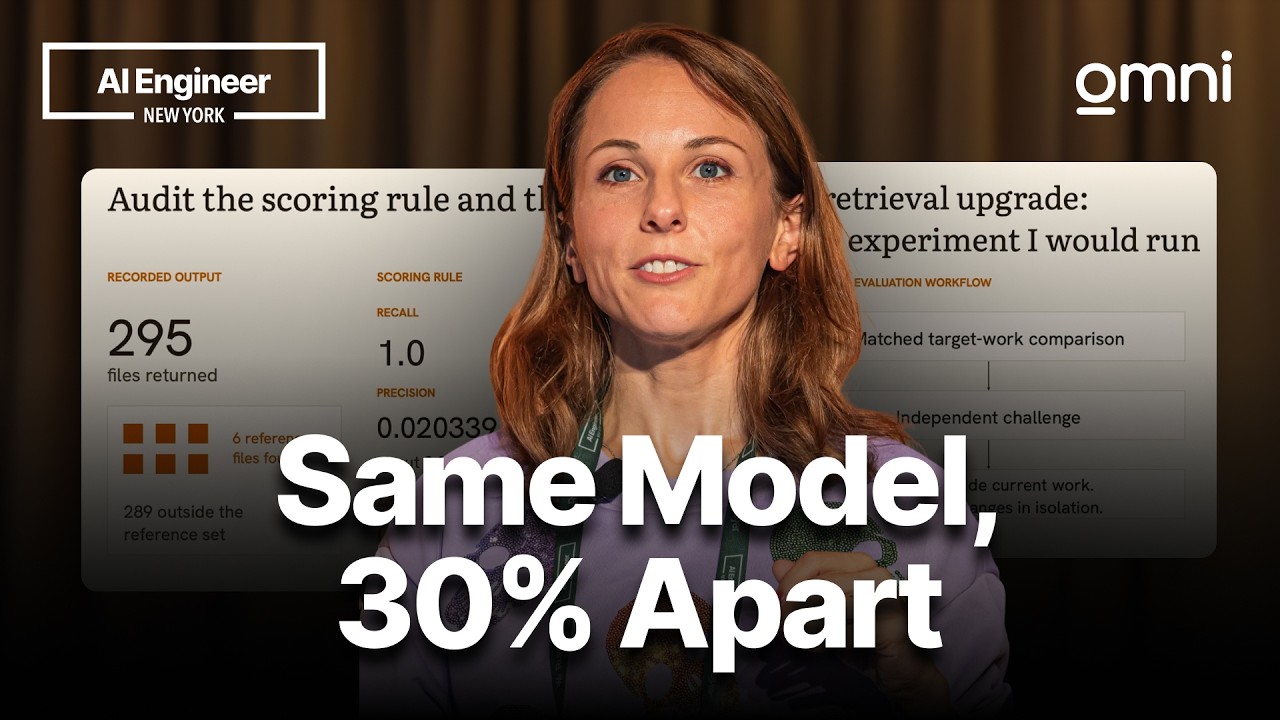
Don't Trust Your AI Agents. Test Them Like a Scientist — Stephanie Jarmak, Omni Analytics

Don't Trust Your AI Agents. Test Them Like a Scientist — Stephanie Jarmak, Omni Analytics

Stephanie Jarmak, who moved from astronomy into building coding benchmarks and agent evals, argues that most agent evaluations are easy to misread. She covers how harness choice can swamp model differences, why public benchmarks serve shortlisting rather than decisions, how to design experiment-style evals with realistic tasks, repeated runs, and full traces, and how to set quality gates, manage human review load, verify agent records, and treat production as the final test.

How to Know When an AI Agent Can Work Unsupervised — Evan Kormos, Coinbase

How to Know When an AI Agent Can Work Unsupervised — Evan Kormos, Coinbase

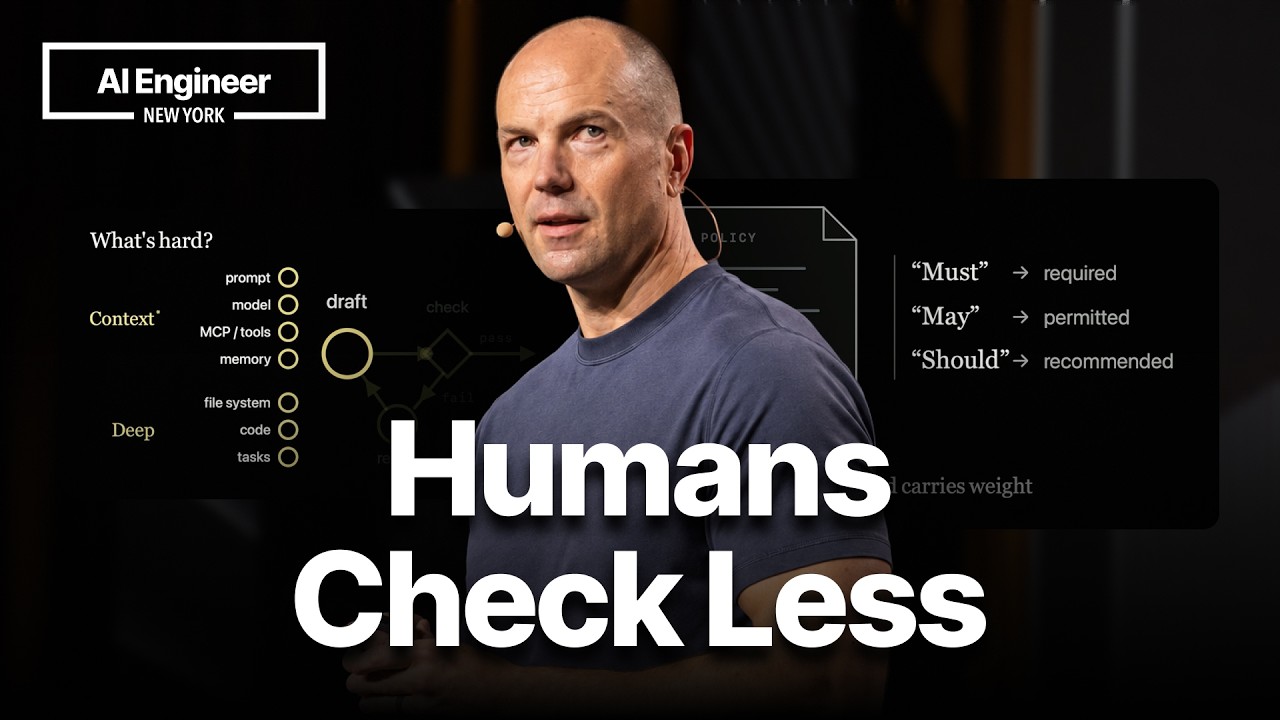
Evan Kormos of Coinbase presents a practical framework for bringing AI agents into policy-driven, regulated workflows. He models processes as DAGs with loops inside each node, argues that a loop is only as trustworthy as its check, and shows how evals and traces create a new confidence mechanism. Agents then move through supervised, sampled, and exception-only stages.

Stop Overpaying for Intelligence | DevDay 2026

Stop Overpaying for Intelligence | DevDay 2026

A practical session on cutting AI costs without sacrificing quality. The speakers argue for measuring cost per completed task rather than per-token list prices, show how to right-size models with accuracy-versus-cost Pareto analysis, and walk through four levers: prompt caching, programmatic tool calling, reasoning effort, and batch or flex processing. Customer case studies from Perplexity, Notion, Clio, and Blitzy ground the advice.

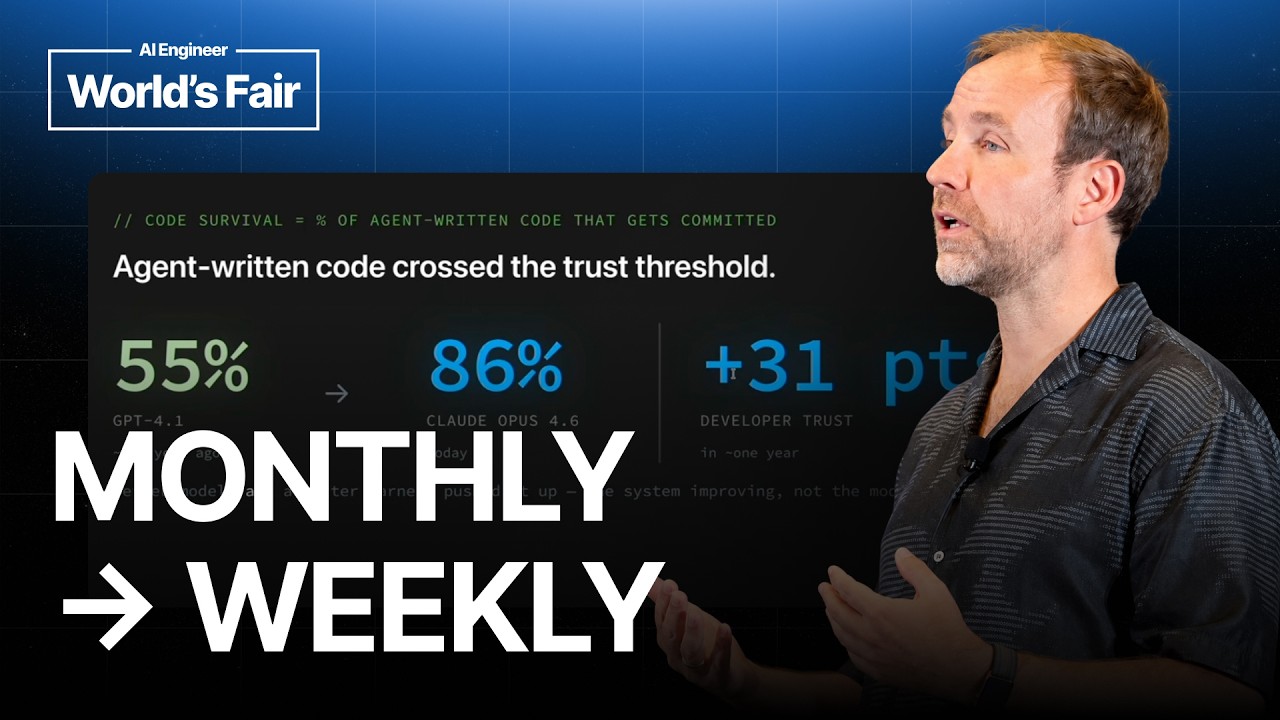
How VS Code Went from Monthly to Weekly Releases with AI — Harald Kirschner

How VS Code Went from Monthly to Weekly Releases with AI — Harald Kirschner

Harald Kirschner, principal product manager on VS Code at Microsoft, explains how a small team serving more than 50 million users moved from monthly to weekly releases by rebuilding its whole delivery system around AI agents. He covers faster shipping through agent-ready codebases, skills, and a 10x faster TypeScript Go build, quality practices like mandatory AI code review, AI triage, auto-fix PRs and staged rollouts, and faster learning through VSC-Bench evals and daily prototyping.

Where AI products go next: voice, agents, and self-driving software | Tara Sesha and Nan Yu (OpenAI)

Where AI products go next: voice, agents, and self-driving software | Tara Sesha and Nan Yu (OpenAI)

A live talk from the Lenny and Friends Summit with OpenAI's Tara Seshan and Nan Yu and host Claire Vo on building AI products when both technology and user expectations change rapidly. Topics include shipping imperfect features (the ChatGPT "toggle"), the 2 to 3 month model-capability horizon, enterprise absorption limits, single versus multi-agent design, platform layering with computer use as a fallback, working with research through evals, direct user relationships, and predictions for voice, proactive agents, and hardware.