Entity resolution

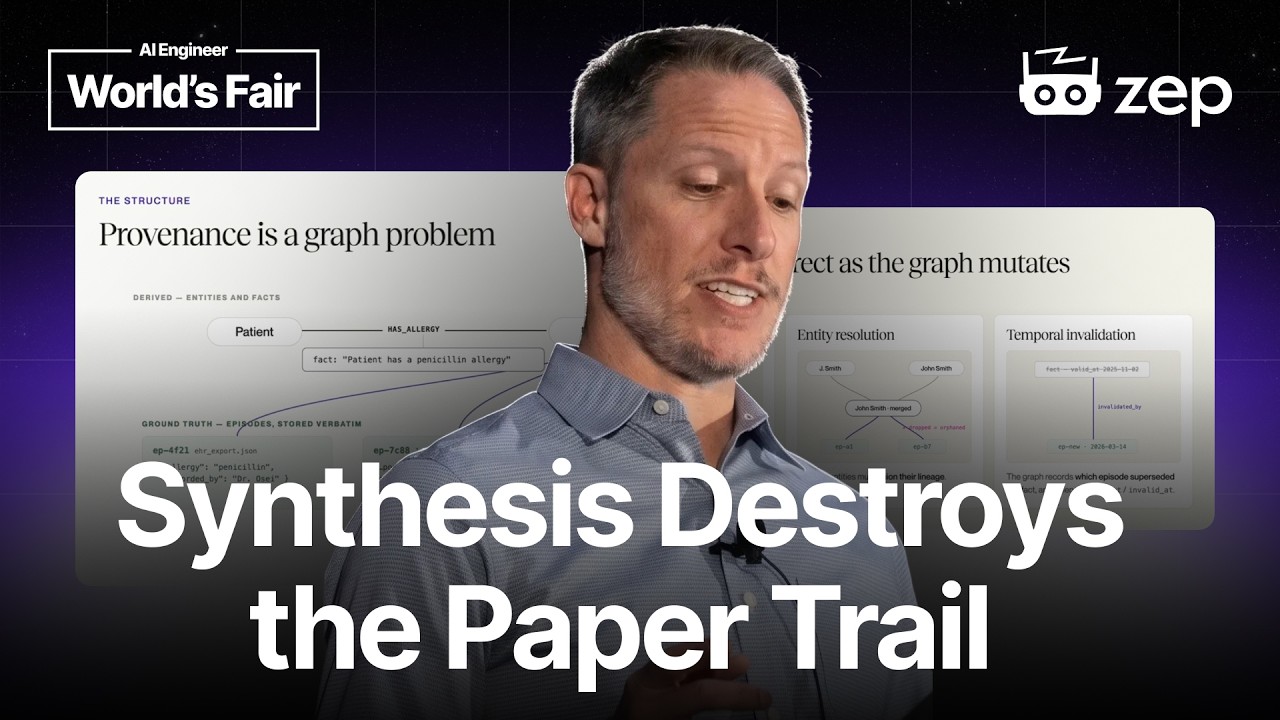
Citation Needed: Provenance for LLM-Built Knowledge Graphs — Daniel Chalef, Zep AI

Citation Needed: Provenance for LLM-Built Knowledge Graphs — Daniel Chalef, Zep AI

Daniel Chalef discusses how LLM synthesis destroys data provenance, making it difficult to trace information back to its sources. He introduces Graphiti, an open-source temporal graph framework, and Zep, an agent memory infrastructure built upon it. This system models provenance as a graph, treating sources as 'episodes' and derived facts as interconnected nodes and edges. This approach enables robust lineage tracing, handles entity merges and fact invalidation through temporal mechanisms, facilitates metadata-driven trust evaluation, and allows for compliant data deletion (e.g., GDPR) based on source support. The benefits include enhanced compliance, improved data veracity, and debuggable AI agents, addressing a critical engineering challenge in LLM applications.

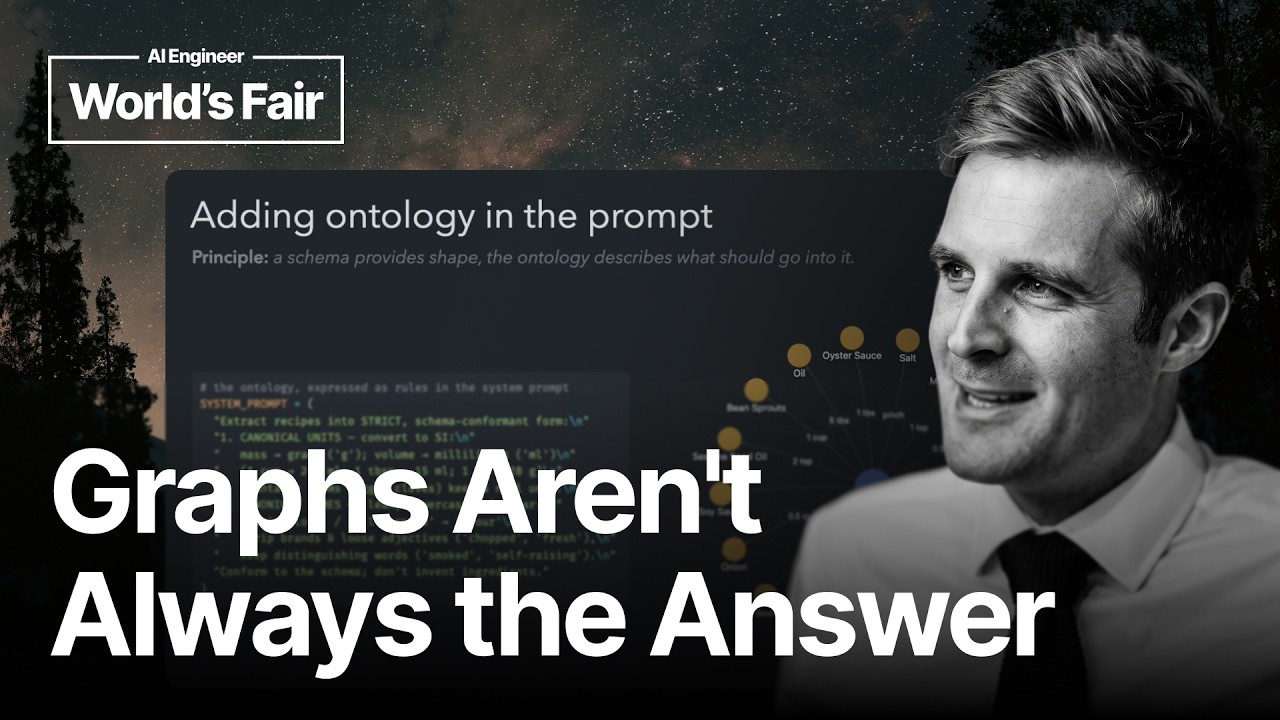
A Practitioner's Guide to Graphs - Tim Ainge, Good Collective

A Practitioner's Guide to Graphs - Tim Ainge, Good Collective

A speed-run through the fundamentals of graphs for AI engineers, covering how to build effective graphs from unstructured text using schema-first approaches and entity resolution, and then exploring powerful graph-native algorithms like Personalized PageRank, Shortest Path, and Subgraph Matching, all illustrated with real-world applications to create smarter, cheaper, and more reliable AI solutions.

Ex-Google Cloud AI Boss: Your Data Is the Real Moat

Ex-Google Cloud AI Boss: Your Data Is the Real Moat

Andrew Moore, CEO of Lovelace AI, discusses YottaGraph, a rapidly growing, automatically constructed knowledge graph designed as a context engine for enterprise AI agents. He highlights Lovelace's differentiation from public knowledge graphs by focusing on integrating private enterprise data, the engineering challenges of entity resolution and fast multi-hop reasoning, and the critical importance of graph amendability and auditability for mission-critical applications. Moore also touches upon the future of computer science education, advocating for product management skills and emphasizing the strategic importance of domestically developed open-weights models.