Edge ai

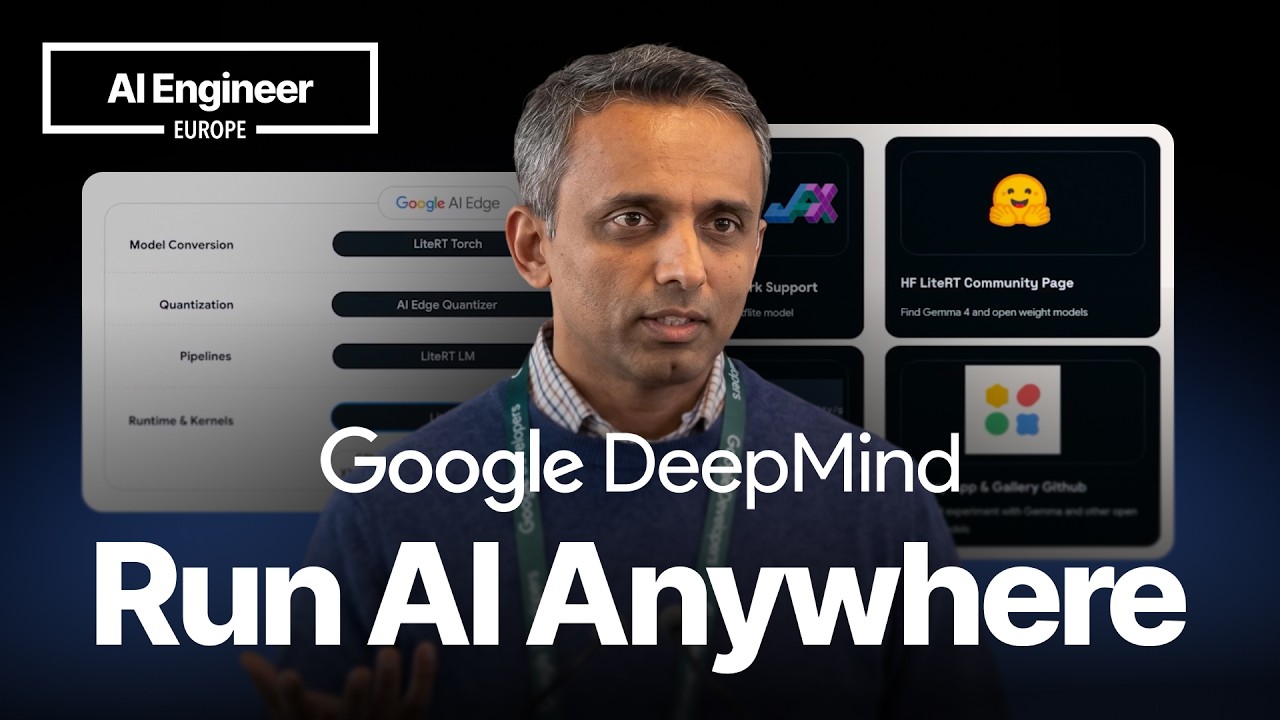
Why Large? Tiny LMs & Agents on Edge/Robotics — Cormac Brick, Google

Why Large? Tiny LMs & Agents on Edge/Robotics — Cormac Brick, Google

Cormac Brick from Google AI Edge discusses how the increasing constraint of DRAM cost on edge devices necessitates the development and deployment of increasingly smaller AI models. He outlines the work of his team in optimizing models like Gemma, achieving 2.9 bits per weight for a 2 billion parameter model capable of running on a Raspberry Pi at 7.6 tokens/second, or on an NPU at 31 tokens/second decode for vision tasks. The talk delves into 'tiny models' (50M-500M parameters) that extend AI to older devices and enable features like robust voice-to-function calling via fine-tuning with synthetic data, exemplified by an offline voice dictation app.
Local Agentic Theory For Mobile Games — Shafik Quoraishee & Joanne Song, The New York Times

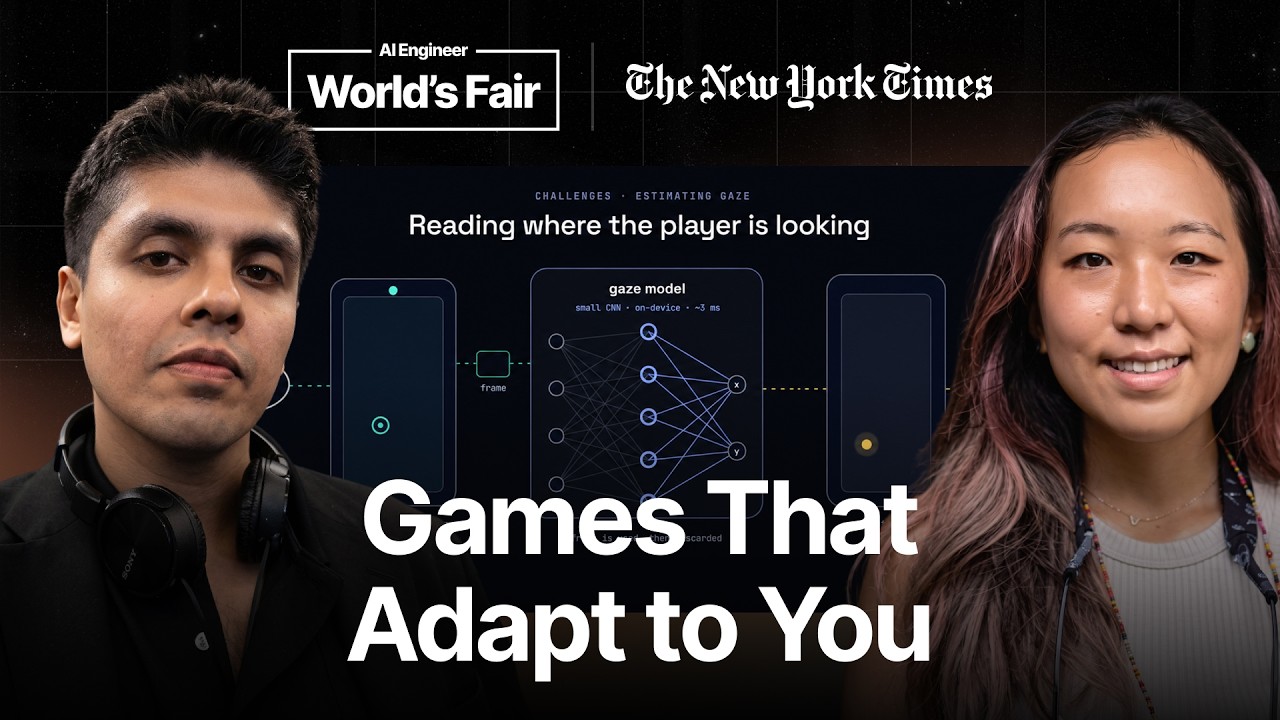
Local Agentic Theory For Mobile Games — Shafik Quoraishee & Joanne Song, The New York Times

This presentation explores the innovative concept of running agentic AI entirely on mobile devices to enhance game accessibility and personalization. It delves into the technical challenges of local AI (space, time, energy budgets), contrasts agentic systems with traditional reinforcement learning, and demonstrates practical applications with a Space Invaders agent and a crossword solver. A key takeaway is the transformation of accessibility from fixed toggles to dynamic, real-time adjustments based on player needs, ultimately envisioning a future of billions of small, personalized local AI brains.

State of the Union: Why Local, Why Now — NVIDIA, Osmantic, Roboflow, EXO Labs, @matthew_berman

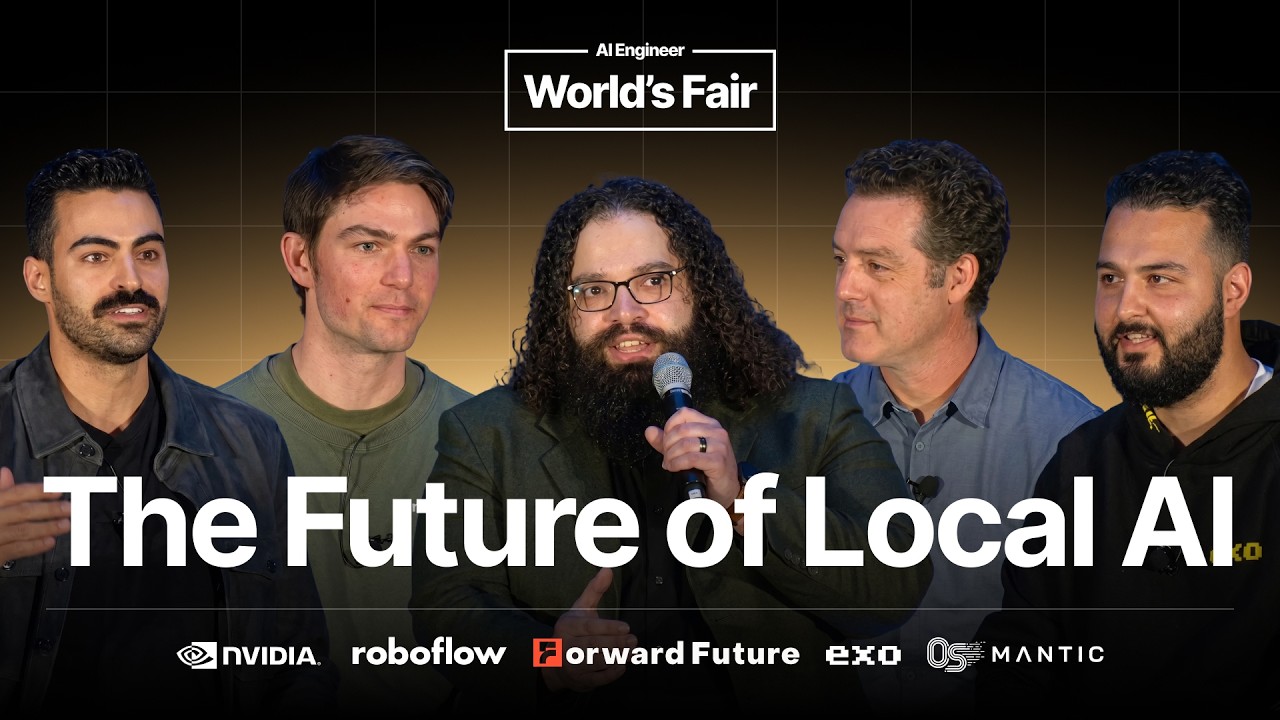
State of the Union: Why Local, Why Now — NVIDIA, Osmantic, Roboflow, EXO Labs, @matthew_berman

This panel discussion explores the inflection point of Local AI, driven by advanced models, improved hardware, and a robust ecosystem. Experts discuss how this shift addresses critical concerns around privacy, cost, sovereignty, and resilience, emphasizing the pivotal role of open-source AI and specialized models. They delve into technical optimizations, the evolution from generalized to specialized AI, and the challenges of making local AI accessible and performant for both enterprise and individual users.

Session on Reasoning

Session on Reasoning

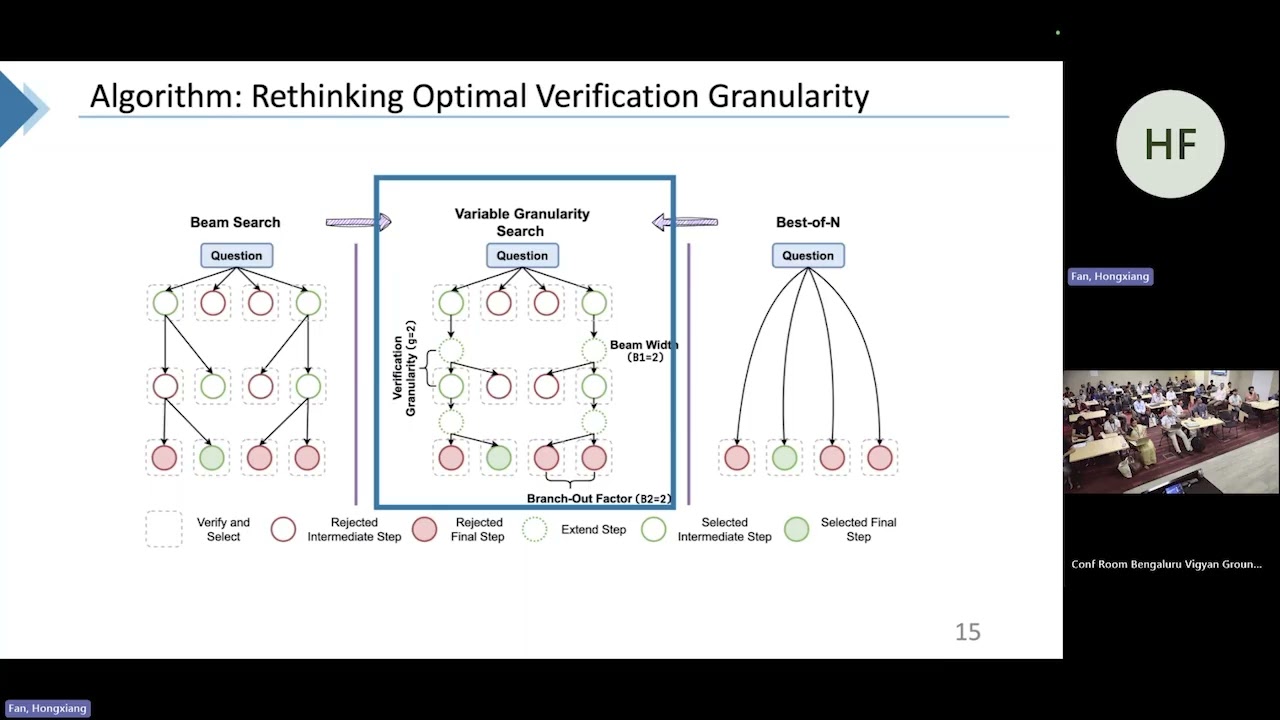
This session features two talks on optimizing and verifying AI reasoning. Hongxiang Fan discusses cross-stack co-design for efficient AI, focusing on Test-Time Scaling (TTS) challenges, optimal verification granularity, and system-level optimizations for edge deployments. Nagarajan Natarajan introduces 'Advancing Verified Reasoning' with the InterVent platform, aiming to ensure AI agents comply with complex policies through formal verification, dynamic steering, and leveraging verification signals for training. Both emphasize addressing the computational and reliability costs of advanced AI.

Re-engineering the Semiconductor Supply Chain with Intel CEO Lip Bu Tan

Re-engineering the Semiconductor Supply Chain with Intel CEO Lip Bu Tan

Intel CEO Lip Bu Tan shares his strategic vision for turning around the tech giant, focusing on cultural transformation, strengthening the balance sheet with key investments (including the US government and Nvidia), and driving innovation in foundry, advanced packaging, and new materials. He discusses collaborations like Terafab with Elon Musk, the profound impact of AI on the semiconductor supply chain, and his investment philosophy for the evolving industry, aiming to position Intel for agentic and physical AI at the edge and client, not just centralized compute.

Accelerating AI on Edge — Chintan Parikh and Weiyi Wang, Google DeepMind

Accelerating AI on Edge — Chintan Parikh and Weiyi Wang, Google DeepMind

A deep dive into Google's AI Edge stack for on-device AI, covering the new Gemma 4 models, the LiteRT framework for cross-platform deployment, and practical use cases in agent skills, tool calling, and hardware acceleration on CPUs, GPUs, and NPUs.