Cybersecurity ai

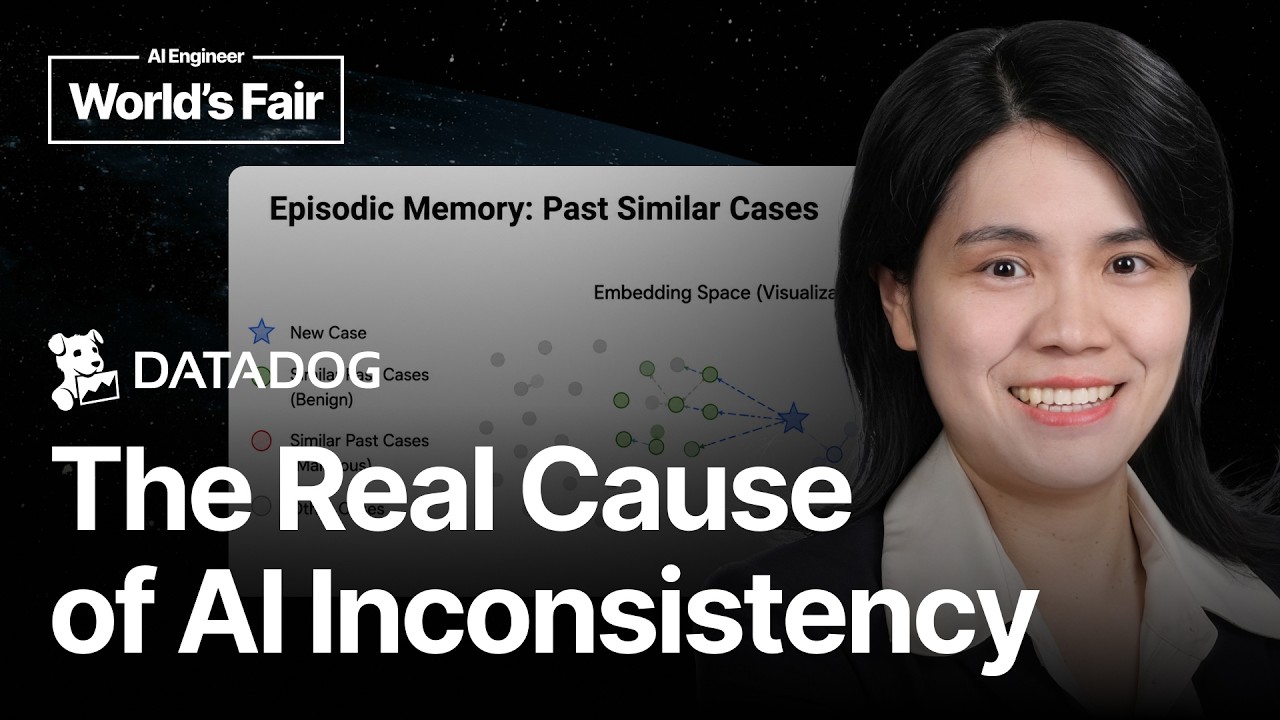
Why Your Agent Disagrees With Itself (And What To Do About It) - Diane Lin, Datadog

Why Your Agent Disagrees With Itself (And What To Do About It) - Diane Lin, Datadog

This session addresses the critical problem of AI agent inconsistency, particularly in LLMs, which leads to "flip-flops" in high-stakes domains like cybersecurity. It argues that this isn't a model failure but a signal of ambiguity in the "gray zone" near decision boundaries. The proposed solution involves using active learning to identify these ambiguous cases, followed by augmenting agents with semantic memory (explicit policies) and episodic memory (past similar cases) to clarify decisions, improve consistency, and adapt to customer-specific preferences without relying solely on expensive fine-tuning.

GLM-5.2: The real security risk? Plus: Vibe hunting, the end of CVSS and updates on Lightwell

GLM-5.2: The real security risk? Plus: Vibe hunting, the end of CVSS and updates on Lightwell

This podcast explores the implications of open-weight AI models like GLM-5.2 for cybersecurity, CISA's new four-variable vulnerability prioritization model, the rise of AI-assisted 'vibe hunting,' and the commercial launch of IBM and Red Hat's Lightwell for securing open-source software. It highlights the tension between AI capabilities for attackers and defenders, the challenges of rapid vulnerability remediation, and the need for new "trust infrastructures" in the AI era.