Cost optimization

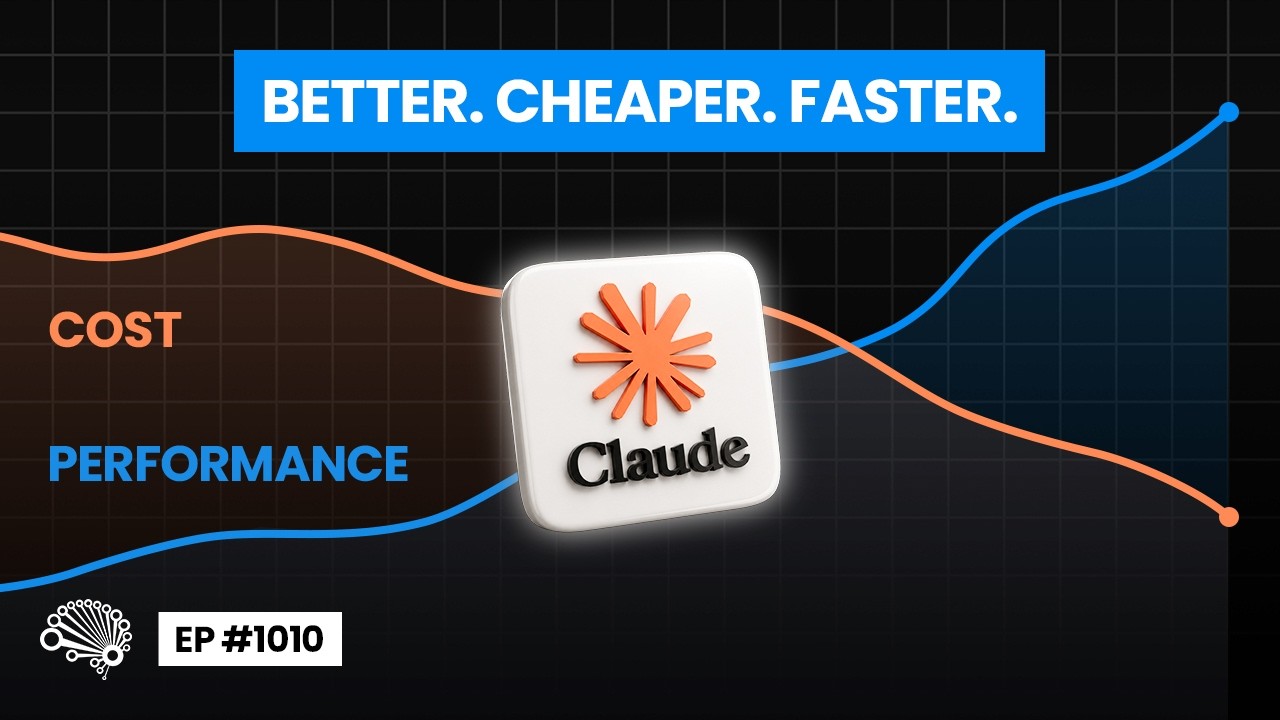
Fable 5 as Advisor: Anthropic's Two-Model Pattern for Smarter, Cheaper Agents (Ep. 1010)

Fable 5 as Advisor: Anthropic's Two-Model Pattern for Smarter, Cheaper Agents (Ep. 1010)

The episode explores Anthropic's "advisor strategy," a novel AI agent pattern that combines a fast, cheap "executor" model with a frontier-class "advisor" model. This allows for mid-task consultation within a single API call, resolving the tension between cost and capability. Benchmarks show simultaneous improvements in quality and cost reduction, demonstrating that AI progress is shifting towards intelligent model composition rather than just larger models.
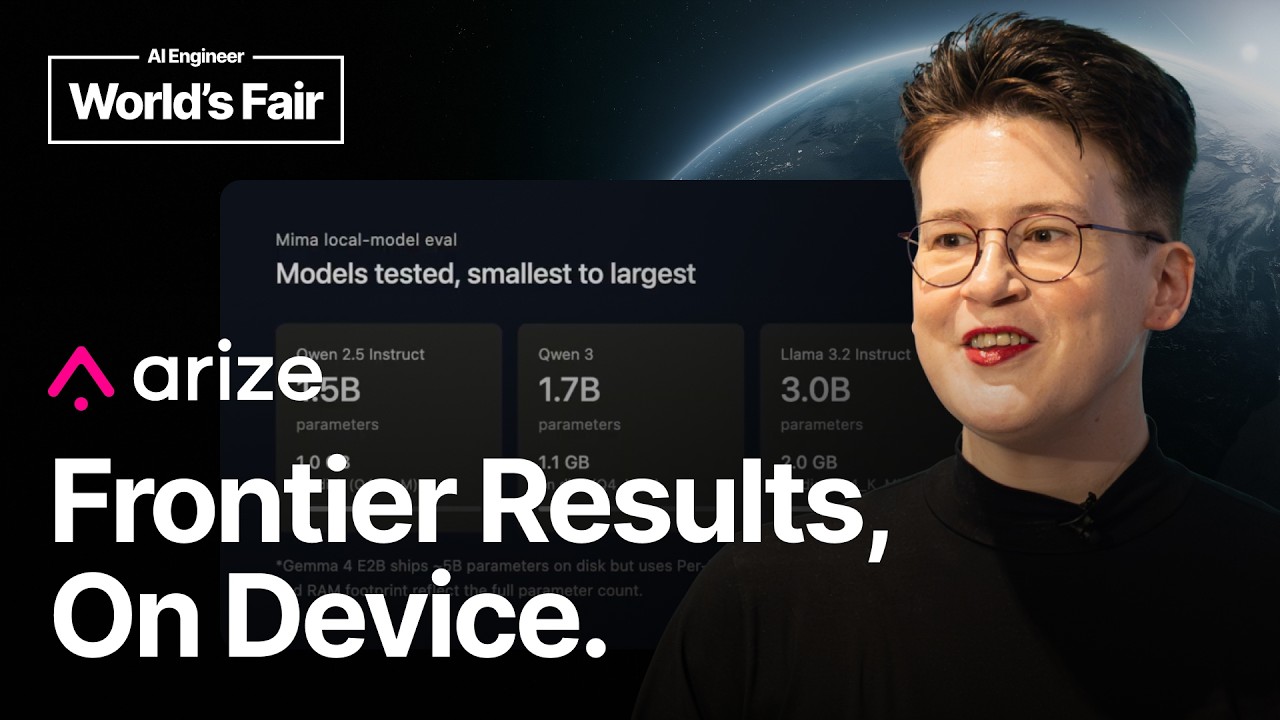

Frontier results, on device - RL Nabors, Arize

Frontier results, on device - RL Nabors, Arize

RL Nabors discusses the significant costs associated with using frontier AI models, covering security, latency, and financial implications. She introduces a framework for right-sizing AI solutions by leveraging smaller, task-specific models and Small Language Models (SLMs). The framework details how to prove task feasibility, establish success criteria with golden datasets, conduct capability evaluations (using tools like Phoenix), and select the most appropriate "Small And Good Enough" (SAGE) model. Nabors further demonstrates how prompt engineering, particularly few-shot prompting, and post-processing can close performance gaps with larger models, while advocating for continuous regression evaluations to maintain performance integrity. The overarching message is to "prototype big, deploy small" to optimize AI deployments.

The 100-Tool Agent Is a Trap - Sohail Shaikh & Ankush Rastogi, Prosodica

The 100-Tool Agent Is a Trap - Sohail Shaikh & Ankush Rastogi, Prosodica

This session unveils the "Fat Agent" trap in LLM agent architectures, where loading an entire tool catalog into the system prompt causes severe latency, cost, and accuracy problems. It presents the Semantic Tool Router pattern, a practical solution leveraging Just-in-Time Context Injection and vector search (RAG for tools) to dynamically provide only relevant tools, dramatically reducing prompt size, enhancing performance, and improving reliability across frontier models like GPT-4o and Gemini 2.0.

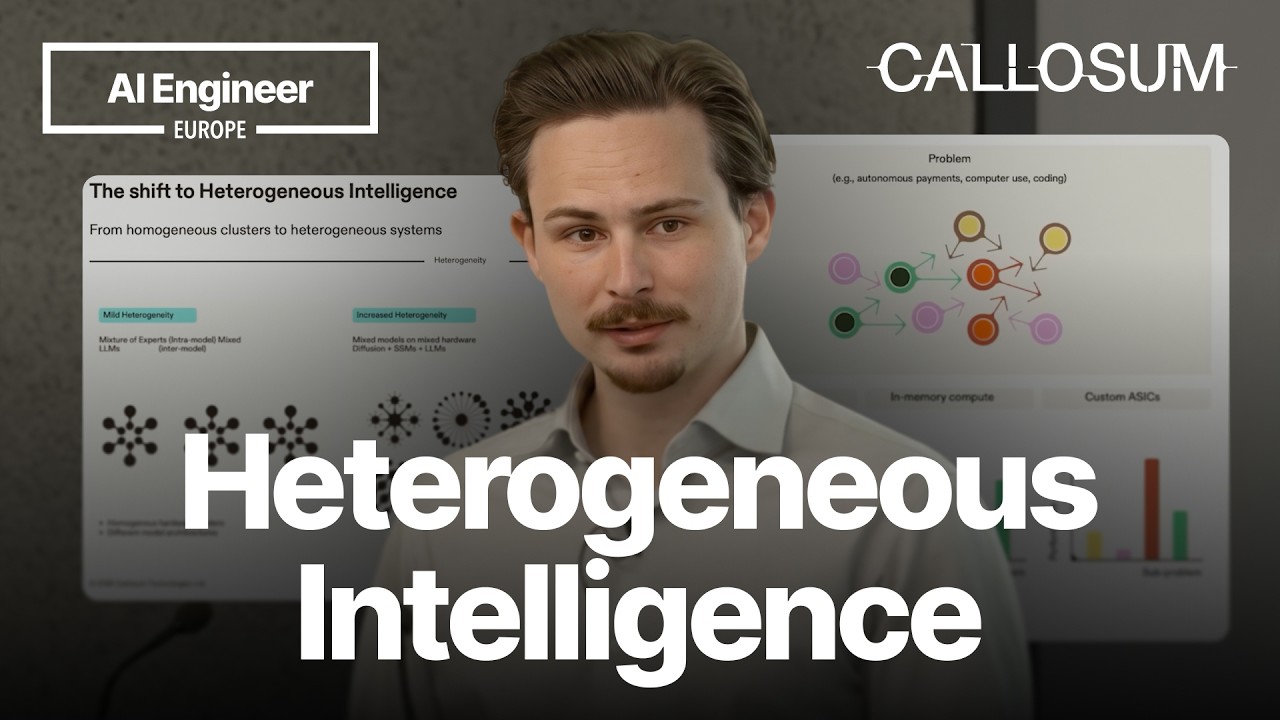
Scaling the Next Paradigm of Heterogeneous Intelligence — Adrian Bertagnoli, Callosum

Scaling the Next Paradigm of Heterogeneous Intelligence — Adrian Bertagnoli, Callosum

Adrian Bertagnoli from Callosum argues that the era of scaling monolithic models on homogeneous GPU clusters is ending. He introduces "heterogeneous intelligence," a new paradigm where model architectures, chip types, and workflows are optimized together. By routing subtasks to the most efficient model and hardware, this approach achieves significant performance gains, as demonstrated by two key results: a 7x cost reduction in recursive reasoning tasks using Cerebras, and state-of-the-art performance on the Video Web Arena benchmark, outperforming leading GPT and Gemini models at a fraction of the cost and time.

Beyond the Basics: Production Serverless Patterns for Extreme Scale • Janak Agarwal • GOTO 2025

Beyond the Basics: Production Serverless Patterns for Extreme Scale • Janak Agarwal • GOTO 2025

This presentation by Janak Agarwal from AWS provides a deep dive into scaling serverless applications for mission-critical, high-traffic workloads. It explores AWS Lambda's rapid scaling capabilities for handling extreme traffic bursts and introduces advanced patterns like Provisioned Concurrency for cost optimization during steady-state operations.

How We Cut LLM Latency 70% With TensorRT in Production

How We Cut LLM Latency 70% With TensorRT in Production

An engineering leader details the journey of self-hosting LLMs at enterprise scale, covering how his team slashed latency by 70% with TensorRT-LLM, optimized GPU costs through counterintuitive scaling, and built a verticalized AI platform for HR tech. The summary explores practical solutions for cold starts, KV cache optimization, and managing the cultural adoption of AI coding agents in engineering teams.