Continuous integration

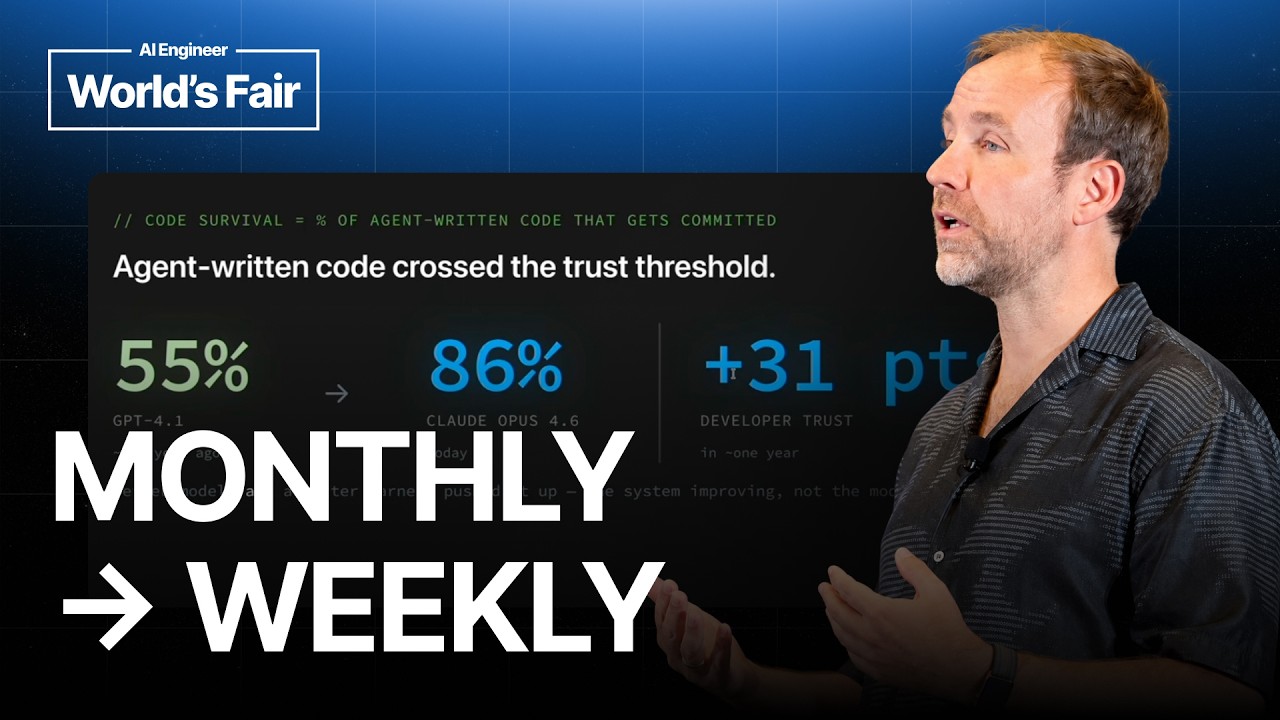
How VS Code Went from Monthly to Weekly Releases with AI — Harald Kirschner

How VS Code Went from Monthly to Weekly Releases with AI — Harald Kirschner

Harald Kirschner, principal product manager on VS Code at Microsoft, explains how a small team serving more than 50 million users moved from monthly to weekly releases by rebuilding its whole delivery system around AI agents. He covers faster shipping through agent-ready codebases, skills, and a 10x faster TypeScript Go build, quality practices like mandatory AI code review, AI triage, auto-fix PRs and staged rollouts, and faster learning through VSC-Bench evals and daily prototyping.

Loop Engineering from First Principles — Kyle Mistele, HumanLayer

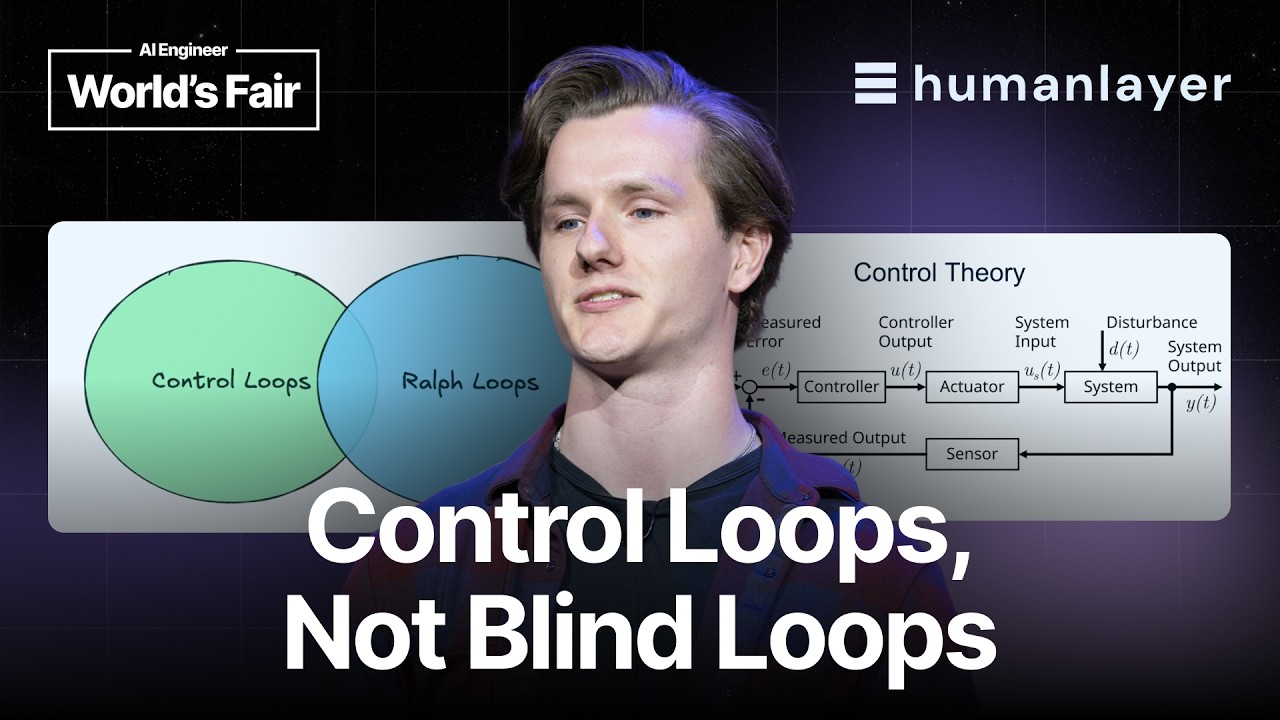
Loop Engineering from First Principles — Kyle Mistele, HumanLayer

Kyle Mistele, in this presentation, argues that fixing the problem of unreviewable 40,000-line pull requests generated by coding agents doesn't lie in better prompts but in better, control theory-inspired loops. He details how to build agentic control loops with distinct sensors, controllers, and actuators, ensuring incremental, verifiable code changes. Using a practical example of RPC API migration, he demonstrates how to implement these loops with tools like ASGrep, integrate them into CI/CD, enable human feedback, and manage workflow to prevent overwhelming reviewers, ultimately leading to more robust and readable agent-generated code.

From Agent Traces to Agent Simulations — Rustem Feyzkhanov, Snorkel AI

From Agent Traces to Agent Simulations — Rustem Feyzkhanov, Snorkel AI

Rustem Feyzkhanov discusses the critical need for companies to build private, production-aligned benchmarks for AI agents. He explains how to turn agent traces into repeatable simulations, why public benchmarks are insufficient, and how a CI pipeline for agents, integrating observability and experimentation, can ensure reliable evaluation, continuous improvement, and effective release management, moving beyond simple pass rates to measure cost, latency, and policy adherence.