Computational efficiency

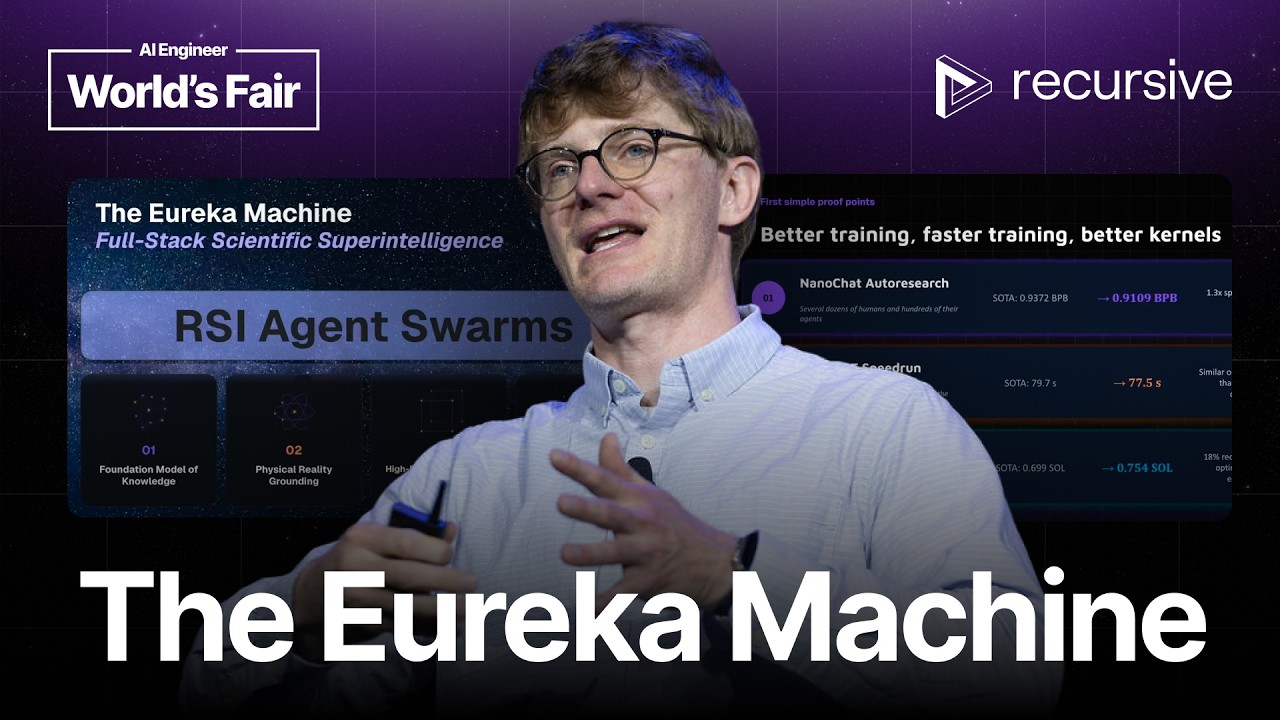
First Steps Toward Automated AI Research — Richard Socher, CEO Recursive AI

First Steps Toward Automated AI Research — Richard Socher, CEO Recursive AI

Richard Socher introduces the "Eureka machine," a concept for automating scientific research and invention through AI. Inspired by open-ended evolution and Karl Popper's philosophy of science, he argues that AI can compress the timeline of scientific discovery, overcoming human-centric bottlenecks. The machine relies on four pillars (knowledge, data, simulations, physical labs) orchestrated by an agent swarm, requiring a rethinking of existing infrastructure. Recursive Self-Improvement (RSI), where AI improves its own code and addresses its shortcomings, is presented as the path forward, with early proof points in model optimization, training speed, and GPU kernel efficiency.
The Benchmark With No Instructions — Tufa Labs (ARC-AGI-3)

The Benchmark With No Instructions — Tufa Labs (ARC-AGI-3)

Tim Scarfe visits Tufa Labs to explore their top-ranking ARC-AGI-3 system, a benchmark for agentic intelligence that challenges LLMs in goal discovery and action efficiency. The team delves into the complexities of fractured representations, the role of human priors, and whether LLMs truly plan or merely simulate it effectively, all while balancing the bitter lesson with AI safety concerns.

Session on Reasoning

Session on Reasoning

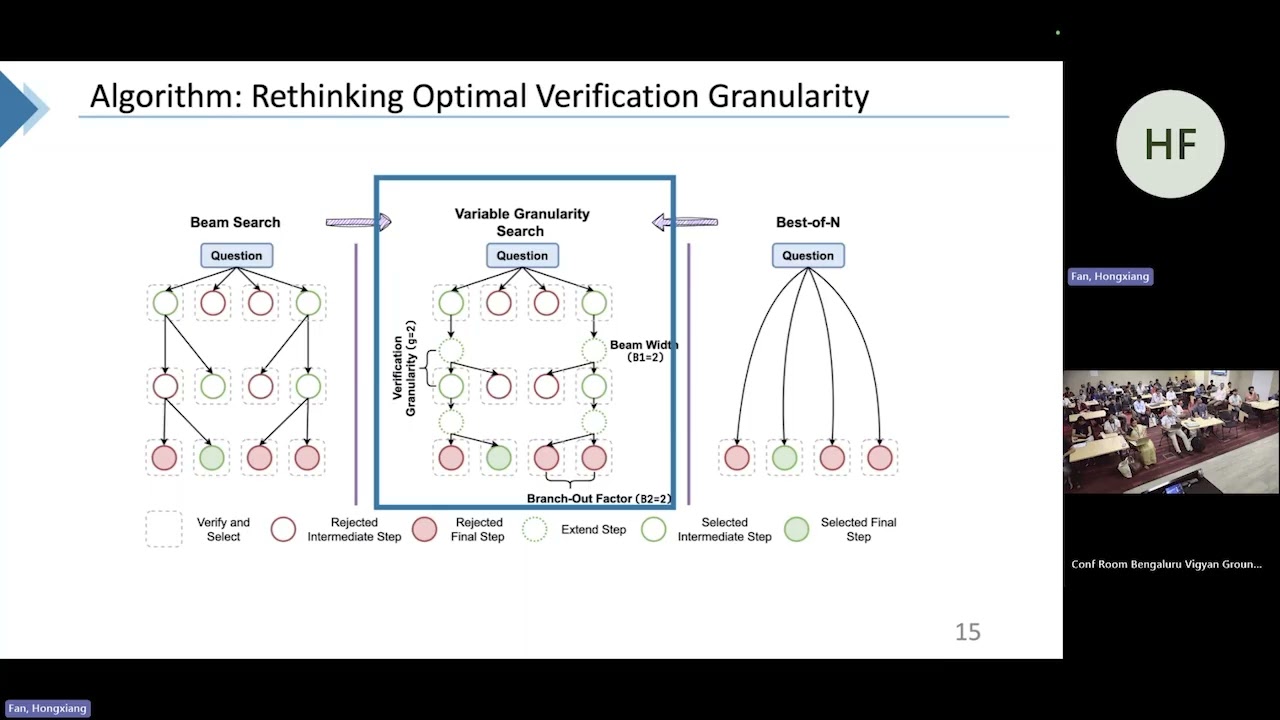
This session features two talks on optimizing and verifying AI reasoning. Hongxiang Fan discusses cross-stack co-design for efficient AI, focusing on Test-Time Scaling (TTS) challenges, optimal verification granularity, and system-level optimizations for edge deployments. Nagarajan Natarajan introduces 'Advancing Verified Reasoning' with the InterVent platform, aiming to ensure AI agents comply with complex policies through formal verification, dynamic steering, and leveraging verification signals for training. Both emphasize addressing the computational and reliability costs of advanced AI.