Coding agents

Why AI Can Write Code But Can’t Keep It Running (Yet)

Why AI Can Write Code But Can’t Keep It Running (Yet)

Grepr CEO Jad Naous talks with a16z's Martin Casado about how coding agents have changed a 10-person engineering team, with projects that once took six months now finishing in about ten days. They examine whether AI can reason about and troubleshoot production distributed systems, why operations is a harder problem than code generation, and where AI adoption is likely to go next.

Rebuilding CI for AI-Scale Commit Volume — Gautam Korlam, SonarSource

Rebuilding CI for AI-Scale Commit Volume — Gautam Korlam, SonarSource

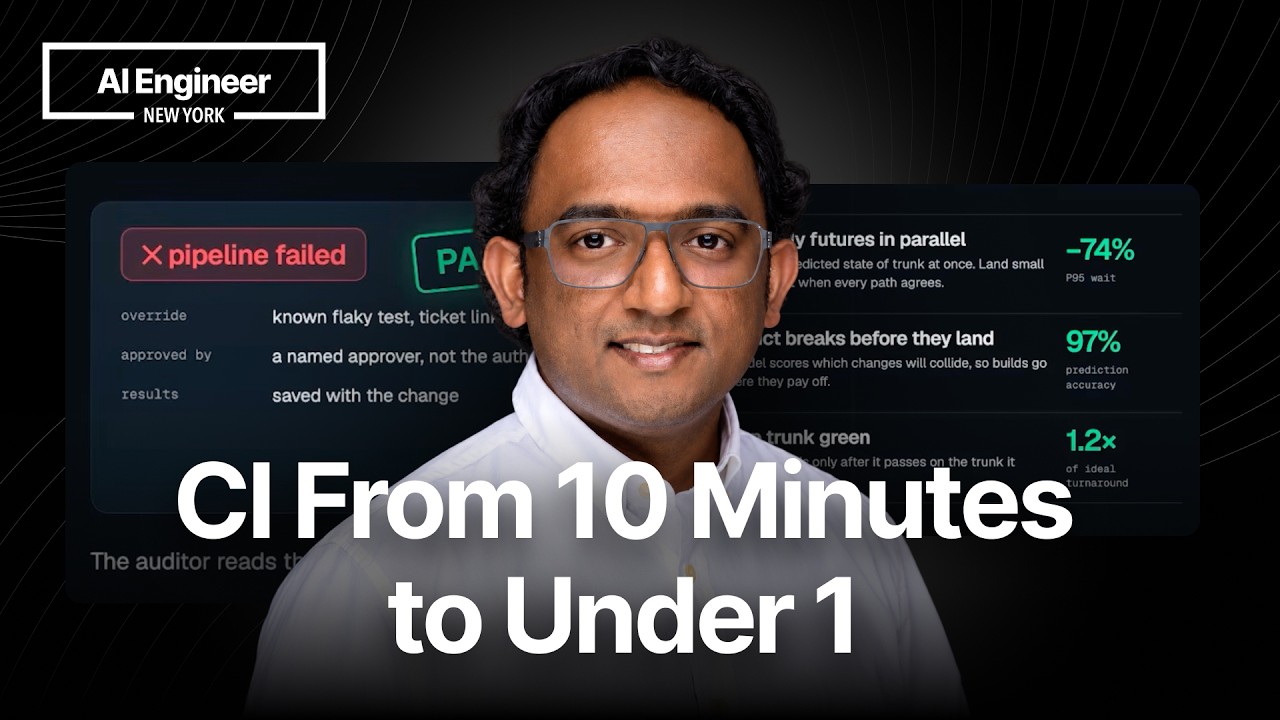
A talk on why coding agents shift the bottleneck from code generation to CI, merge queues, review, and approvals, and how to redesign those systems around speed, automated repair, policy enforcement, and auditable records.

Let Your Agent Cook: Using Skills to Evaluate and Improve Your App — Ankur Duggal, Arize AI

Let Your Agent Cook: Using Skills to Evaluate and Improve Your App — Ankur Duggal, Arize AI

A financial agent produces confident investment advice with fabricated details, redundant tool calls and bad summaries. This talk shows how traces, evaluations, and a coding agent connected through the Arize CLI and skills can investigate those failures, propose fixes, and test them with experiments. It covers why evaluations matter over vibes-based shipping, how judges and costs fit in, and why human review and application-specific evals are still essential.

The Lethal Trifecta Is Already on Your Laptops — Michael Patterson, Coder

The Lethal Trifecta Is Already on Your Laptops — Michael Patterson, Coder

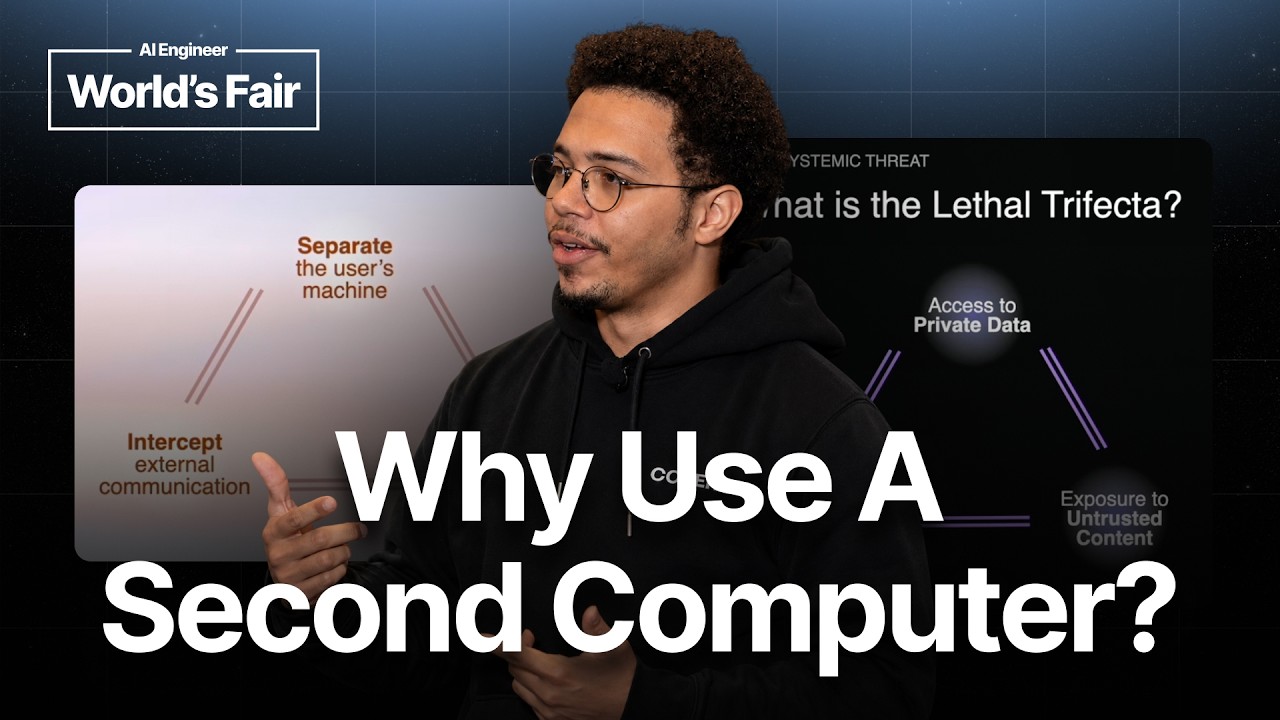
Michael Patterson of Coder explains Simon Willison's lethal trifecta: private data access, exposure to untrusted content, and external communication, and why coding agents running on developer laptops hit all three. He covers prompt injection, the organizational blockers to enterprise agent rollout such as shadow AI and alert fatigue, and three architectural guardrails: cloud development environments, a model proxy, and an agent firewall.

Stop Prompting — Greg Pstrucha, Sentry

Stop Prompting — Greg Pstrucha, Sentry

Greg Pstrucha of Sentry argues that instead of repeatedly re-prompting coding agents, teams should codify their recurring corrections as deterministic checks. He covers why agents forget and why custom lint rules are now cheap, how to mine transcripts and PR reviews for rules, real Sentry examples that keep OpenAPI schemas and agent skills in sync, written policies and a Grumpy Engineer review loop for qualitative judgment, and why agents game metrics like test coverage.

We Mapped 115 Microservices for Our Coding Agents — Kamalakannan Nandagopal, Postman

We Mapped 115 Microservices for Our Coding Agents — Kamalakannan Nandagopal, Postman

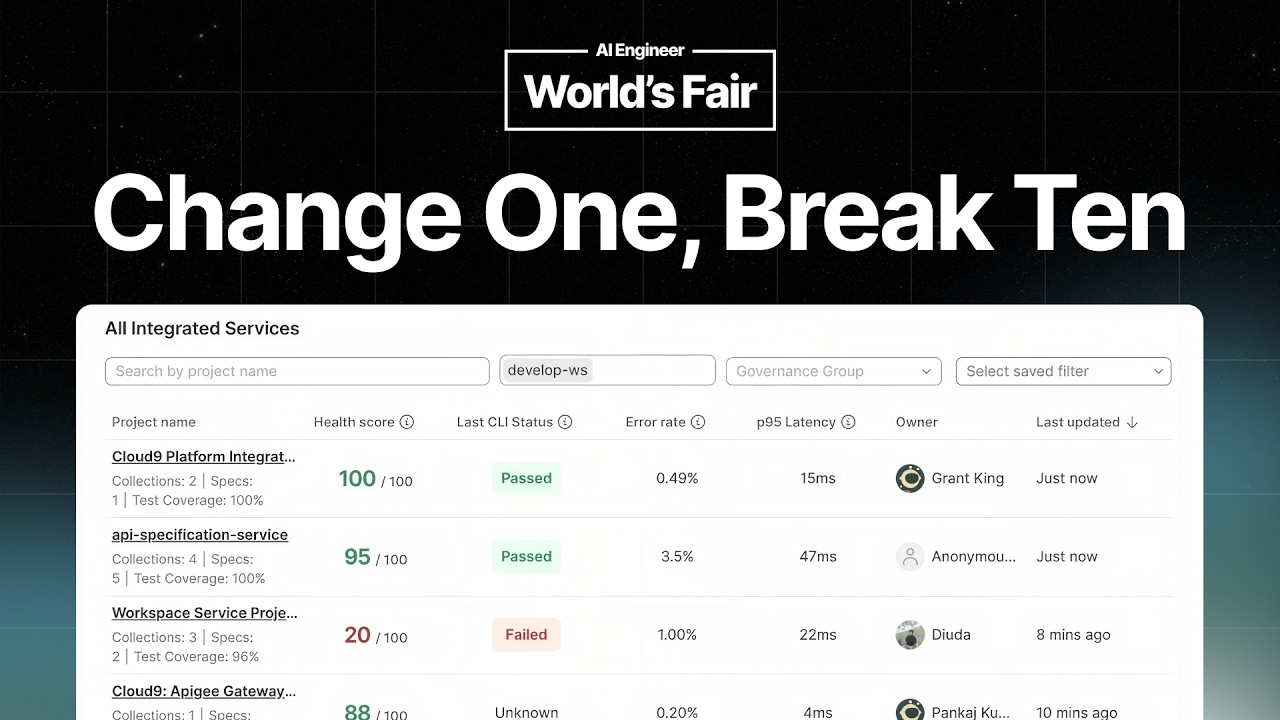
Kamalakannan Nandagopal from Postman explains why coding agents struggle beyond a single repo and how an API context graph, grounded in code and production telemetry, gives agents system-wide awareness. The talk covers evals built from real PRs, wins on API discovery, redesign and impact assessment, a stale-graph failure, and a 21-page architecture review generated by the agent.