Claude code

Opencode CEO: Blocked, 20X Growth in 6 Months, Building the Coding Agent for the World

Opencode CEO: Blocked, 20X Growth in 6 Months, Building the Coding Agent for the World

Jay V, founder and CEO of Opencode, shares insights into the explosive growth of his platform, an open-source alternative to proprietary coding agents. He details Opencode's journey to 13 million monthly active users and 7 trillion tokens processed daily, attributing its rapid rise partly to an unexpected controversy with Anthropic and the maturing open-source model ecosystem. The discussion delves into global user adoption, the economic shift in AI token consumption, and how Opencode's strategic product design, rooted in 16 years of entrepreneurial persistence, positions it as a critical marketplace for diverse AI models, serving both individual developers and Fortune 500 companies.
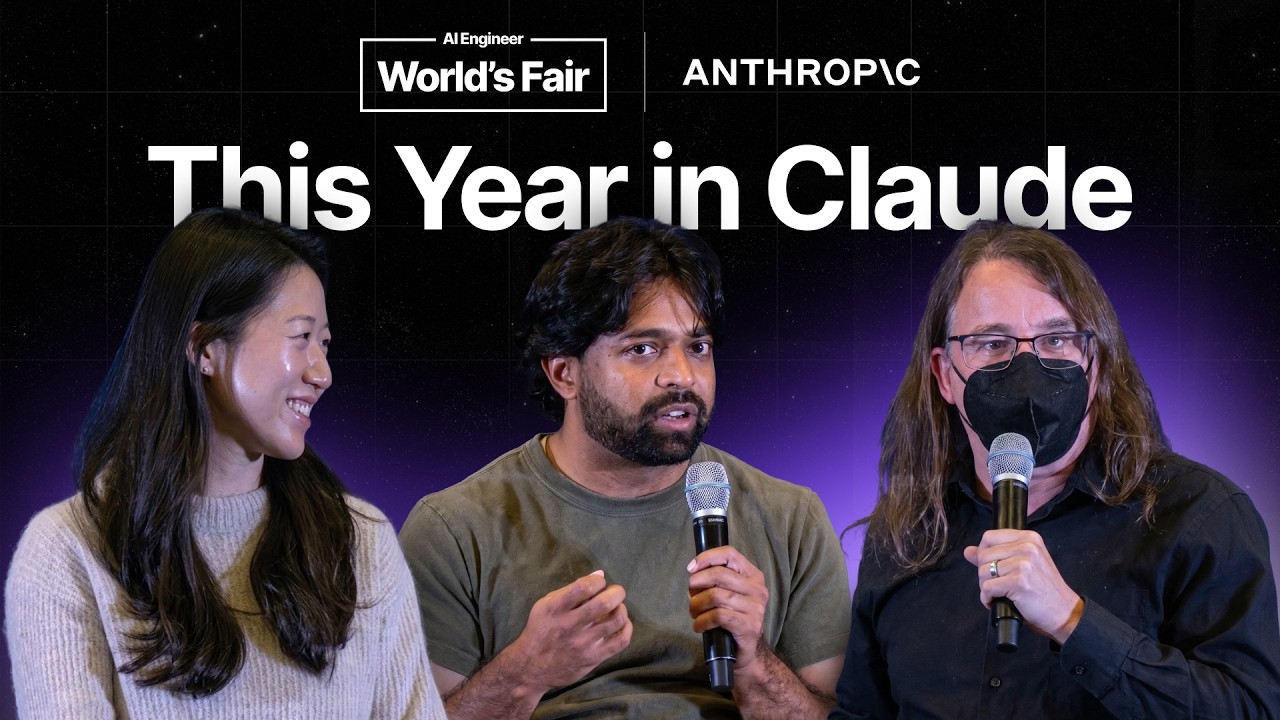
Simon Willison in conversation with Cat Wu & Thariq Shihipar, Anthropic

Simon Willison in conversation with Cat Wu & Thariq Shihipar, Anthropic

A Q&A with Anthropic's Cat Wu and Thariq Shihipar on how Claude Code and agentic AI are fundamentally changing software development, from workflow shifts and engineering norms to safety, model trust, and team collaboration. The discussion covers the rapid evolution of coding agents, the rise of proactive agents like Claude Tag, new approaches to code review and system prompt optimization, and Anthropic's robust safety measures including Auto Mode.

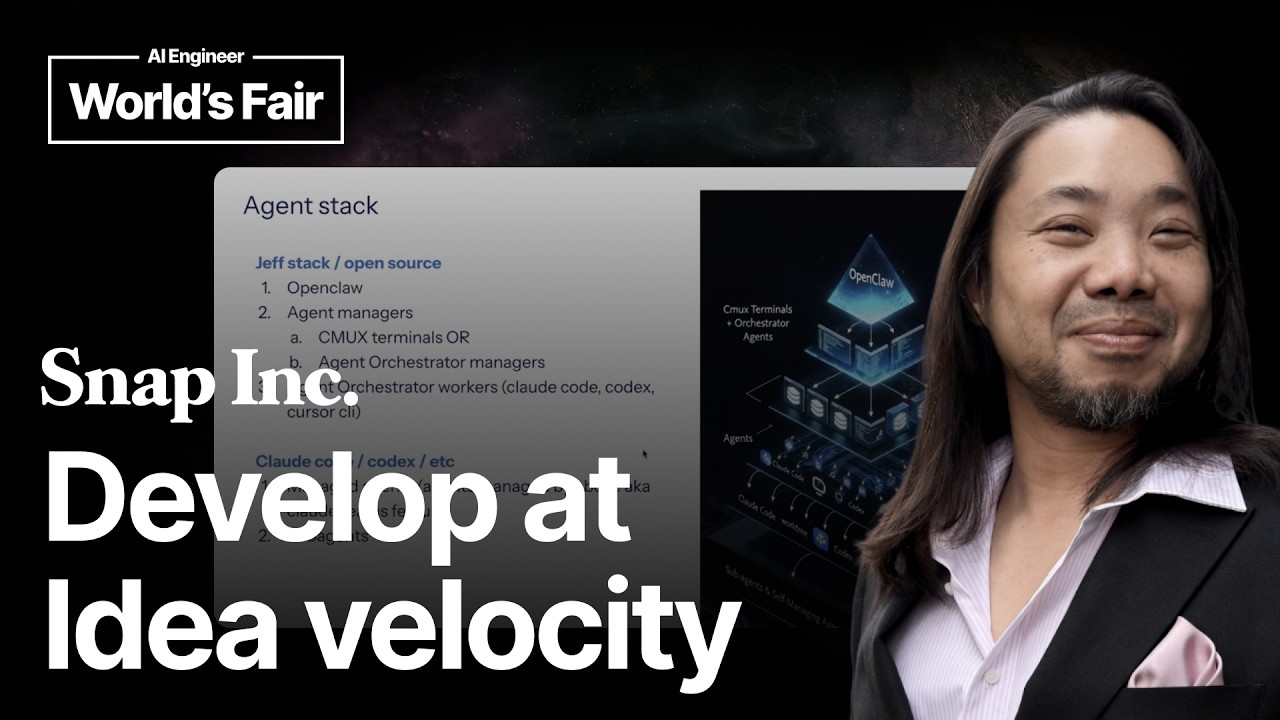
Develop at Idea Velocity - Jeffrey Lee-Chan, Snapchat

Develop at Idea Velocity - Jeffrey Lee-Chan, Snapchat

Jeffrey Lee-Chan argues that the critical component for production AI agent systems is not the model but the "harness"—an orchestration layer providing persistent memory and contextual guardrails. He introduces Open Claw, a conceptual framework that separates agent orchestrator managers (handling task specs and history) from specialized workers (executing implementation details). This architecture enables deterministic teamwork, parallelization, and unbiased outcomes, supported by examples like AI RPGs and multi-AI analysis, alongside tools like tmux for enhanced developer productivity and careful token management strategies.

Field Guide to Fable — Thariq Shihipar, Anthropic

Field Guide to Fable — Thariq Shihipar, Anthropic

Thariq Shihipar from Anthropic introduces Fable, their newest model, as a major leap forward, emphasizing "capability overhang" where tool use unlocks unprecedented intelligence. He provides a "field guide" on working with Fable, discussing evolving prompt engineering, advanced tool interactions (like HTML reports), and strategies for identifying project unknowns. He concludes by challenging the necessity of traditional tradeoffs, advocating for ambitious development that is both good, fast, and cheap, and urging AI engineers to prove the transformative power of AI.

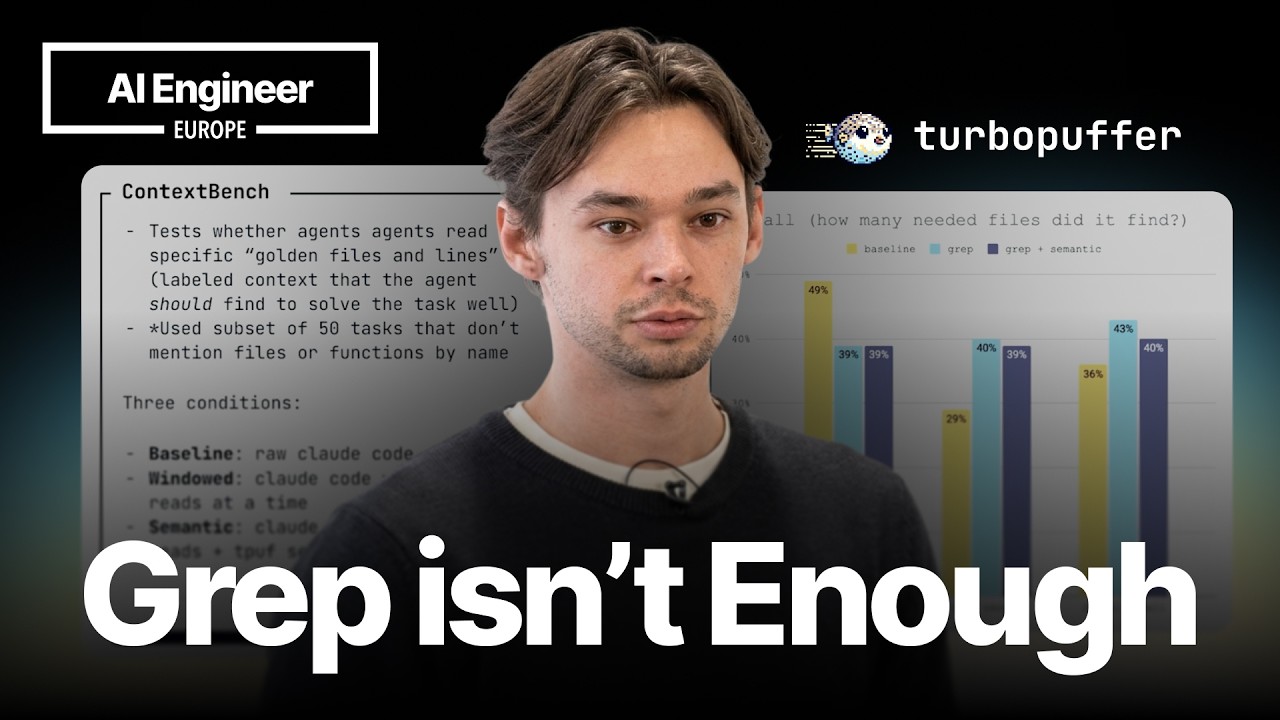
Benchmarking semantic code retrieval on Claude Code — Kuba Rogut, Turbopuffer

Benchmarking semantic code retrieval on Claude Code — Kuba Rogut, Turbopuffer

A detailed benchmark analysis comparing raw Claude Code's performance with windowed grep and Turbopuffer's semantic search for code retrieval in LLM agents. The study reveals significant improvements in file precision (65% to 87%) and reduced wasted reads (1 in 3 to 1 in 8) with semantic search, while highlighting the importance of the agent's understanding of when to use retrieval tools.

Pair Programming with AI in Your Python Notebook — with Dr. Trevor Manz

Pair Programming with AI in Your Python Notebook — with Dr. Trevor Manz

Dr. Trevor Manz from Marimo introduces Marimo Pair, an open-source agent skill that enables coding agents like Claude Code to interact with and drive reactive Python notebooks. He discusses the mechanics of agent skills, the power of recursive language models for agentic reasoning, and his work on the AnyWidget project, which bridges the gap between Python's data ecosystem and interactive web technologies.