Bayesian inference

The mathematics of AI uncertainty

The mathematics of AI uncertainty

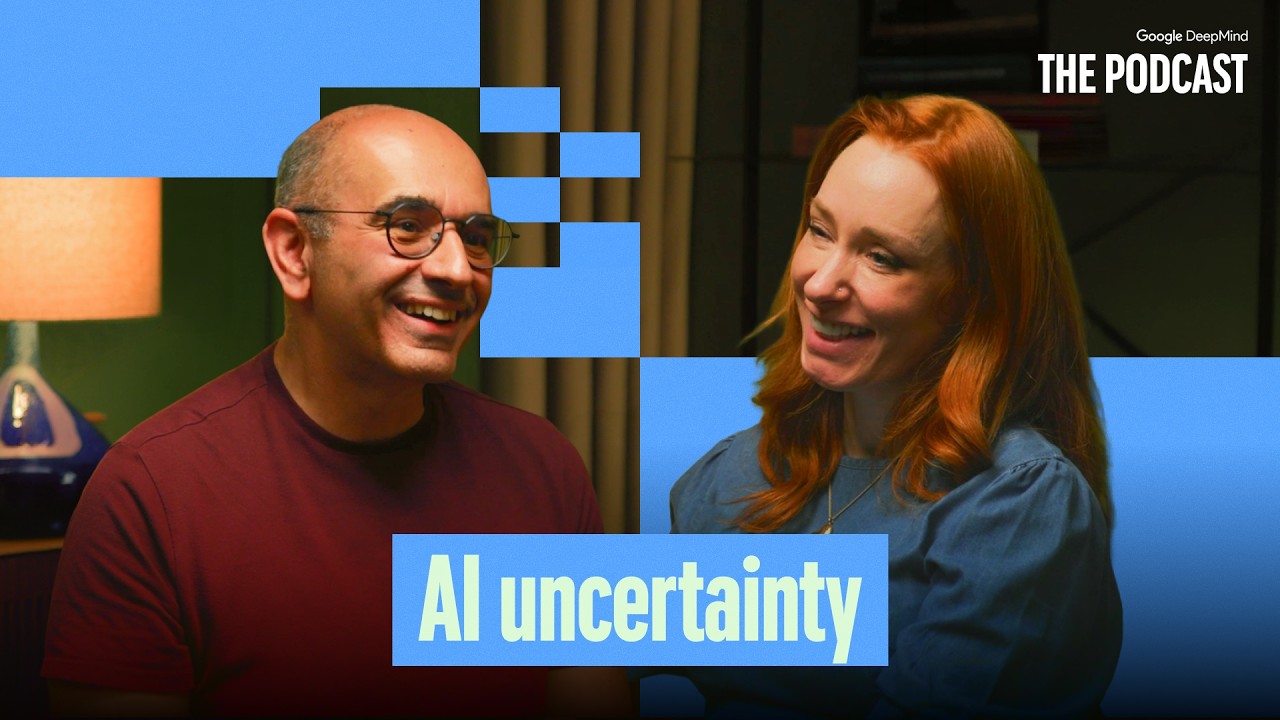
Zoubin Ghahramani, a leading researcher at Google DeepMind and professor at Cambridge, argues that incorporating uncertainty is a missing piece for ever-improving AI. He discusses the critical difference between correctness and confidence in AI, tracing the historical evolution of probabilistic models from early neural networks to modern Bayesian approaches. Ghahramani highlights how current large language models often 'fake' uncertainty and explores successful implementations in areas like weather forecasting and AlphaFold, ultimately advocating for architectural innovations over pure scale to build more robust, trustworthy, and human-aligned intelligent systems that understand their own limitations.
PhylaFlow: Hybrid flow matching in phylogenetic tree space

PhylaFlow: Hybrid flow matching in phylogenetic tree space

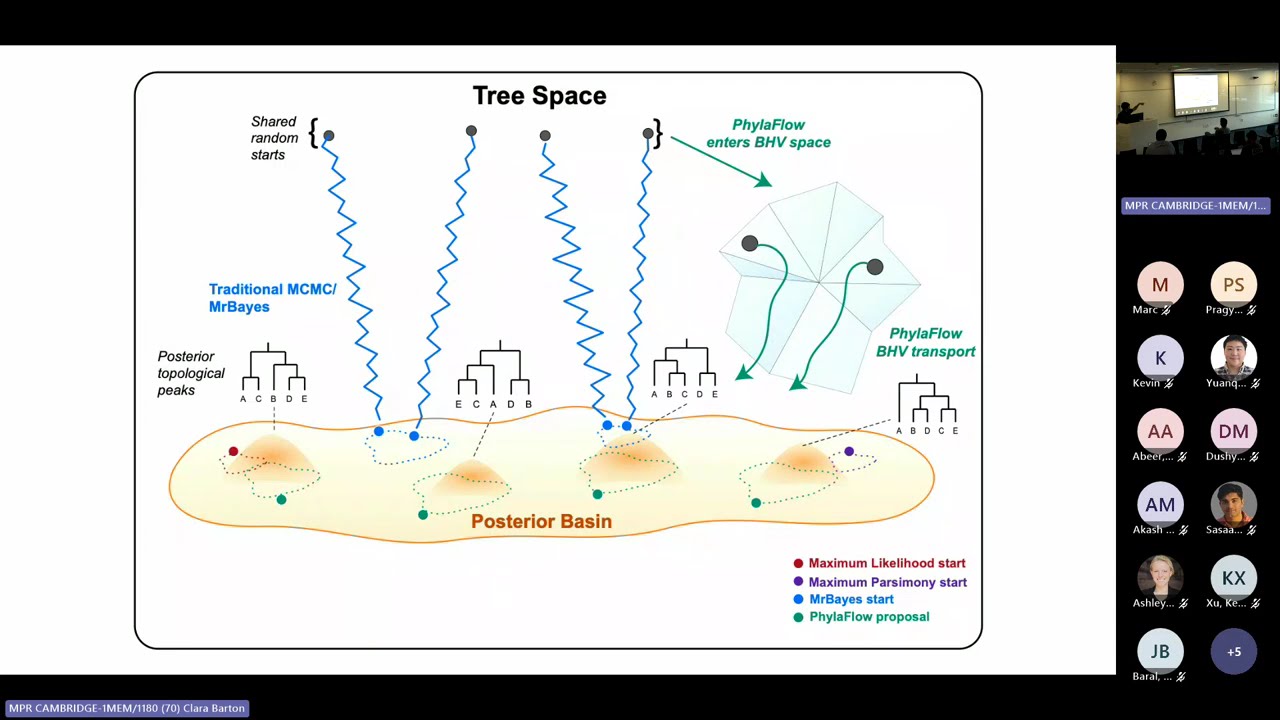
PhylaFlow is a hybrid flow-matching framework that navigates Billera–Holmes–Vogtmann (BHV) tree space to accelerate Bayesian phylogenetic inference. By learning geodesic paths from random trees to posterior samples, PhylaFlow efficiently initializes MCMC chains, drastically reducing the "burn-in" time. A PhylaFlow-MCMC variant, which guides MrBayes move acceptance, significantly outperforms traditional methods and even existing machine learning baselines for posterior sampling, achieving better results within the same computational budget. The work also explores conditioning on sequence embeddings, aiming for a future phylogenetics foundation model capable of zero-shot inference.

The Algorithm That IS The Scientific Method [Dr. Jeff Beck]

The Algorithm That IS The Scientific Method [Dr. Jeff Beck]

Dr. Jeff Beck argues that the future of AI lies not in scaling up large language models, but in building systems that mirror the brain's approach to understanding the world. He posits that true intelligence is grounded in physics and object-centered models, not language. Beck's vision involves creating AI composed of numerous small, modular models—much like a video game engine—that can be dynamically combined, updated through continual learning, and understand the world through causal relationships and forces. This approach, he claims, will solve key challenges in generalization, robotics, and alignment by enabling machines to 'know what they don't know' and reason about the physical world in a way that is fundamentally similar to humans.

Columbia CS Professor: Why LLMs Can’t Discover New Science

Columbia CS Professor: Why LLMs Can’t Discover New Science

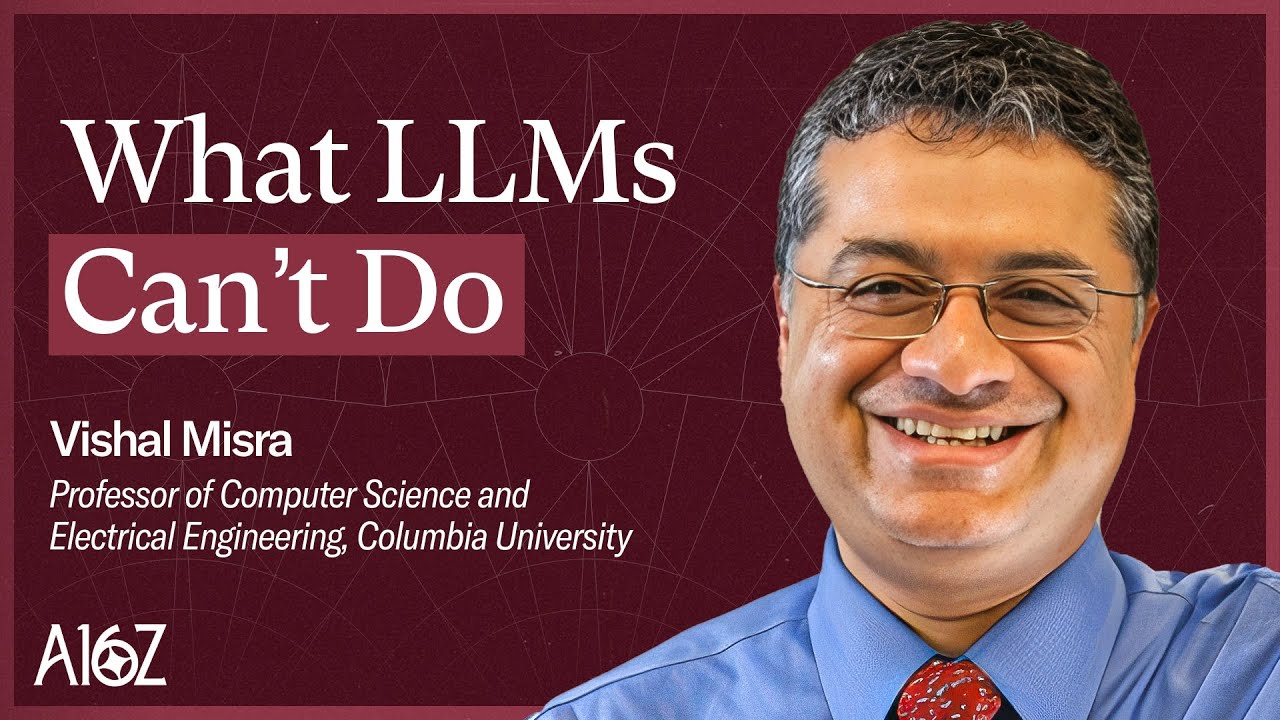
Professor Vishal Misra of Columbia University introduces a formal model for understanding Large Language Models (LLMs) based on information theory. He explains how LLMs reason by navigating "Bayesian manifolds", using concepts like token entropy to explain the mechanics of chain-of-thought, and defines true AGI as the ability to create new manifolds rather than just exploring existing ones.