Agentic ai

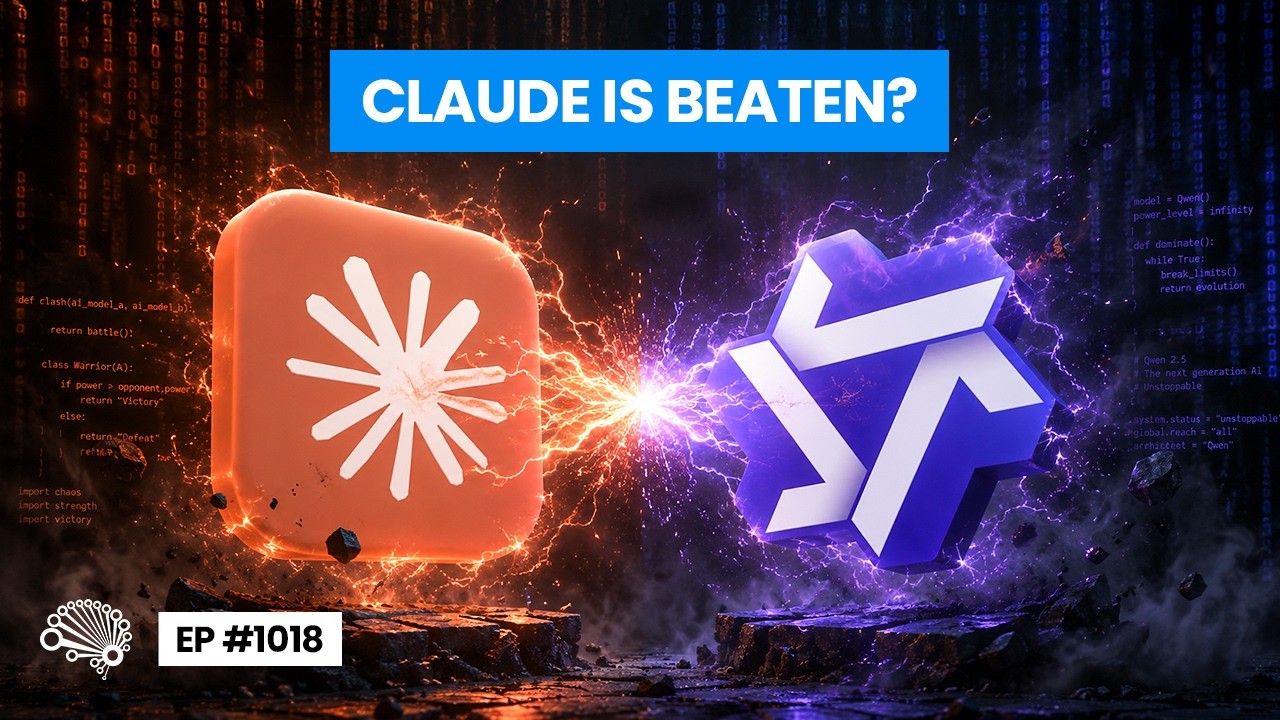
Alibaba's Qwen3.8-Max: Open-Weight Model Surpasses Most American Frontier Labs (Ep. 1018)

Alibaba's Qwen3.8-Max: Open-Weight Model Surpasses Most American Frontier Labs (Ep. 1018)

Jon Krohn dissects Alibaba's Qwen 3.8 Max, a 2.4-trillion-parameter Mixture-of-Experts (MoE) model positioned as the largest open-weight release in history if its promised weights ship. The discussion covers its multimodal capabilities, 1M token context window, and performance competitive with Anthropic's Claude Fable 5. Key highlights include its advanced multi-day agentic capabilities and aggressively low pricing ($2 in / $6 out per million tokens), intensifying the AI price war. Krohn also provides critical insights into the safety of using Chinese models, emphasizing data handling practices and the benefits/risks across different deployment scenarios.
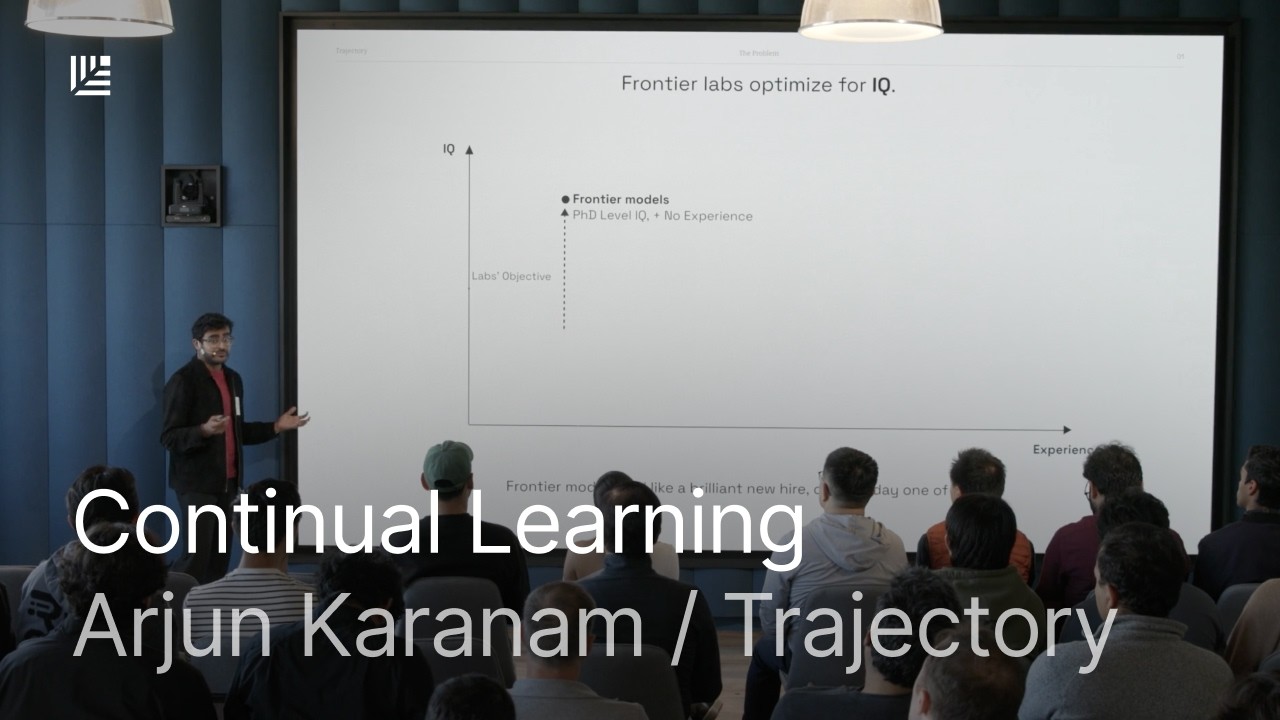
Continual Learning: How AI Agents Get Better With Every Use | Arjun Karanam, Trajectory

Continual Learning: How AI Agents Get Better With Every Use | Arjun Karanam, Trajectory

Arjun Karanam from Trajectory discusses the "experience gap" in AI, where models excel in intelligence but lack real-world experience, advocating for continual learning. He outlines four key areas for the agent ecosystem: robust traceability including corrective actions, evaluations drawn from production traffic, harnesses that orchestrate rather than constrain, and comfort with open-weight models. Trajectory aims to provide a platform for companies to own and continuously improve their AI intelligence.

Y Combinator CEO on Founder Psychology in the Age of AI

Y Combinator CEO on Founder Psychology in the Age of AI

Garry Tan, President and CEO of Y Combinator, discusses how AI is fundamentally reshaping the startup landscape. He covers the evolution of Silicon Valley culture, the lessons learned from two decades of tech cycles, and why earnestness and courage trump chasing trends. The conversation delves into the transformative power of AI agents in creating "400x" founders, the obsolescence of traditional SaaS, and how small, agent-powered teams can achieve unprecedented scale. Tan also explores the future of consumer AI, the impact of AI on organizational bureaucracy, and the "white pill" perspective on AI adoption, concluding with thoughts on local politics and community engagement.

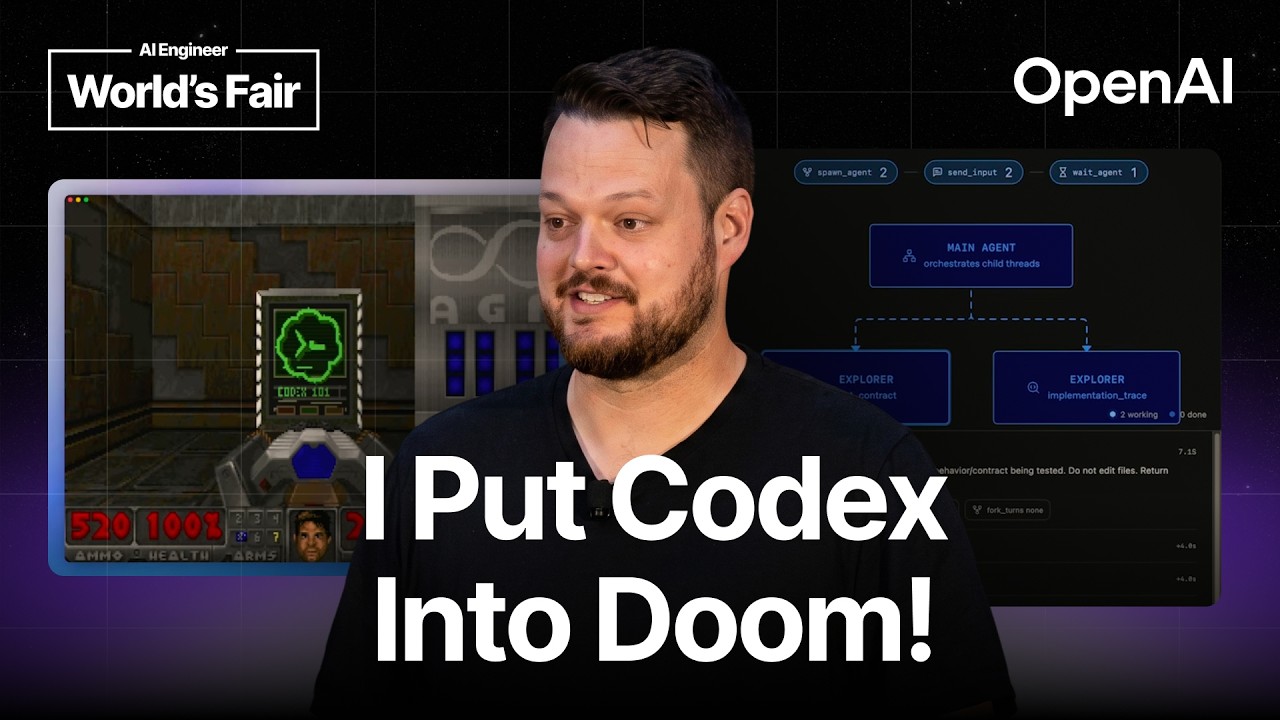
Codex, Behind the Harness — Dominik Kundel, OpenAI

Codex, Behind the Harness — Dominik Kundel, OpenAI

Once GPT 5.3 Codex Spark achieved 1000 tokens/sec on Cerebras, network latency superseded inference as the bottleneck for agents. This talk details how the Codex harness addresses this and other agentic challenges through innovations like WebSocket mode for stateful context, deferred tools for efficient context construction, robust sandboxing (Seatbelt, Bubblewrap, custom Windows solution), and an auto-review subagent to mitigate approval fatigue while ensuring security. It also covers structured actions via 'apply patch' for file edits, shell tools for system interaction, and sophisticated long-horizon goal management, with most distinct features exposed through the open Responses API.

Benchmarking Coding Agents on New vs Legacy Codebases — Denys Linkov, Wisedocs

Benchmarking Coding Agents on New vs Legacy Codebases — Denys Linkov, Wisedocs

Denys Linkov details Wisedocs' journey of refactoring a complex, distributed ML pipeline into a monorepo, benchmarking the process against evolving AI coding tools. He honestly audits whether the six-month effort was justified, or if waiting for more advanced AI would have been better, ultimately concluding that the significant social and technical benefits made the refactor a successful strategic move despite current LLM limitations.

Anthropic's CCA Exam as a Field-Guide for Agentic Engineering — Frank Coyle, UC Berkeley

Anthropic's CCA Exam as a Field-Guide for Agentic Engineering — Frank Coyle, UC Berkeley

Frank Coyle demystifies the Claude Certified Architect exam by dissecting key scenarios and highlighting common anti-patterns in Agentic AI design. He provides actionable best practices, emphasizing effective tool use, context management, specialized agent architectures, and cost-saving techniques, all centered on understanding what to avoid to build robust LLM applications.