Agent skills

Why AI Agents Should Have Their Own Sandbox — Philipp Schmid, Google DeepMind

Why AI Agents Should Have Their Own Sandbox — Philipp Schmid, Google DeepMind

Philipp Schmid of Google DeepMind introduces the Gemini Interactions API, a unified interface for models and agents with server-side state and long-running jobs. He then shows managed cloud sandboxes for Antigravity agents that persist, can be shared, and automatically pick up skills and AGENTS.md files, closing with a live AI talk radio demo built from a single prompt.
From 36% to 100%: How Self-Improving Agents Write Their Own Skills — Rafal Wilinski, Runlayer

From 36% to 100%: How Self-Improving Agents Write Their Own Skills — Rafal Wilinski, Runlayer

Rafal Wilinski of Runlayer argues that when one agent solves a hard problem, that knowledge should become a skill shared across the whole company. He covers why skills matter more as agents run longer, three problems with current skills, using MCP as a governed distribution layer, distilling skills from successful and failed agent traces inspired by the Voyager paper, and the organizational flywheel as a durable competitive advantage.

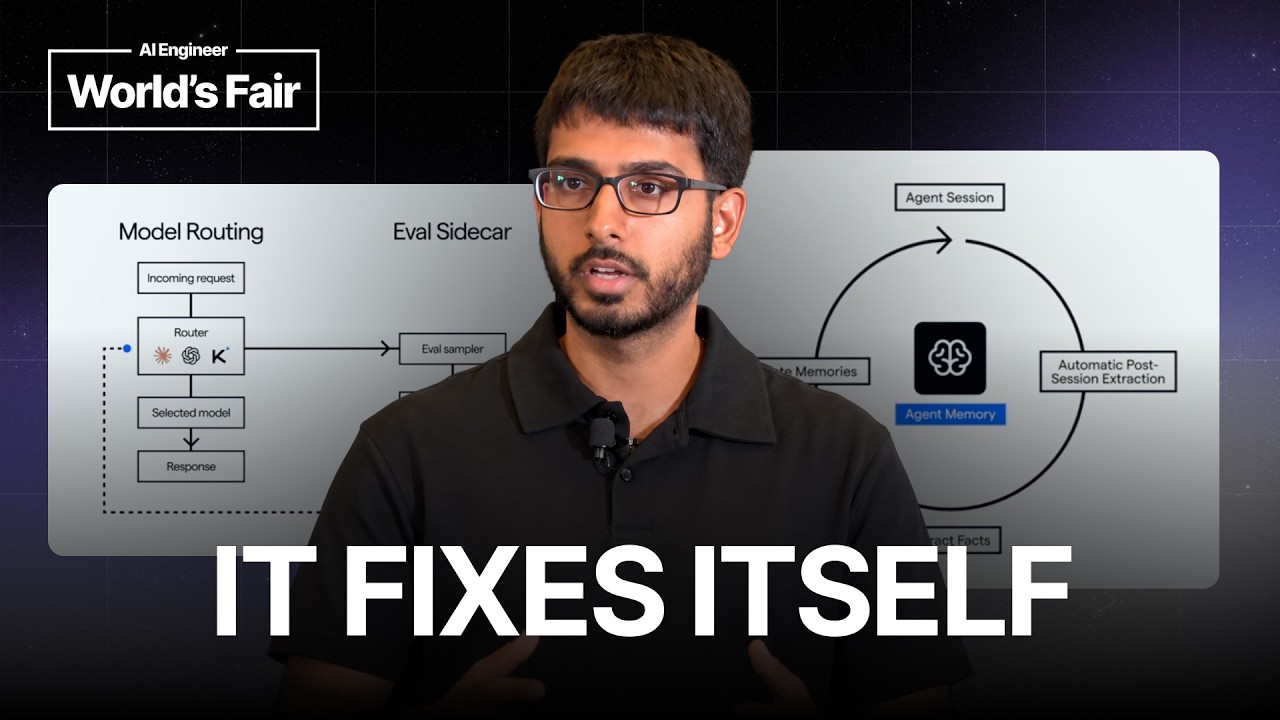
How Software Factories Improve Themselves — Suraj Gupta, Warp

How Software Factories Improve Themselves — Suraj Gupta, Warp

Siraj Gupta of Warp outlines three practical ways software factories can improve over time: self-updating skills driven by outer-loop agents with pull-request review, versioned and traceable persistent memory that works across harnesses, and cost-aware model routing with custom rules and evals.

Beating RL With Reflection: GEPA and Optimize Anything — Lakshya A. Agrawal, GEPA

Beating RL With Reflection: GEPA and Optimize Anything — Lakshya A. Agrawal, GEPA

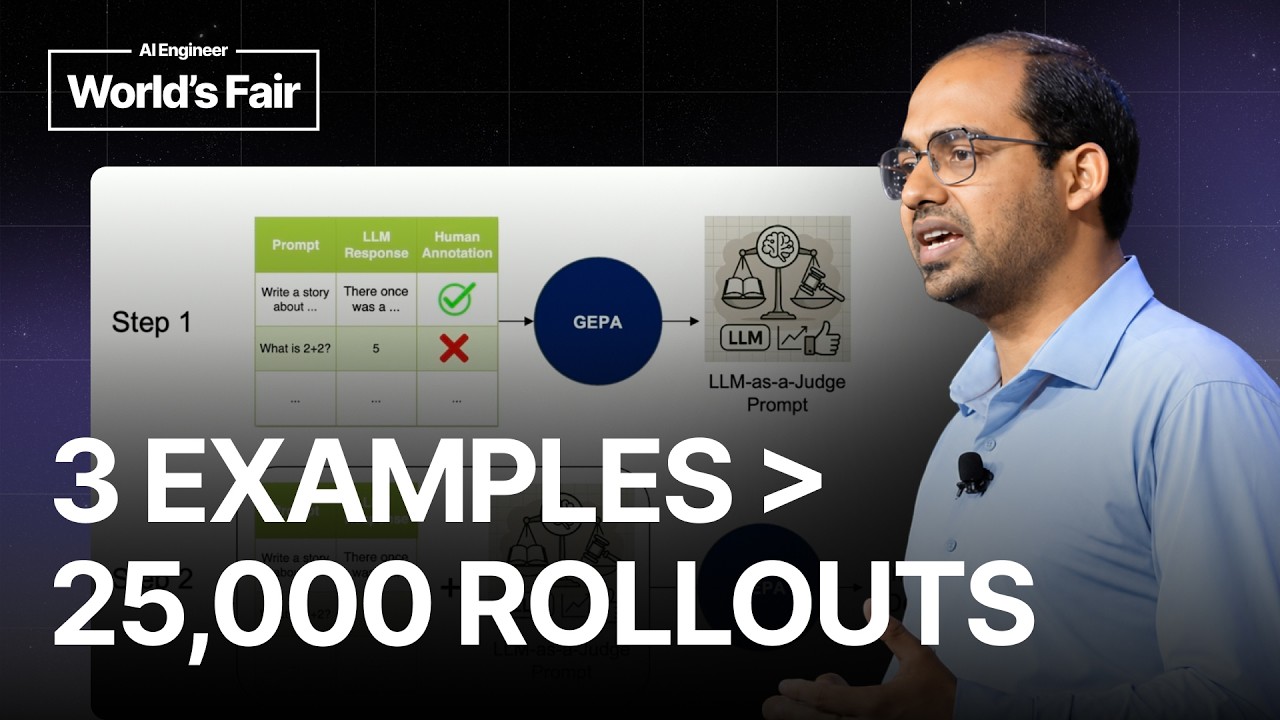
Lakshya Agrawal, creator of GEPA and a PhD student at UC Berkeley's Sky Computing Lab, presents reflective optimization as an alternative to scalar-reward reinforcement learning. GEPA lets a model read full rollout traces, including reasoning, tool calls, and error messages, and rewrite prompts from that feedback, with a Pareto candidate pool guarding against local optima. The talk covers the GEPA vs. GRPO sample-efficiency comparison, domain-knowledge discovery, the Optimize Anything API for text-based artifacts like code, harnesses, and skills, and production results from Databricks, Snorkel, and others.

5 Best Practices for Building AI Agent Skills

5 Best Practices for Building AI Agent Skills

This video outlines five essential best practices for developing reliable, secure, and effective AI agent skills. It covers optimizing skill triggering through descriptive metadata, leveraging real-world domain expertise over generic LLM output, managing context windows efficiently by writing lean skills and using progressive disclosure, implementing deterministic logic with scripts for fragile operations, and critically vetting all skills for security vulnerabilities before deployment. These practices are crucial for professionals building robust agentic systems.

Is Fine-Tuning Still Needed? LLMs, RAG, & LoRA

Is Fine-Tuning Still Needed? LLMs, RAG, & LoRA

This summary explores the evolving role of fine-tuning in modern AI workflows, comparing it with advanced techniques like RAG, LoRA, and enhanced generative AI capabilities. It discusses the historical benefits, current limitations due to rapidly advancing frontier models, and outlines a practical decision framework for customizing machine learning models and designing efficient AI systems.