Agent skills

Your Agent Fix Just Broke Something Else - Sofia Jakovcevic, Arize AI

Your Agent Fix Just Broke Something Else - Sofia Jakovcevic, Arize AI

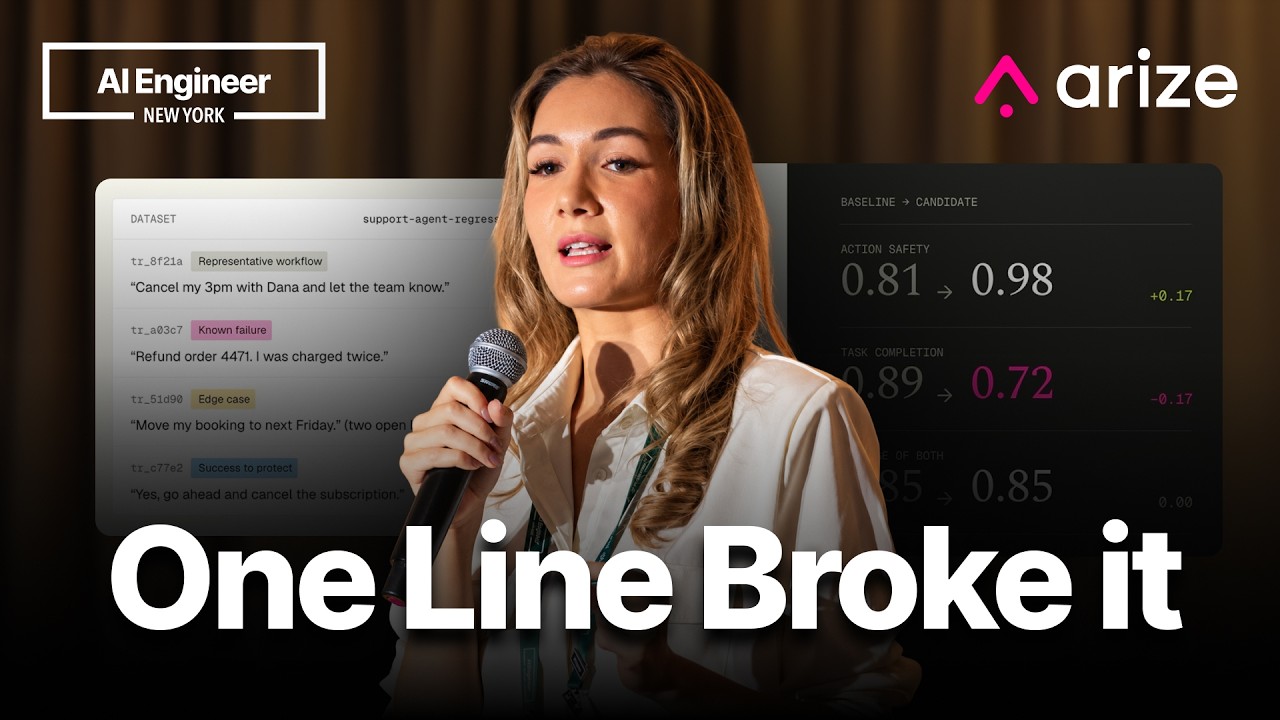
Sofia Jakovcevic, a forward deployed engineer at Arize AI, argues that agents fail at runtime rather than in code, so regressions from a small prompt change can hide behind an improved metric. She walks through a five-step regression loop built on production traces, including dataset curation, LLM-as-a-judge evaluators, baseline experiments, comparisons, and CI merge gates, then shows how coding agents with access to traces can close the loop themselves.
What Is Loop Engineering? Building Better AI Agents

What Is Loop Engineering? Building Better AI Agents

Martin Keen explains loop engineering as the next step beyond prompt engineering: designing systems where AI agents act, observe, adjust, and repeat toward verifiable goals. The discussion covers goal design, triggers, context and persistent state, tools via MCP and APIs, verifier subagents, and why humans must remain in the loop to manage comprehension debt, intent debt, and cognitive surrender.

AI Security Engineer Foundations + Certificate — Javier Garza, Snyk

AI Security Engineer Foundations + Certificate — Javier Garza, Snyk

Javier Garza's AI Security Engineer Foundations workshop walks through the OWASP LLM Top 10, shadow AI and AI Bills of Materials, AI threat modeling, securing agent skills and MCP servers, secure vibe coding, and offensive agent workflows. Throughout, he argues that AI systems break traditional security assumptions because they are probabilistic, reach external content, and act through tools, so defenses must combine least-privilege access, continuous inventory, automated scanning, human approval, and education that explains guardrails rather than merely imposing them.

Why Your Company Needs a Context Graph (and How to Build It) — Gil Feig, Merge

Why Your Company Needs a Context Graph (and How to Build It) — Gil Feig, Merge

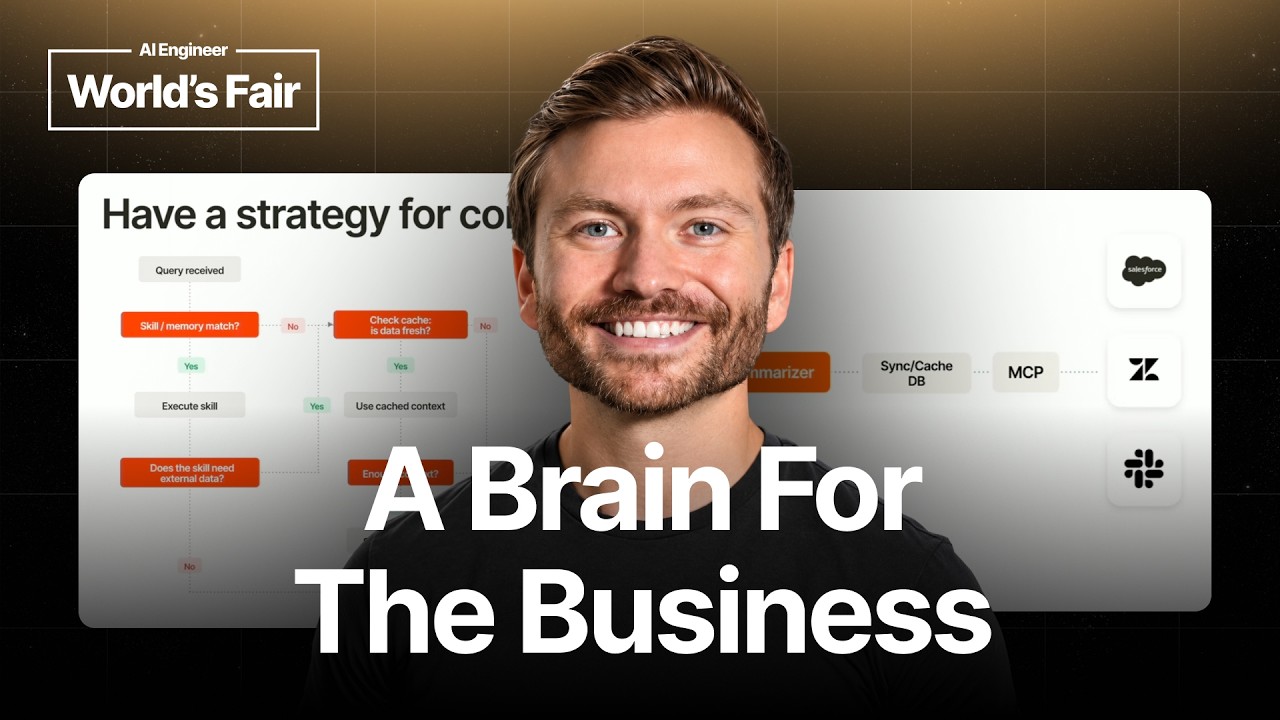
Gil Feig, co-founder and CTO of Merge, explains why agents need a company-wide context graph rather than a few MCP connections. Using the question of which customers were upset last week, he shows why live API lookups fail across large datasets and why synced local copies, routing, summarization, skills, memory, and traceable provenance are needed to build a reliable company brain.

Stop Prompting — Greg Pstrucha, Sentry

Stop Prompting — Greg Pstrucha, Sentry

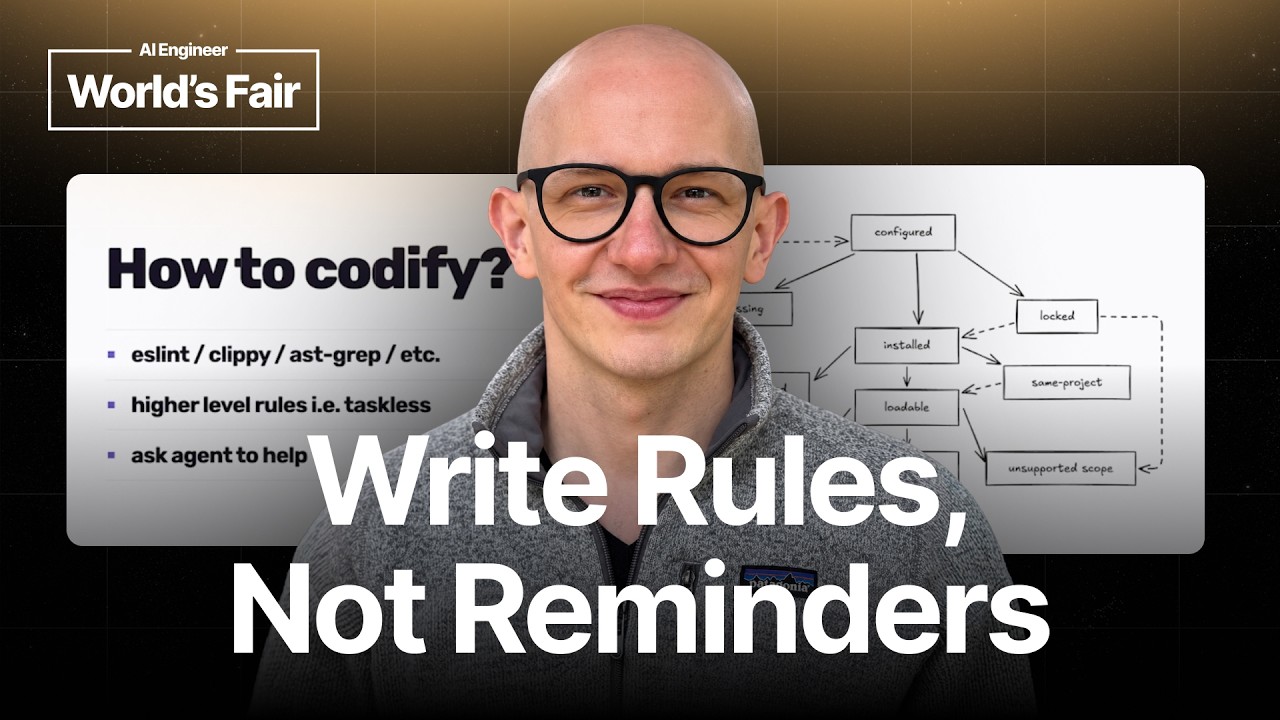
Greg Pstrucha of Sentry argues that instead of repeatedly re-prompting coding agents, teams should codify their recurring corrections as deterministic checks. He covers why agents forget and why custom lint rules are now cheap, how to mine transcripts and PR reviews for rules, real Sentry examples that keep OpenAPI schemas and agent skills in sync, written policies and a Grumpy Engineer review loop for qualitative judgment, and why agents game metrics like test coverage.

Turning Agent Memory Into Skills That Work — Will Lyon, Neo4j

Turning Agent Memory Into Skills That Work — Will Lyon, Neo4j

Neo4j's Will Lyon argues that embedding-based retrieval gives agents recall but not actionable knowledge. He presents a context graph model of agent memory with short-term, long-term, and reasoning memory, then shows how to distill grounded, governed skills from that graph using APE typed execution graphs, with grounding, coverage, and coherence checks, staleness alerts, and a live demo of the Neo4j Agent Memory Service building a patient-intake skill.