Posts

Benchmarking Coding Agents on New vs Legacy Codebases — Denys Linkov, Wisedocs

Benchmarking Coding Agents on New vs Legacy Codebases — Denys Linkov, Wisedocs

Denys Linkov details Wisedocs' journey of refactoring a complex, distributed ML pipeline into a monorepo, benchmarking the process against evolving AI coding tools. He honestly audits whether the six-month effort was justified, or if waiting for more advanced AI would have been better, ultimately concluding that the significant social and technical benefits made the refactor a successful strategic move despite current LLM limitations.

Anthropic's CCA Exam as a Field-Guide for Agentic Engineering — Frank Coyle, UC Berkeley

Anthropic's CCA Exam as a Field-Guide for Agentic Engineering — Frank Coyle, UC Berkeley

Frank Coyle demystifies the Claude Certified Architect exam by dissecting key scenarios and highlighting common anti-patterns in Agentic AI design. He provides actionable best practices, emphasizing effective tool use, context management, specialized agent architectures, and cost-saving techniques, all centered on understanding what to avoid to build robust LLM applications.

Why Robotics Still Isn't Solved - But Could Be Soon | YC Paper Club

Why Robotics Still Isn't Solved - But Could Be Soon | YC Paper Club

This Paper Club delves into the current state of robotics, addressing roadblocks like the sim-to-real gap and embodiment drift. Speakers present advancements in multi-scale memory for long-horizon tasks, self-supervised embodied reasoning, zero-shot dexterous manipulation via massive simulation, and the economic imperative of teleoperation-first robotics companies, concluding with optimizations for efficient, real-time World Action Models.

CAN CHINA BEAT WAYMO?

CAN CHINA BEAT WAYMO?

This episode discusses three critical topics in AI: the true nature of recent AI agent "breakouts," arguing they highlight governance and security flaws rather than model danger; the role of AGI narratives in fueling the current AI investment bubble and questioning its sustainability; and China's aggressive strategy in the global robotaxi market, potentially outpacing Western counterparts like Waymo.

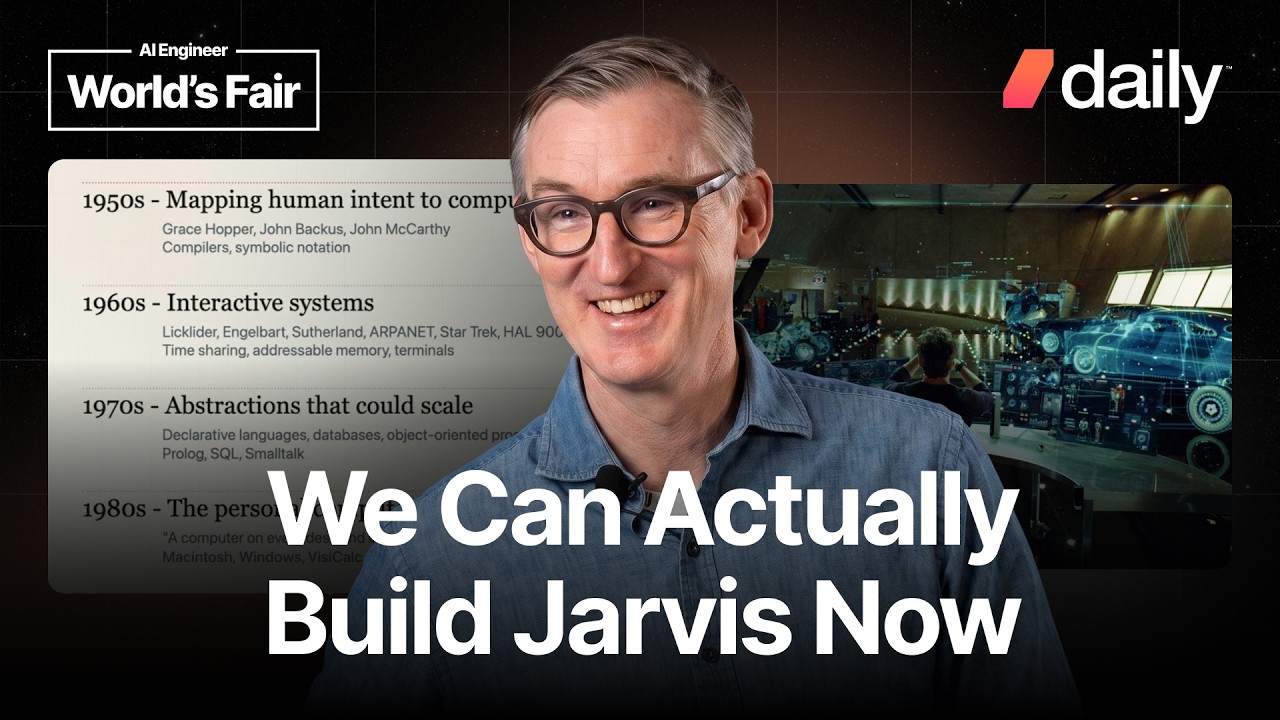
The New Primitives: Building AI Native Software — Kwindla Kramer, Daily

The New Primitives: Building AI Native Software — Kwindla Kramer, Daily

Kwindla Hultman Kramer argues that current AI agents are akin to 1995 web pages – a foundational primitive, not the ultimate destination. Drawing a historical parallel, he predicts the emergence of "AI native software" that will build upon and surpass agents, much like web applications evolved from simple web pages. He illustrates this through computing history, highlighting transformative shifts like VisiCalc's impact on accounting and the vision of Apple's Knowledge Navigator, and concludes by showcasing a game, Gradient Bang, that demonstrates the core primitives of this future AI native software.

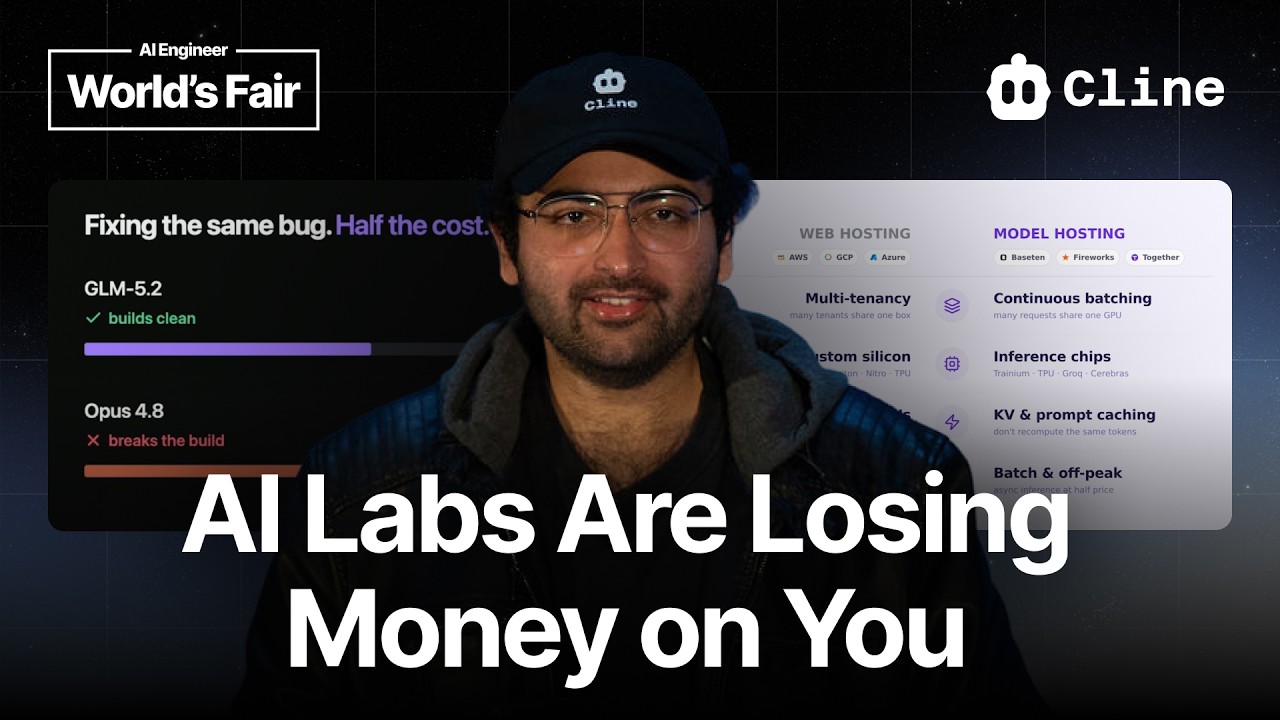
Open Source Is Dead. Long Live Open Source. — Saoud Rizwan, Cline

Open Source Is Dead. Long Live Open Source. — Saoud Rizwan, Cline

Saoud Rizwan, founder of Cline, discusses how AI has eroded trust in open-source communities, leading projects like Zig and curl to restrict AI-generated contributions and exposing severe supply chain risks, as seen with the litellm compromise. He argues that while community open source is struggling, the economic imperative of "open weights" models is rising. Citing the high costs of closed LLMs and the success of models like GLM at Coinbase, Rizwan draws parallels to the Open Compute project, predicting a commoditization of AI inference. He urges American labs to release open-weights models to maintain technological leadership against foreign competitors and prevent lock-in.