Posts

Frontier results, on device - RL Nabors, Arize

Frontier results, on device - RL Nabors, Arize

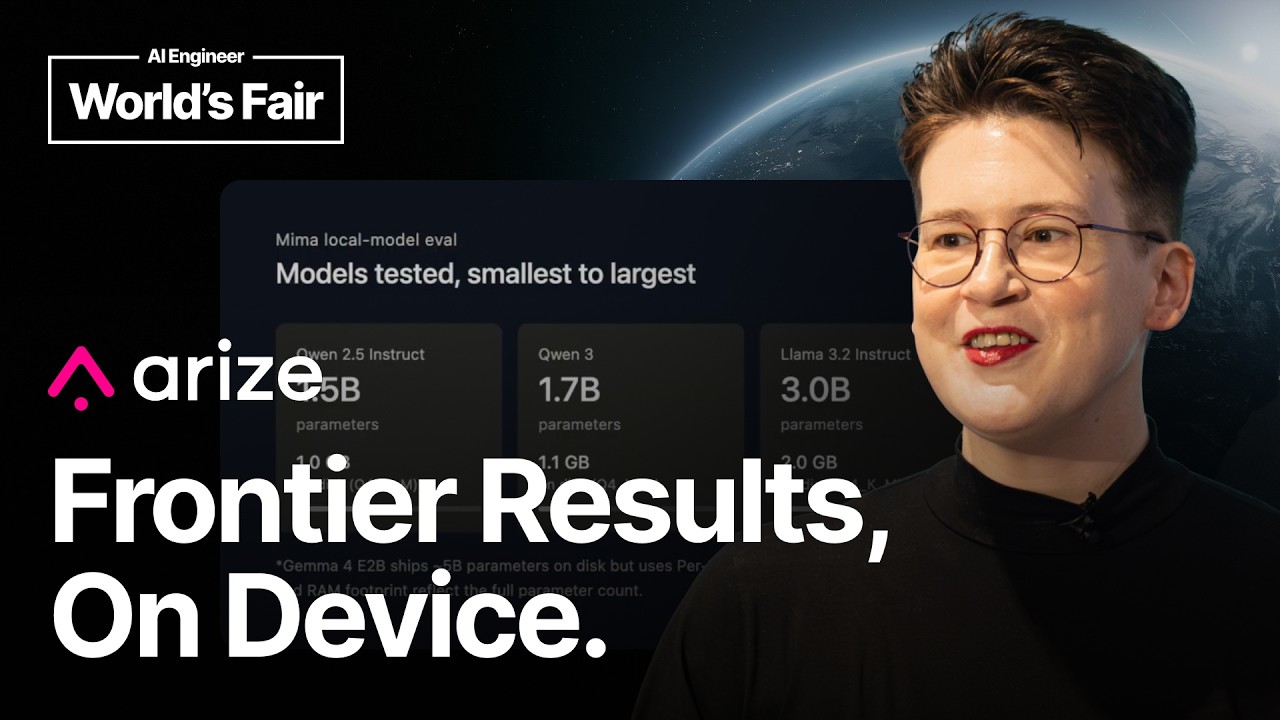
RL Nabors discusses the significant costs associated with using frontier AI models, covering security, latency, and financial implications. She introduces a framework for right-sizing AI solutions by leveraging smaller, task-specific models and Small Language Models (SLMs). The framework details how to prove task feasibility, establish success criteria with golden datasets, conduct capability evaluations (using tools like Phoenix), and select the most appropriate "Small And Good Enough" (SAGE) model. Nabors further demonstrates how prompt engineering, particularly few-shot prompting, and post-processing can close performance gaps with larger models, while advocating for continuous regression evaluations to maintain performance integrity. The overarching message is to "prototype big, deploy small" to optimize AI deployments.

The Future Is Domain-Specific Agents - Justin Schroeder, StandardAgents

The Future Is Domain-Specific Agents - Justin Schroeder, StandardAgents

Justin Schroeder argues for a paradigm shift in AI agent development from monolithic, context-inflated agents (inheritance) to modular, domain-specific agents (DSAs) that operate through composition. He explains how DSAs offer superior token efficiency, cost savings with smaller models, enhanced security through capability limits, and better scalability, predicting their widespread adoption by 2027 as a solution to rising AI costs and the need for practical, customer-facing AI.

You Can't Prompt the Room: The Last Skill AI Won't Replace - Balázs Horváth, VisualLabs

You Can't Prompt the Room: The Last Skill AI Won't Replace - Balázs Horváth, VisualLabs

AI has shifted the software development bottleneck from coding to defining *what* to build. This talk emphasizes the critical role of human skills in eliciting true requirements and understanding business value, detailing practical tools like story mapping, a 4-question value framework, and the VAD thinking path to ensure valuable AI-driven solutions are built, focusing on impact over mere feature delivery.

Voice In, Visuals Out: The Agony and the Ecstasy - Allen Pike, Forestwalk Labs

Voice In, Visuals Out: The Agony and the Ecstasy - Allen Pike, Forestwalk Labs

Allen Pike (Forestwalk Labs) discusses the power of "voice-in, visuals-out" AI experiences, a paradigm championed by Andrej Karpathy. He highlights the critical challenge of latency in real-time AI interactions and shares three key techniques for achieving low-latency, delightful user experiences: utilizing fast models, employing short inference intervals, and implementing stable caching regimens.

AI-Driven Multi-Document Correlation for Financial Compliance - Varsha Shah, Independent

AI-Driven Multi-Document Correlation for Financial Compliance - Varsha Shah, Independent

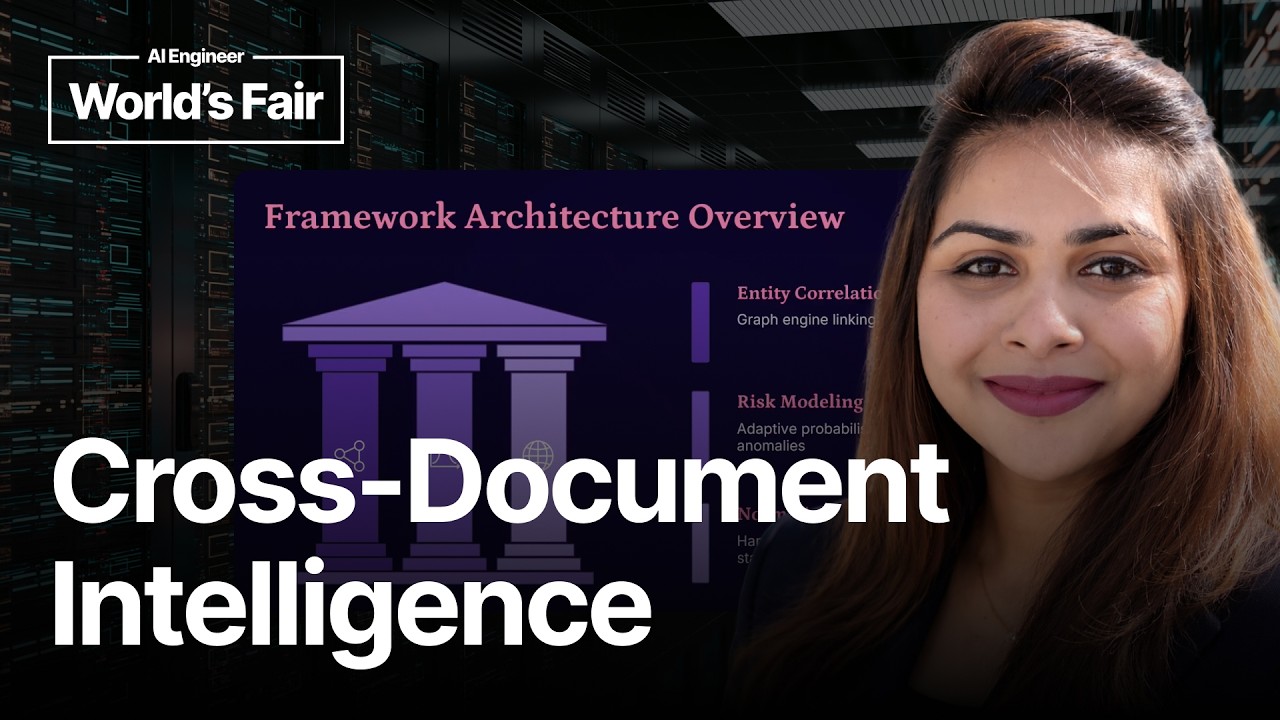
Varsha Shah's research introduces an AI-driven framework for enterprise financial compliance and fraud detection, overcoming the limitations of traditional systems that analyze documents in isolation. The framework combines graph-based entity correlation, adaptive probabilistic risk modeling, and cross-jurisdictional normalization to uncover hidden fraud patterns across payroll, tax, procurement, and financial records. Evaluated on 3 million anonymized records across four jurisdictions, it demonstrates significant improvements in detection accuracy (91% precision, 87% recall), reduces false positives by 76%, and lowers manual audit effort by 40%, ultimately transforming compliance from a reactive process into a proactive, intelligence-driven capability through continuous learning.

We Cut 94% of AI Coding Tokens With a Local Code Index - Rajkumar Sakthivel, Tesco

We Cut 94% of AI Coding Tokens With a Local Code Index - Rajkumar Sakthivel, Tesco

Rajkumar Sakthivel details how an unexpected surge in AI coding tool costs led to the discovery that sending excessive, irrelevant context was the primary culprit. He introduces the Code Context Engine (CCE), a local retrieval layer that intelligently prunes context using AST-aware chunks, hybrid search, and relevance scoring, resulting in up to 94% token reduction and significant cost savings. The talk emphasizes that optimizing input context, not just the AI model, is paramount for efficient and accurate AI-assisted coding.