Posts

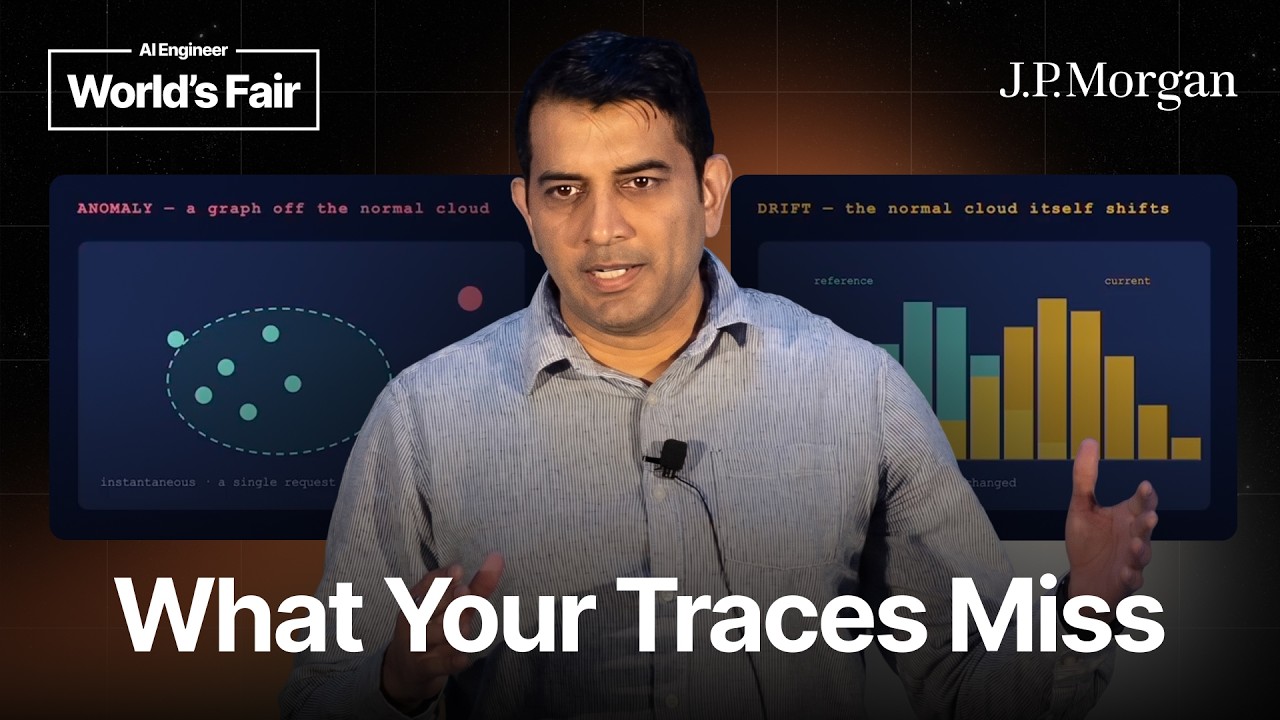
Learned Execution Graphs for Anomaly Detection & Drift in APIs — Ritvik Pandya, JP Morgan Chase

Learned Execution Graphs for Anomaly Detection & Drift in APIs — Ritvik Pandya, JP Morgan Chase

Ritvik Pandya from JP Morgan introduces 'learn execution graphs'—short-lived DAGs representing API request processing—to detect anomalies and drift in high-throughput systems. This approach localizes performance issues to exact nodes, identifies skipped or reordered steps, and differentiates between transient anomalies and fundamental system drift (structural, volume, or behavioral). It leverages per-client baselines and OpenTelemetry data to reduce mean time to discovery (MTTD) from hours to seconds, enhancing system reliability and observability.
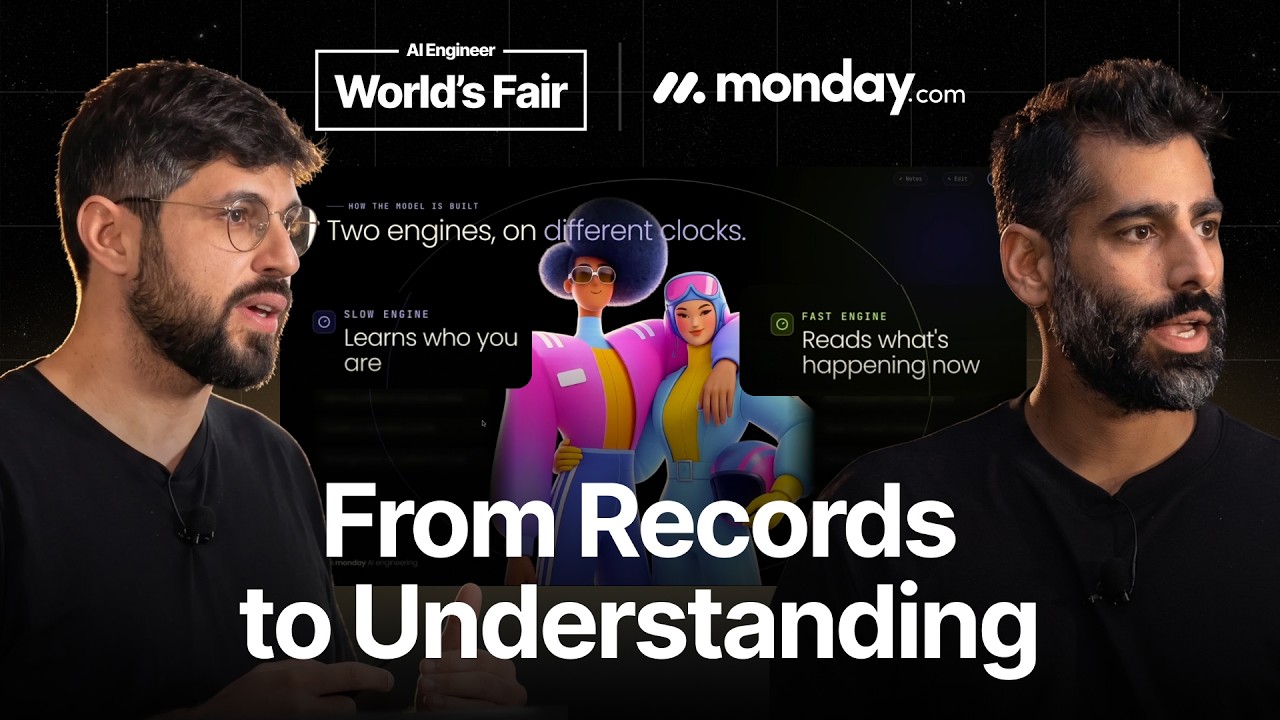
From Systems of Record to Systems of Context — Omri Bruchim, monday.com

From Systems of Record to Systems of Context — Omri Bruchim, monday.com

monday.com introduces a paradigm shift from traditional "systems of record" to a "system of context" to overcome the limitations of current AI agents. By developing a "Monday world model" with a unique data architecture, including slow and fast processing engines inspired by neuroscience and lambda architecture, their AI assistant Sidekick gains a deep understanding of user workflows, priorities, and implicit meaning, allowing it to provide truly contextual and proactive assistance.

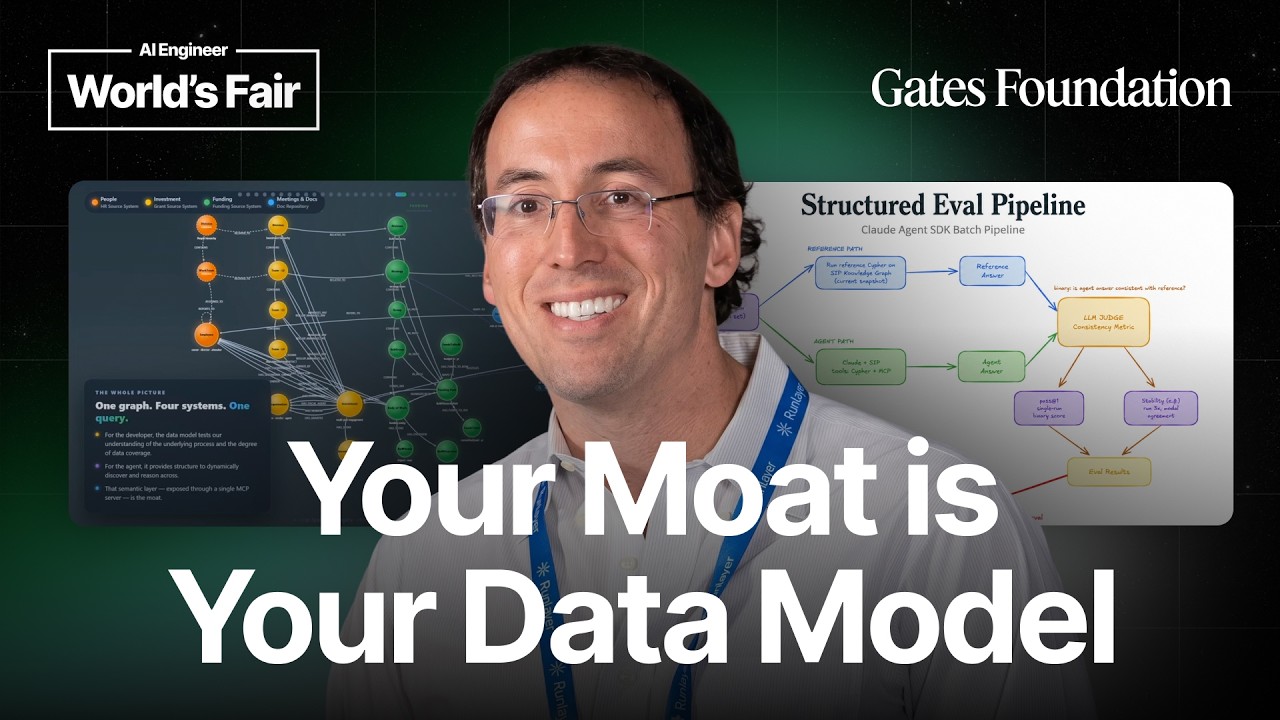
Your Moat Is Your Data Model — Mike Phipps, Gates Foundation

Your Moat Is Your Data Model — Mike Phipps, Gates Foundation

Mike Phipps from the Gates Foundation details how they built a Strategic Intelligence Platform (SIP) using a Neo4j knowledge graph to serve AI agents. He argues that the true "moat" in an AI-commoditized world lies in an organization's unique data model and tacit knowledge, not in generic AI tools. The platform unifies 25 years of siloed grantmaking data, integrating structured and unstructured information through a rigorous curation pipeline, and is refined via continuous retrieval evaluations to ensure alignment with organizational reporting standards.

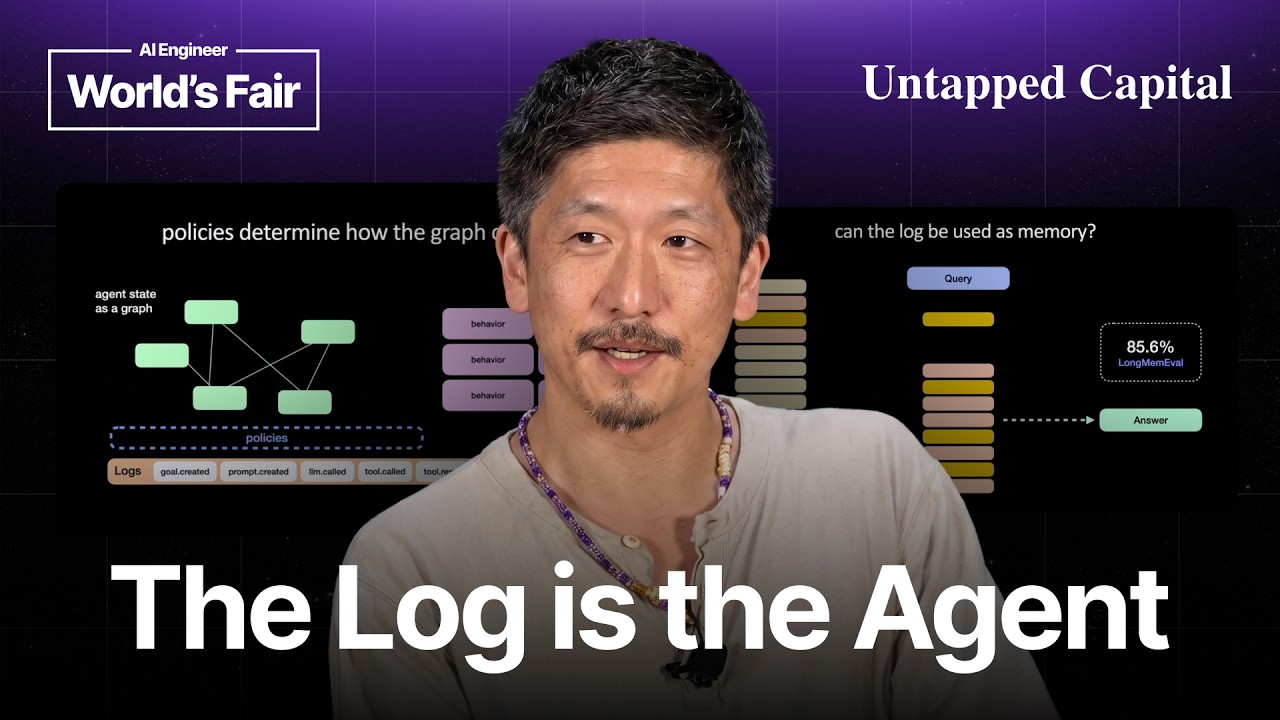
Active Graph Agent Runtime (BabyAGI 4) — Yohei Nakajima, Untapped Capital

Active Graph Agent Runtime (BabyAGI 4) — Yohei Nakajima, Untapped Capital

Yohei Nakajima, creator of BabyAGI, introduces ActiveGraph, a novel agent architecture that builds around an immutable event log rather than the LLM. This log-centric approach enables auditable agents with native replay, rollback, and self-improvement capabilities, drawing inspiration from blackboard systems and Kafka.

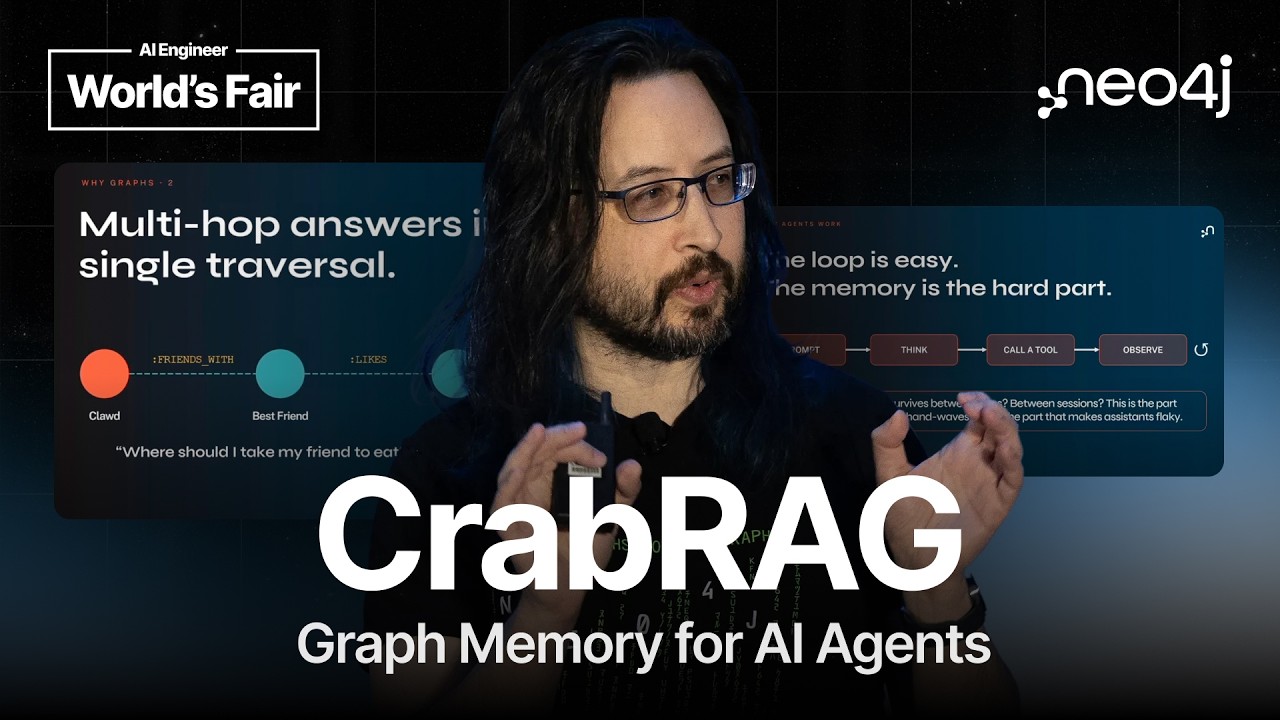
CrabRAG: Why Automated Assistants Need Graph Memory, Not More Tokens — Stephen Chin, Neo4j

CrabRAG: Why Automated Assistants Need Graph Memory, Not More Tokens — Stephen Chin, Neo4j

Stephen Chin demonstrates how current LLM agent memory systems, relying on markdown files or vector databases, lead to token inefficiency, hallucinations, and a lack of multi-hop reasoning. He showcases graph databases as a superior alternative, providing precise, explainable, and auditable answers for complex, large-scale problems through a live demo of a home lab digital twin.

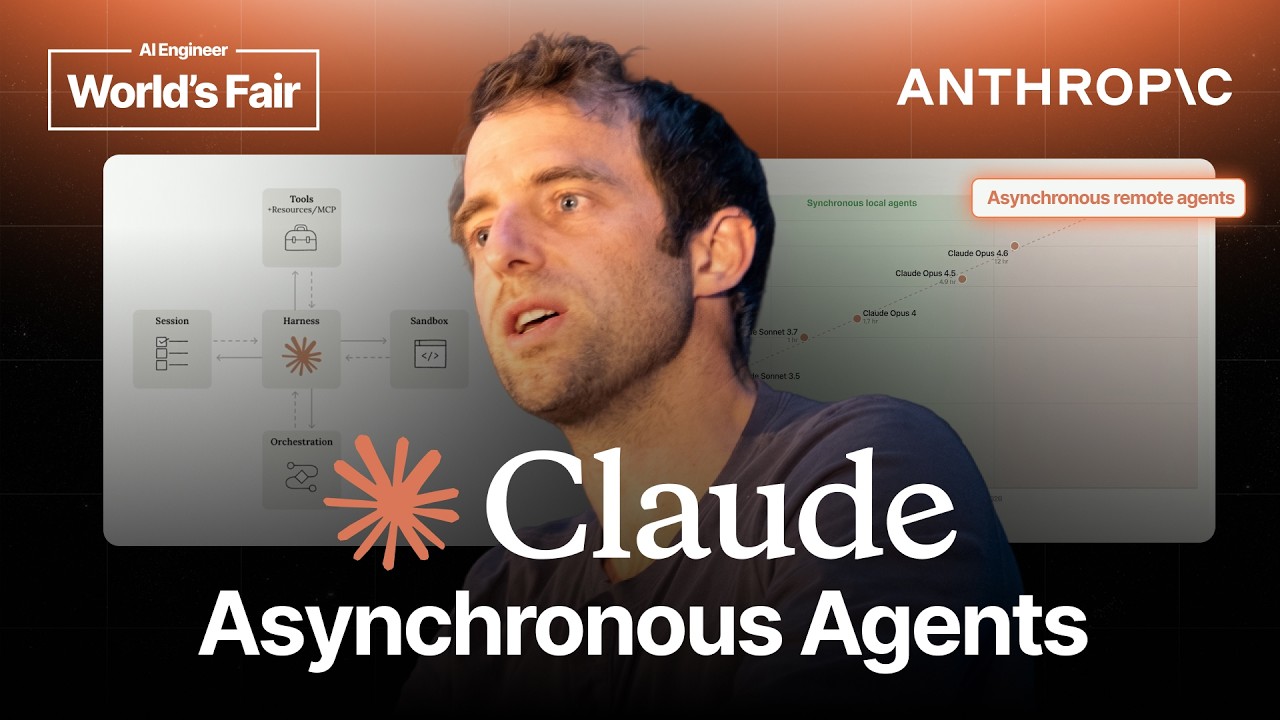
Claude for Long-Horizon Tasks — Lance Martin, Anthropic

Claude for Long-Horizon Tasks — Lance Martin, Anthropic

Lance Martin from Anthropic shares insights into building reliable and secure long-horizon agents with Claude. He details architectural principles like decoupling the 'brain' from the 'hands' for reliability and security, implementing independent verifiers for self-correction, and developing advanced self-learning memory systems akin to human memory's in-band writing and offline 'dreaming' consolidation. The talk concludes with a vision for evolving agent harnesses towards organizational-level, proactive, and multiplayer capabilities.