Posts

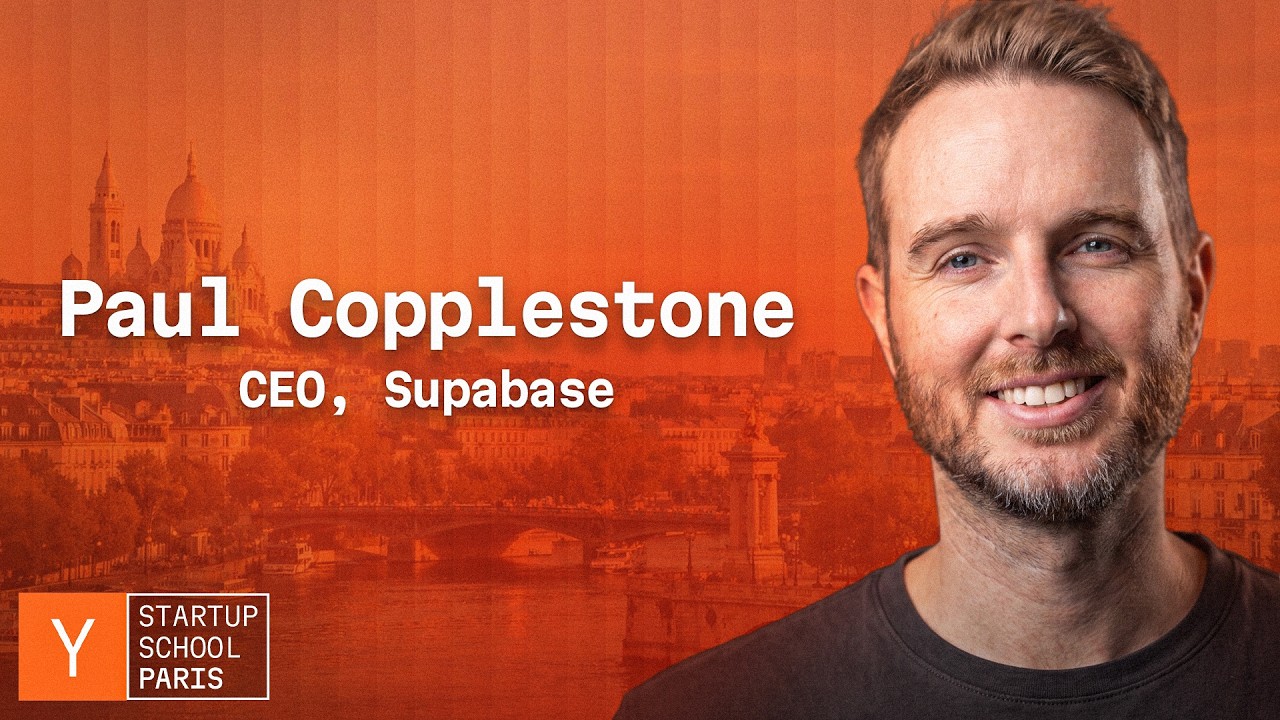
How Supabase Became One Of The Fastest Growing DevTool Companies In The World

How Supabase Became One Of The Fastest Growing DevTool Companies In The World

Supabase CEO Paul Copplestone details how a frustrating Firebase migration sparked an open-source side project that grew into a decacorn. He explains the strategic choice of PostgreSQL and open source, the evolution of developer experience to achieve 5-second time-to-value, and the transformative impact of AI agents, which now launch millions of Supabase databases monthly. The conversation also covers the challenges and advantages of a fully distributed workforce and the future bet on 'self-driving databases' to address the complex 'operate' stage of AI-driven development.


Citation Needed: Provenance for LLM-Built Knowledge Graphs — Daniel Chalef, Zep AI

Citation Needed: Provenance for LLM-Built Knowledge Graphs — Daniel Chalef, Zep AI

Daniel Chalef discusses how LLM synthesis destroys data provenance, making it difficult to trace information back to its sources. He introduces Graphiti, an open-source temporal graph framework, and Zep, an agent memory infrastructure built upon it. This system models provenance as a graph, treating sources as 'episodes' and derived facts as interconnected nodes and edges. This approach enables robust lineage tracing, handles entity merges and fact invalidation through temporal mechanisms, facilitates metadata-driven trust evaluation, and allows for compliant data deletion (e.g., GDPR) based on source support. The benefits include enhanced compliance, improved data veracity, and debuggable AI agents, addressing a critical engineering challenge in LLM applications.

Local Agentic Theory For Mobile Games — Shafik Quoraishee & Joanne Song, The New York Times

Local Agentic Theory For Mobile Games — Shafik Quoraishee & Joanne Song, The New York Times

This presentation explores the innovative concept of running agentic AI entirely on mobile devices to enhance game accessibility and personalization. It delves into the technical challenges of local AI (space, time, energy budgets), contrasts agentic systems with traditional reinforcement learning, and demonstrates practical applications with a Space Invaders agent and a crossword solver. A key takeaway is the transformation of accessibility from fixed toggles to dynamic, real-time adjustments based on player needs, ultimately envisioning a future of billions of small, personalized local AI brains.

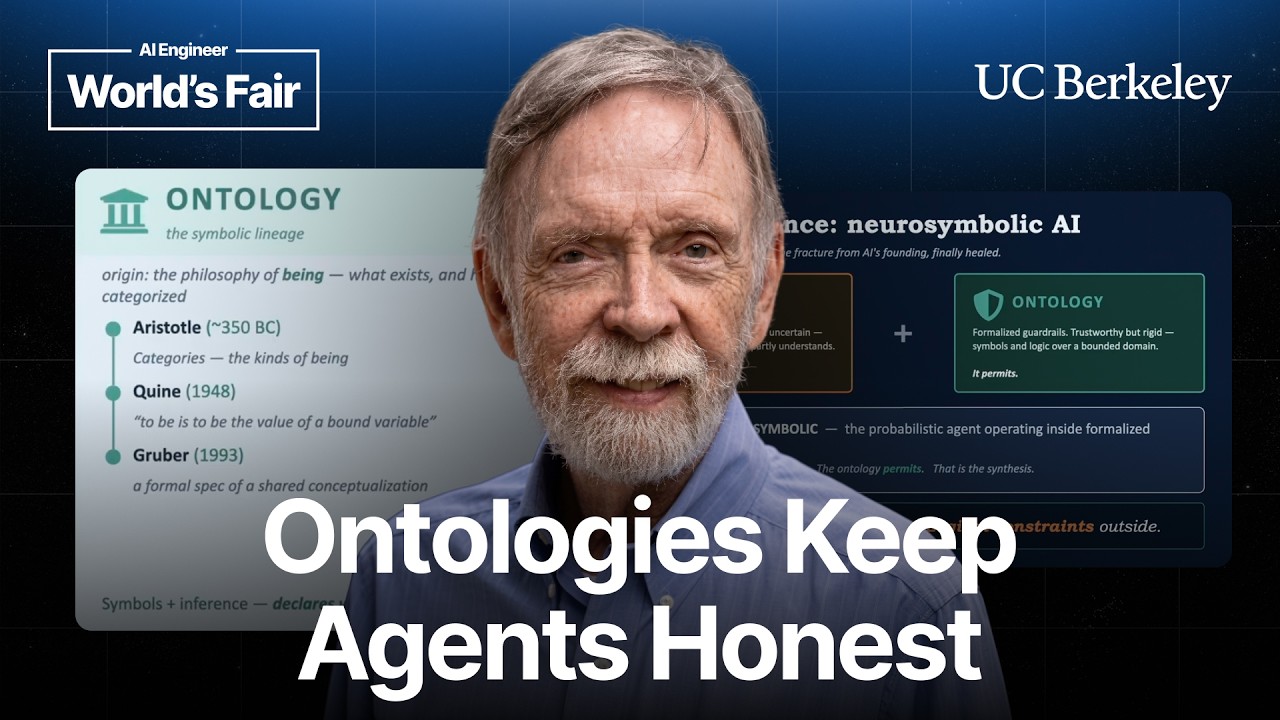
Why Agentic Systems Need Ontologies — Frank Coyle, UC Berkeley

Why Agentic Systems Need Ontologies — Frank Coyle, UC Berkeley

Frank Coyle discusses the inherent flaws of purely probabilistic LLMs in agentic systems and proposes a neuro-symbolic solution. He advocates for wrapping LLM tool-use loops with external ontologies and validation mechanisms (like RDFS, OWL, and Pydantic) to provide logical guardrails, preventing common, critical errors that probabilistic reasoning alone cannot reliably avoid.

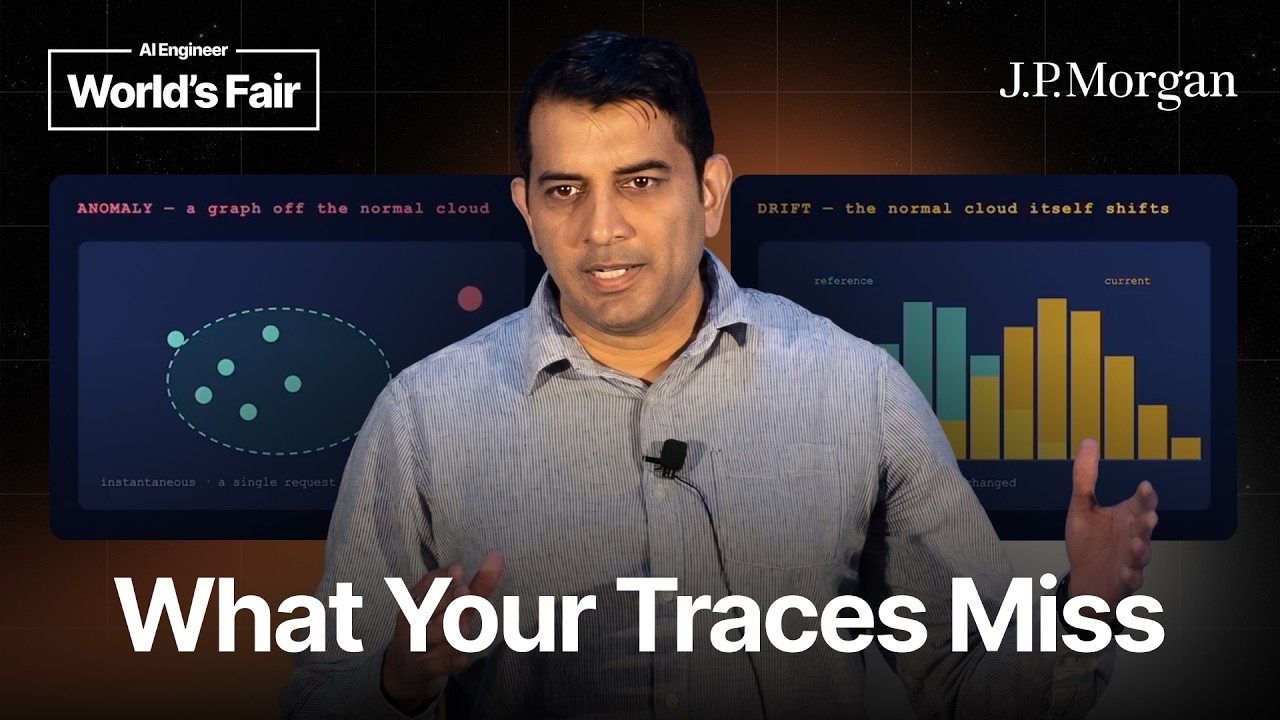
Learned Execution Graphs for Anomaly Detection & Drift in APIs — Ritvik Pandya, JP Morgan Chase

Learned Execution Graphs for Anomaly Detection & Drift in APIs — Ritvik Pandya, JP Morgan Chase

Ritvik Pandya from JP Morgan introduces 'learn execution graphs'—short-lived DAGs representing API request processing—to detect anomalies and drift in high-throughput systems. This approach localizes performance issues to exact nodes, identifies skipped or reordered steps, and differentiates between transient anomalies and fundamental system drift (structural, volume, or behavioral). It leverages per-client baselines and OpenTelemetry data to reduce mean time to discovery (MTTD) from hours to seconds, enhancing system reliability and observability.

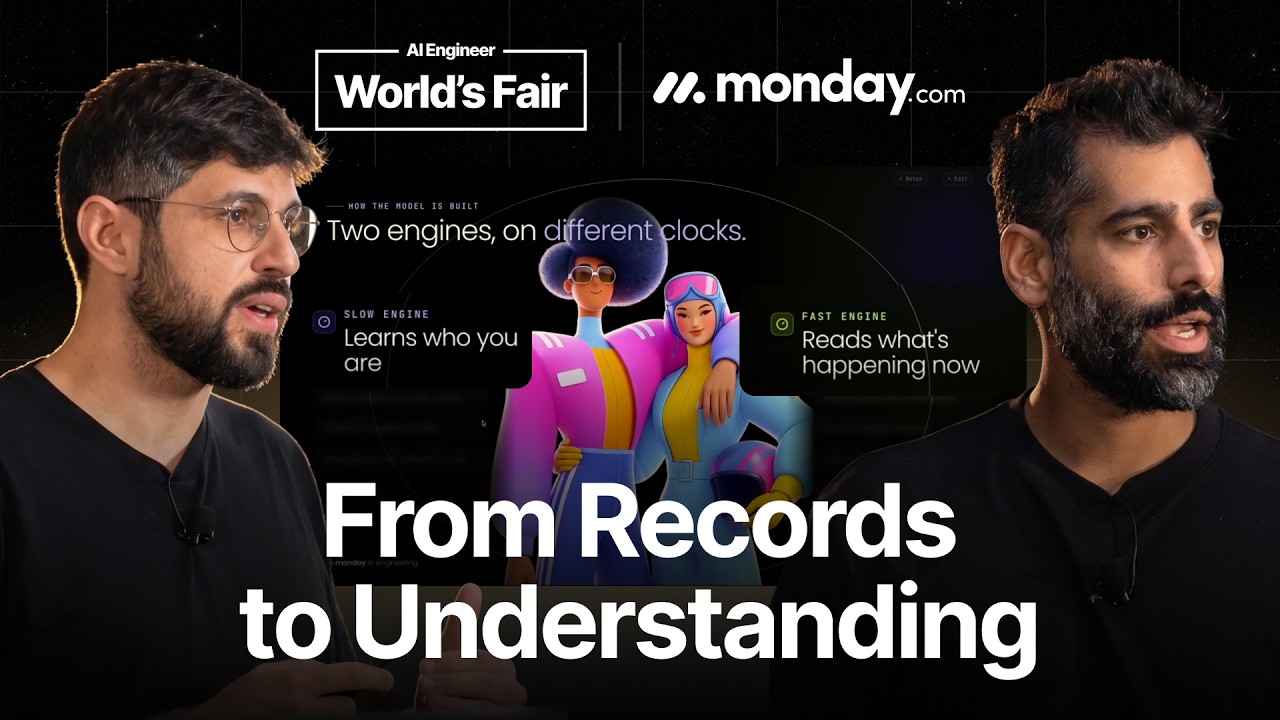
From Systems of Record to Systems of Context — Omri Bruchim, monday.com

From Systems of Record to Systems of Context — Omri Bruchim, monday.com

monday.com introduces a paradigm shift from traditional "systems of record" to a "system of context" to overcome the limitations of current AI agents. By developing a "Monday world model" with a unique data architecture, including slow and fast processing engines inspired by neuroscience and lambda architecture, their AI assistant Sidekick gains a deep understanding of user workflows, priorities, and implicit meaning, allowing it to provide truly contextual and proactive assistance.